
What The Tech?! has always aimed to cover the most interesting parts of the technological evolution. While plenty of technology has helped to shape the modern world, some stories are more interesting than others, and today certainly meets that brief.
The Automatic Teller Machine would be responsible for changing the way we do banking before slowly losing relevance and becoming a victim of its own success. Along the way, we’d see disputes over intellectual property along with plenty of interesting characters that would contribute to its design and development.
There would also be a unique security vulnerability that most people knew absolutely nothing about, to say nothing of the fact that the machine that made cash so ubiquitous would face its own death with the shift to a cashless economy.

It would be Reg Varney who would make the world’s first ATM transaction in London. Source: Wikipedia.
The Beginnings
Ask the British who invented the ATM, and they’ll tell you it was John Shepherd-Barron. Ask the Americans, and they’ll point you toward Don Wetzel. Ask someone who has spent time in patent law, and they’ll mention James Goodfellow, who quietly filed the critical paperwork before either of them.
The reality, as is often the case with new technology, is that several people arrived at similar conclusions around the same time, driven by the same problem. Banks closed early. People needed cash late.
Somebody needed to build a machine that could bridge the gap, and whoever could would stand to make some serious profit.
It would be Shepherd-Barron who would get there first, operationally speaking. Working on behalf of Barclays Bank, he would field the first ATM in Enfield, North London, in early 1967. The moment was considered significant enough to warrant a publicity stunt, and the bank chose Reg Varney, a well-known actor from the British sitcom On the Buses, to be the first person to use it.
Despite running from the same concept that made the ATM mainstream, the machine would bear little resemblance to the ATMs that we’d recognise today. The concept of the magnetic strip for data transfer did not yet exist, and in its place was (wait for it) a paper cheque impregnated with radioactive carbon 14.
The machine would detect the radiation to ensure the cheque was legitimate and not forged before dispensing the required funds. While the concept worked, it was completely impractical for deployment at scale.
The PIN system and magnetic strip that would replace it would come with their own unique tale. When Shepherd-Barron was developing the system, he initially used six digits for the PIN system. When his wife told him that she couldn’t remember more than four, he took her advice to heart, giving us the 4-digit system that is often still used by many today.
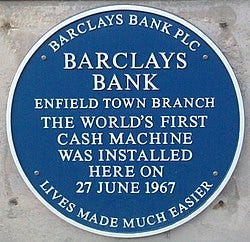
While the invention remains disputed, Barclays were the first to take the concept to market. Source: Wikipedia.
A Financial Revolution
While the first machine worked, it was the PIN & Strip concept that would help to take the concept mainstream. Developed through the late 1960s and standardised through the 1970s, this allowed for account information to be stored on a card that was able to be machine-read later on.
This would finally lay the foundations for the modern era of machines that saw extensive use and would give us a much more user-friendly method of operation. This was a fact that was not unnoticed by banks and the world of finance, and with that, the rapid explosion of growth was set, with ATMs going global.
Banks began deploying machines beyond their own branches, and networks emerged that allowed customers to use ATMs operated by banks other than their own. The infrastructure grew quickly, driven by the realisation that every machine installed was a branch that required no staff, no opening hours, no closing time and, more importantly, no wages.
By the time 1980 arrived, the ATM was a modern fixture on streets in cities worldwide. This had some distinct benefits for both tourists and business travellers. While earlier trips and methods of exchange would rely on cumbersome processes like travellers' cheques, the ATM made the same process almost trivial.
A user could use a machine overseas to withdraw cash from their home account, and the exchange rate and entire conversion could be handled in a single transaction. This technical shift would have a huge impact on travel.
It would take just three decades for the ATM to complete its dominance. By the 2000s, an estimated 400,000 machines were in operation in the US alone.
The ATM had completed its journey from experimental technology to invisible infrastructure in the space of roughly three decades.
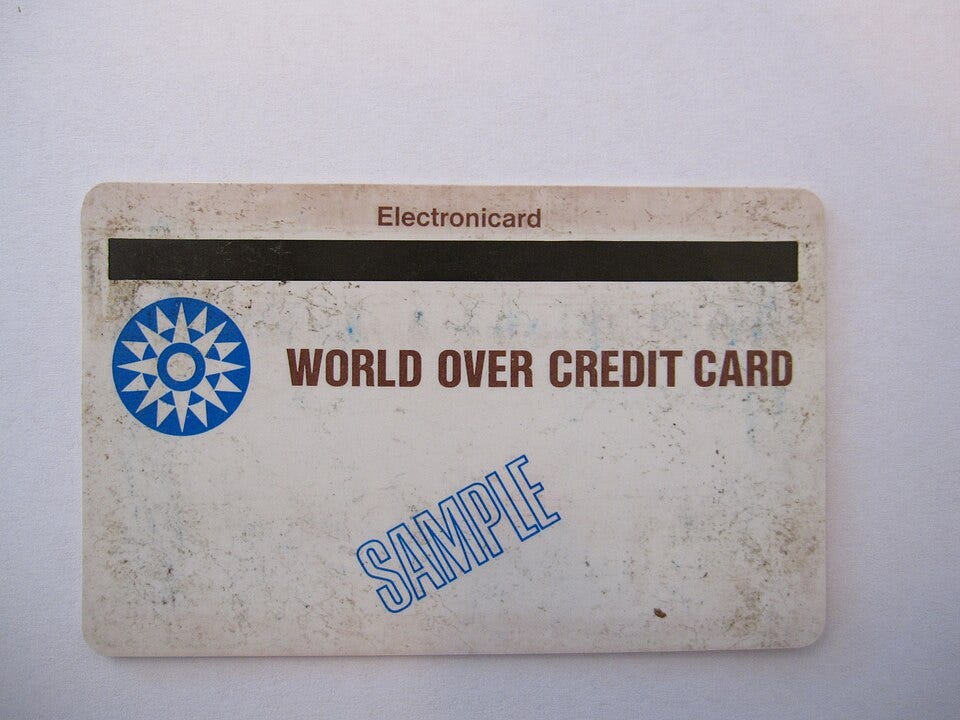
The Magnetic Strip would take banking mainstream, but it was not without its issues. Source: Wikipedia.
Convenience, Not Security
While the magnetic strip had plenty of functionality to offer, it came with some inherent vulnerabilities that carried very real risks to the long-term development of the technology.
The data encoded on it was static, unencrypted and readable by any device capable of reading a magnetic stripe. Which meant that building a device to clone the information from a card as it was inserted into a machine was not a particularly complex undertaking. In fact, it was basically trivial.
This would give us the first of our very modern financial problems: card skimming. A basic skimmer could be manufactured for a trivial sum and attached to an ATM in seconds. Combined with a small camera to capture the PIN being entered, it gave an attacker everything they needed to clone a card and drain an account. Because of this, skimming would emerge as one of the most widespread financial crimes of the late 20th and early 21st centuries.
The response to this problem would give us the modern cards we use for contactless payment today. NFC chips and PINs would use cryptographic exchanges to ensure that security was much improved over the simpler magnetic strips used earlier.
While these are not without their own security issues, it’s a much better strategy that allows for the continued deployment of the card system globally.
Sidenote: Skimming is just one of many ATM attack vectors. For instance, Jackpotting attacks in which the ATM’s software is compromised to instruct the machine to dispense all of its cash on demand, emerged as a significant problem through the late 2000s. There are also a number of other “blackbox” approaches showing the problems that come with deploying convenience at scale.
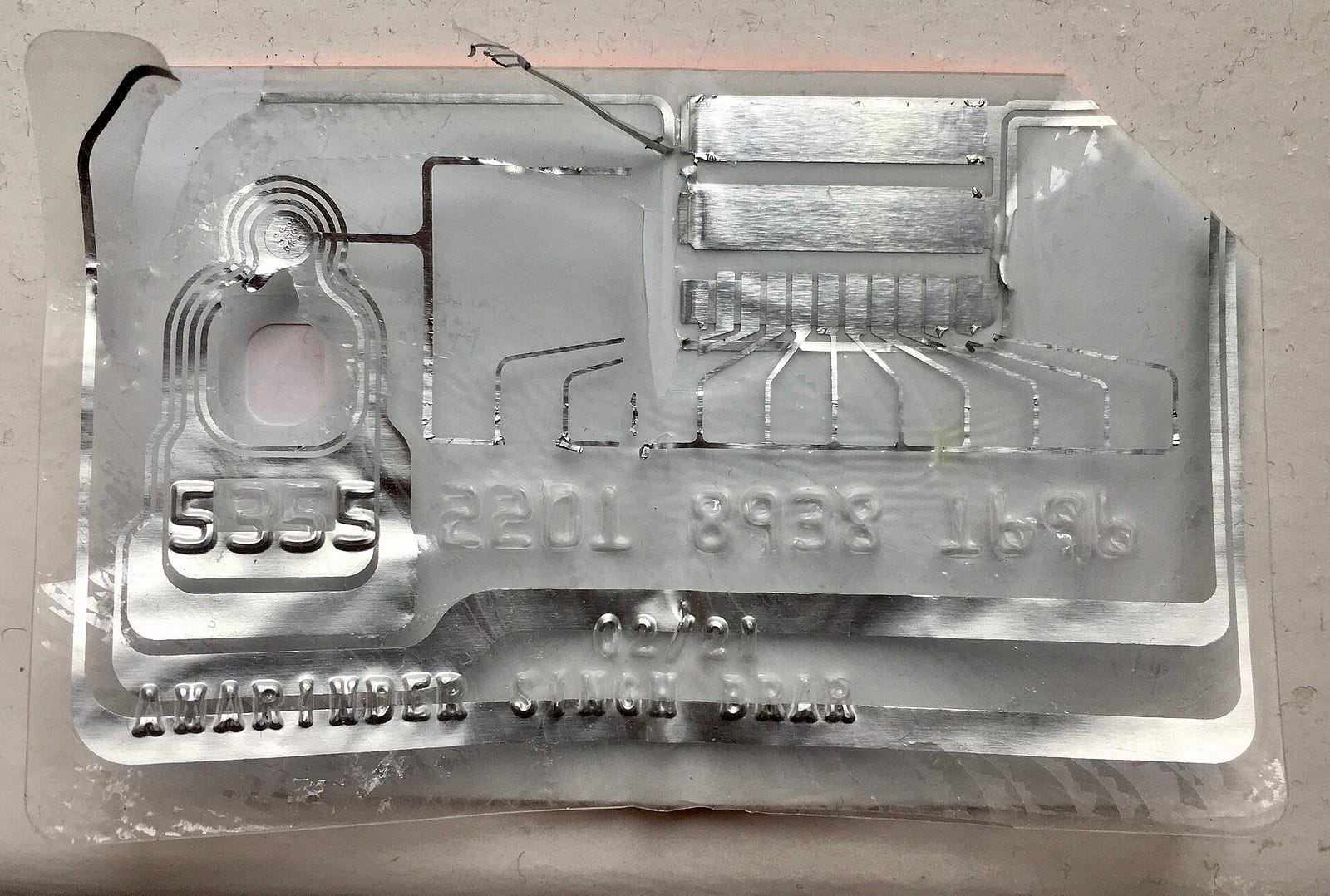
NFC chips would unlock paywave technology, making the concept of the ATM obselete. Source: Wikipedia.
Into The Modern Age
ATMs would survive the development of the Debit Card, the Credit Card and even Online Banking. However, one thing that the ATM is struggling to survive against is the slow death of cash itself.
While cash has had a small resurgence over the past year or two, for the most part, its overall usage has continued to decline on a year-by-year basis. This is an existential problem for a machine that relies on cash for its very existence.
Contactless payments, banking apps and the Coronavirus pandemic would all eat away at the ATM’s relevance. For the most part, many transactions that would require an ATM previously can now be completed from start to finish without any cash required at all.
This would be exacerbated by the fee issue. ATMs, which had been a cash cow for their operators, had become more and more fee-happy over the years. For the most part, this didn’t go down well, and the impact of this would be a gentle nudge towards cashless transactions that would eliminate the fees. This would create a death spiral that the whole system never really recovered from. Usage goes down, fees increase, usage continues to go down.
The ATM would mark the eventual reduction of the bank teller and fundamentally change the way that people would use their money. Now, it’s being pushed into irrelevance…thanks to fundamental changes in how people use their money.
The irony is strong with this one.
If you liked the article, Get the Book.
Investigator515 explores the RF spectrum, cybersecurity, and the hidden tech behind modern espionage.
Follow for new content weekly
You might also like,
- OSINT Investigators Guide to Self Care & Resilience





