
As students, we are used to the Monday-to-Friday routine of going to a classroom, from our childhood to our adulthood, and, some of us use the library services, either the local ones or the one that our institution brings us. It is a very common thought that education nowadays is outdated, and maybe it can be discussed in favor of that statement within certain issues, but I think there has been subtle changes and innovations through the years.
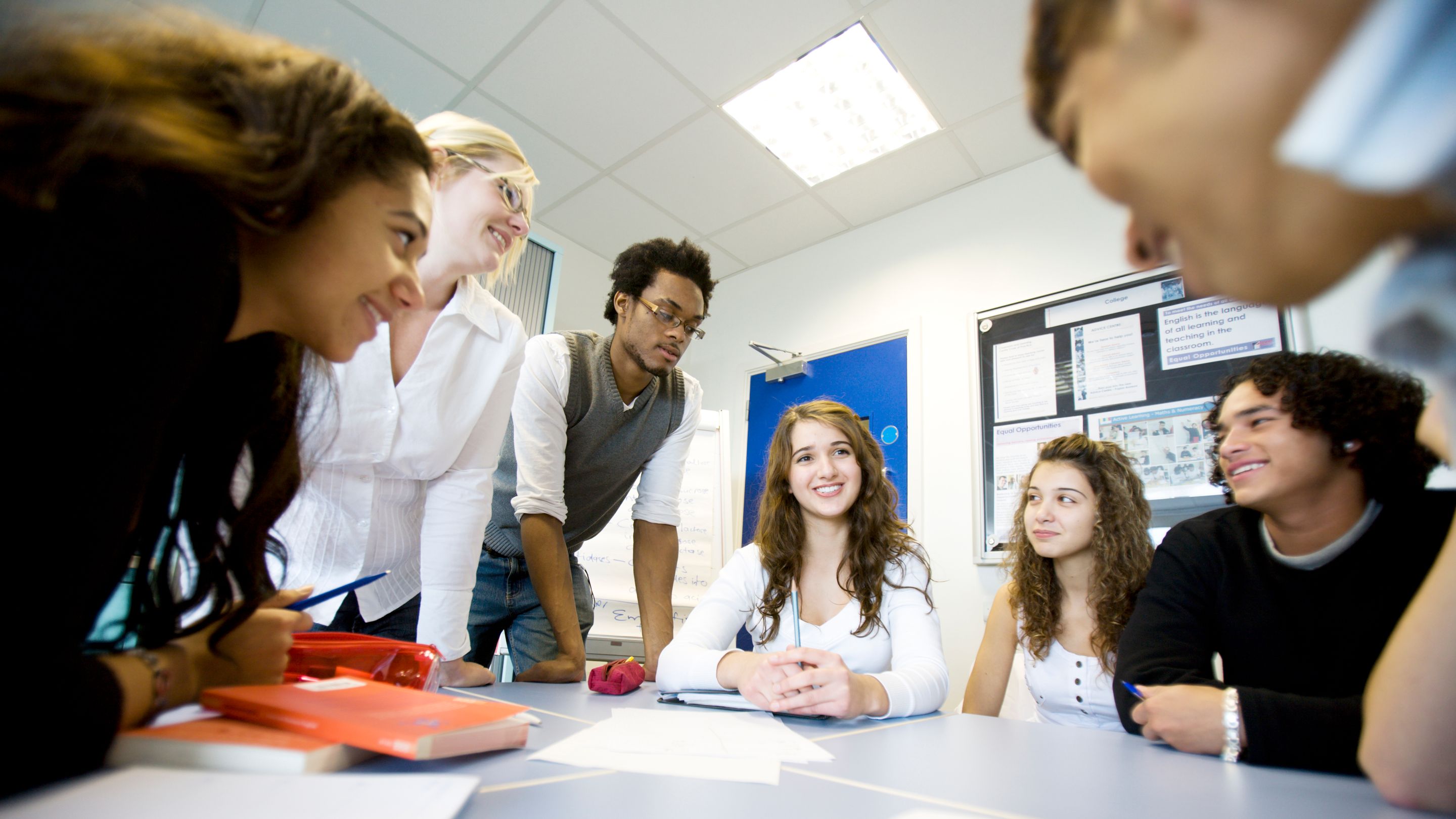
Libraries are not only spaces where you go, grab a book, sit, read, maybe borrow it, and return. Technologies have made their impact, for example, with online registration, access to audiobooks, internal search engine updates, remote tutoring platforms, and so on. Libraries also have diversify their subspaces, with individual cubicles, group spaces with computers and whiteboards, sofa spaces. Classrooms in colleges and universities have made subtle changes as well, by using smartboards, interactive smart projectors to give the lectures. However, unlike the case of the libraries, these small changes are not disruptive enough to make a big shift into new forms of education.
It is a typical and casual complain that curricula has not change enough, at least not at the same rate as technology does. I think it is crucial to modernize education, not only in terms of technology but also in the way that learning is driven, it cannot be static For example, Viloria et al. (2019) made a Big Data analysis of main learning style from the four types according to Kolb’s model (activist, reflector, theorist and pragmatist) among college students of different social sciences and humanities career, they found out the reflector one to be the predominant style. Beyond the result obtained this kind of analysis shows that using modern statistics among computer science it is possible to determine what type of learning process (or processes) students are leaning on. With that information, the making up of dynamical and suitable curricula gets easier.

The previous suggestion is just one little example on how using modern data science (and in general, knowledge) can lead to the potential implementation of new strategies into the classrooms. By doing that, society can redirects education and learning spaces into the path that they were meant to be, creating good and integral individuals instead of empty bodies that are filled with information to make a specific task.
REFERENCES
Viloria, A., Gonzalez, I. R., & Lezama, O. B. (2019). Learning Style Preferences of College Students Using Big Data. Procedia Computer Science, 160, 461-466. doi:10.1016/j.procs.2019.11.064
This post was published first on Uptrennd:
https://www.uptrennd.com/post-detail/perspectives-on-education-1-physical-spaces~NzAyODkz





