
Just a week ago, Nayib Bukele, the president of El Salvador, posted a tweet in which he explained that 32 central banks and 12 financial authorities, the equivalent of 44 countries, were going to meet the next day in El Salvador:
On the agenda:
-
Financial inclusion
-
Digital economy
-
Banking the unbanked
-
The Bitcoin rollout and its benefits in El Salvador
This was enough to get all Bitcoiners talking about “Bitcoin Davos”, referring to the famous world economic forum that takes place every year. Nayib Bukele chose to present this as a strong signal for the adoption of Bitcoin by Nations around the world.
For my part, I had fun comparing this B44 (for Bitcoin 44) meeting to the G20 summits:
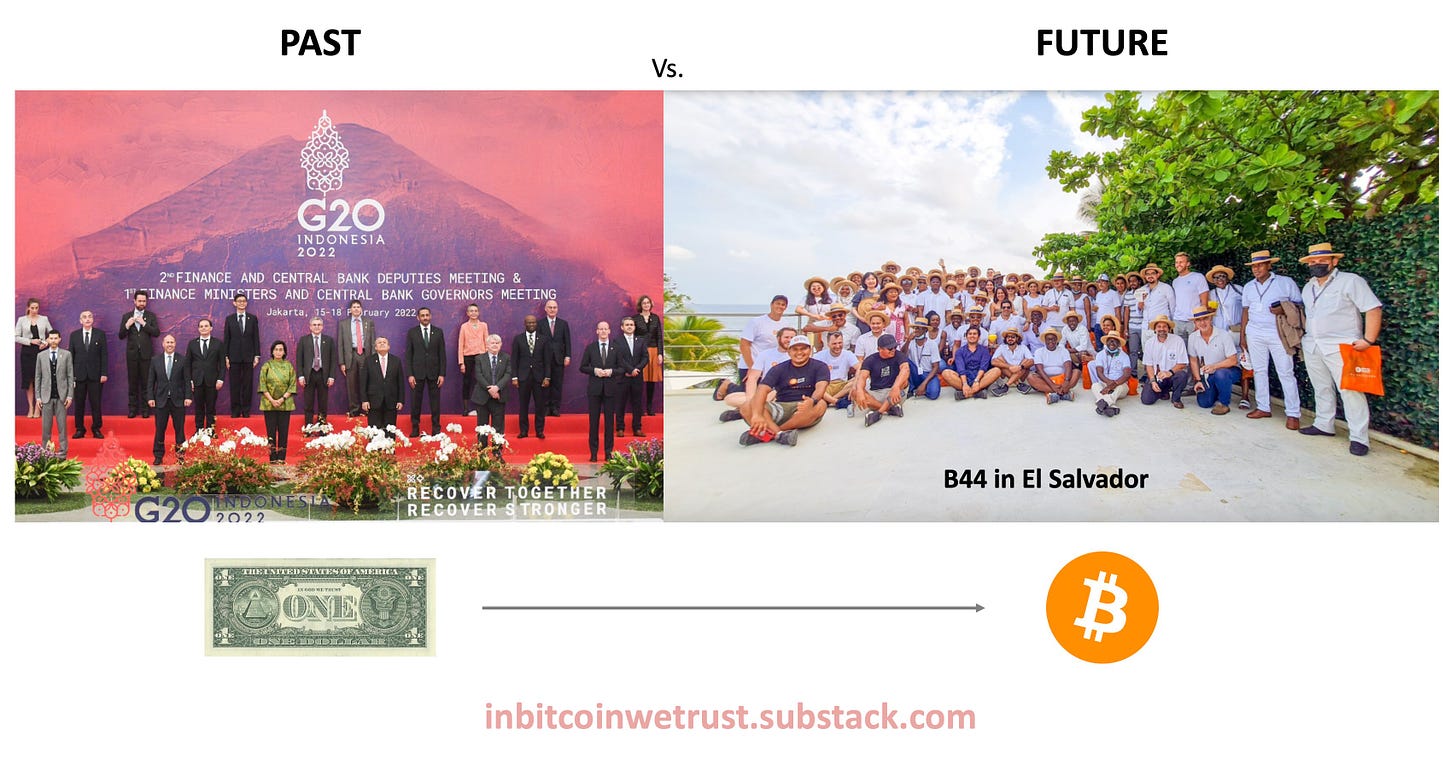
On one side, is the present. On the other hand, the future. The positive side here is that it is primarily emerging countries that will choose to go with Bitcoin first. This will rebalance the economic forces in the future.
This conference was not only dedicated to Bitcoin as some might have imagined. It was a summit organized by AFI, the Alliance for Financial Inclusion, a Malaysian organization. The purpose of the gathering was to discuss the best ways to ensure greater banking inclusion - and while some of the discussion was about Bitcoin, it was not a meeting entirely dedicated to the adoption of the digital currency king.
Nevertheless, that's not a big deal, because the important thing to remember here is that all these countries were able to discuss the Bitcoin standard implemented by Nayib Bukele in El Salvador in September 2021.
Some of them, probably for fear of reprisals from the IMF, the World Bank, or even America, wanted to make it clear that the scope of the meeting was broader. This is the case of Paraguay, which quickly published this press release in advance of the B44:
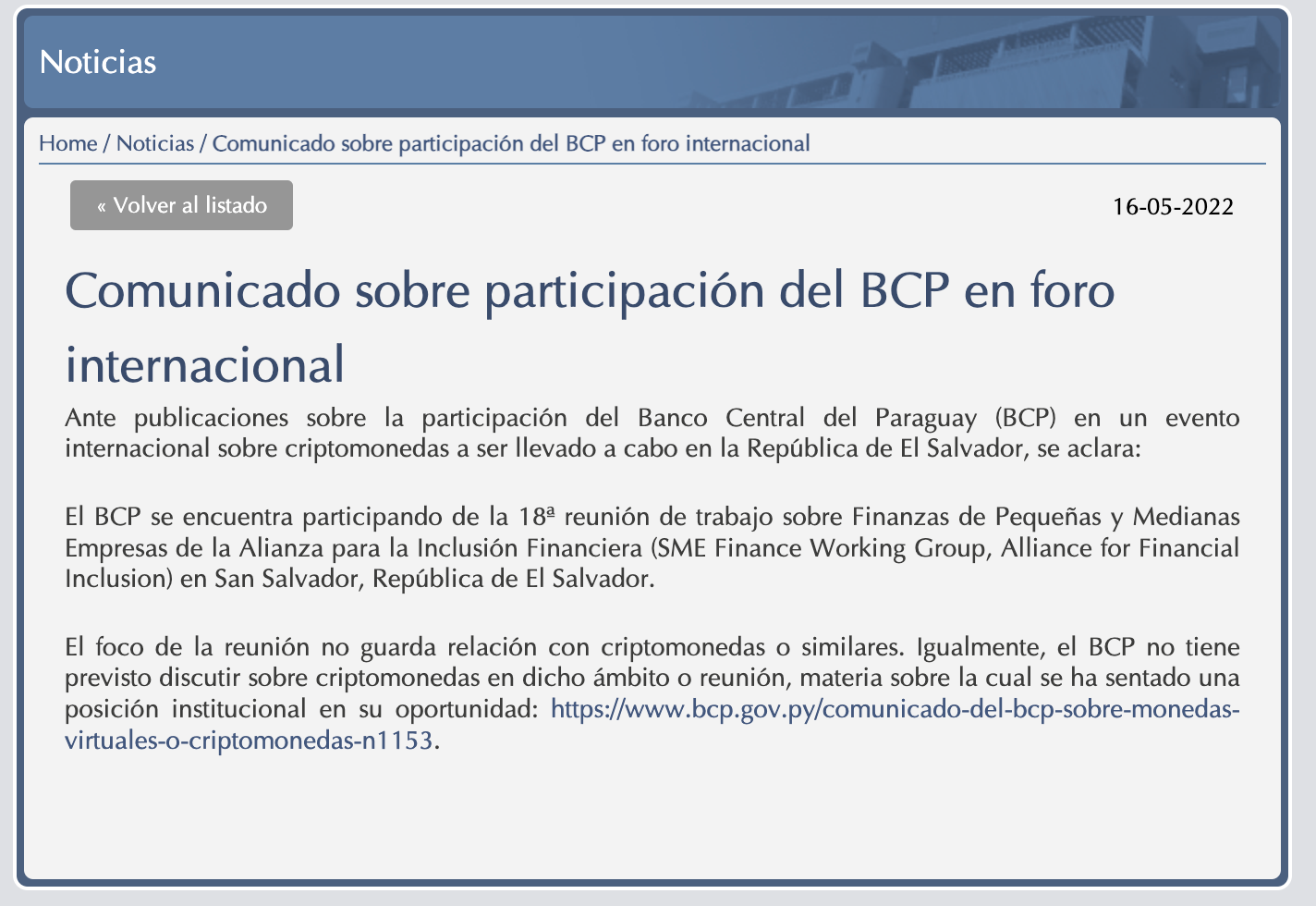
“The meeting does not focus on cryptocurrencies. The Central Bank of Paraguay does not intend to discuss the adoption of cryptocurrencies in the AFI”. That's the official message from Paraguay.
Certainly, such discussions are best done internally in the country.
The big question on everyone's mind then is what these central bankers might have been talking about during the past week in El Salvador. According to the AFI program, during the week of events, participants “held discussions on promoting digital ecosystems and financial innovations” with the goal of “providing more assistance to small businesses, women, and individuals earning low wages”.
The group also talked about “the emergence and regulation of digital private currencies in developing countries,” meaning cryptocurrencies, but also digital assets and stablecoins. No real discussion of central banks' plans to accept Bitcoin as a legal tender, then.
A demonstration of how Bitcoin can bank the unbanked was made at Bitcoin Beach
But, because there is a but as always, a panel was organized during the meeting to talk about the benefits of Bitcoin. Presented by Roman Martinez and Nicolas Burtey, the two entrepreneurs behind Bitcoin Beach (the Salvadoran resort where Bitcoin was first used). During this presentation, the entrepreneurs spoke at length about the history of the place, and the payment systems developed. They took the opportunity to answer any questions.
Representatives from financial institutions even visited Bitcoin Beach at the end of their stay to test Bitcoin payments for themselves. Galoy, the company that handled the development of the crypto wallets for Bitcoin Beach, says the group members were able to “see what Bitcoin does for communities excluded from the current banking system”.
And Nayib Bukele even took advantage of the visit to have them take a break, and shout “Bitcoin,” which resulted in the photo used for my illustration.
Even if the other members of the AFI have still not made any official announcement following this meeting, the symbol will remain strong. I do not doubt that these central bankers and other financial authorities will have been impressed by the incredible opportunity that Bitcoin could represent for their countries to bank the unbanked.
And this, especially since the IMF or the World Bank give little hope to these AFI member countries to change their future. At most, they can only allow them to continue to live in a monetary and financial system that is unjust, as it has always benefited the richest countries.
In Bitcoin We Trust Newsletter: Everything around Bitcoin, Blockchain, and the cryptocurrency market





