(IJCH) Two Non-Traditional Uses for the Blockchain: Recognition of Lawful Identity and Worldwide Humanitarian Efforts
IJCH - Inside JaiChai's Head (meaning: My warped, personal opinions and musings)

From the Author:
Salutations.
I am JaiChai.
And if I haven't had the pleasure of meeting you before, I'm delighted to make your acquaintance now.

I invite you to interact with everyone, learn, and have as much fun as possible!
For my returning online friends, "It's always great to see you again!"
In my last article "(IJCH) The King is Dead, Long Live the King (or Why "The Flippening" King may NOT be Ethereum)", I stated:

"IMHO, Bitcoin as a digital asset is the least functional use of the blockchain.
...People with tunnel vision; that is, those who only focus on Bitcoin as a slow moving, expensive transaction medium are missing the notion that we’re on the threshold of the next generation of the web."
This article will discuss two non-traditional, yet critical uses for the Blockchain.
Recognition of Lawful Identity

Article 6 of the Universal Declaration on Human Rights stipulates, ‘Everyone has the right to recognition everywhere as a person before the law.’
However, more than a billion people across the globe lack access to this fundamental right, depriving them of basic healthcare, education, voting, housing, schooling, childcare benefits and other social facilities.
In support of the "ID2020 Program", Microsoft and Accenture began an initiative in June of 2017 to create a blockchain solution to address the problem of lawful identity (and subsequent eligibility to basic social programs and benefits) for the billions of people worldwide unable to obtain such "credentials" - lawfully recognized identity.
In November of that same year, the "Humanitarian Blockchain Summit" was held.
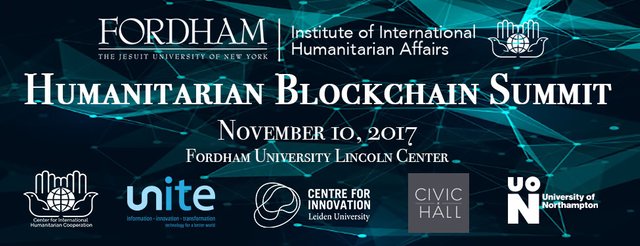
The Institute of International Humanitarian Affairs (IIHA), Fordham University, in collaboration with the UN had the following items on its Blockchain Solutions Agenda:
-
Anti-Child Trafficking
-
Increasing the Birth Certificate Issuance Rate - Over 600 million children under the age of 14 (and 50% of all children under 5 years-old) possess no documentation of live birth.
There are grave consequences that result from this situation.
Think of it.
These undocumented children are high-risk for child-trafficking, crime and eventually drug abuse.
Since they are "invisible" to the system, they are not eligible for government aid or NGO social programs.
This is why Recognition of Lawful Identity is so important.
Worldwide Humanitarian Efforts
Over 80 million people go hungry world over.
The United Nations World Food Programme (WFP) is an effort to address the needs of these people. The process is cumbersome with pitfalls at multiple points.
The WFP has been taking steps to imbibe the blockchain technology and make the food-assistance process faster, cheaper and more secure to cover as many people as possible.
"The internet is entering a second stage based on blockchain," states the World Economic Forum and its absolutely true.
Other such Blockchain Based Humanitarian Programs include:
- The Humanitarian Blockchain (HB) is the first project that aims to solve social global problems using Blockchain technology.
See:
https://cointelegraph.com/news/saving-the-world-through-crypto-the-humanitarian-blockchain
https://ph.linkedin.com/company/humanitarian-blockchain)
- OneRelief

See:
- UNICEF Blockchain
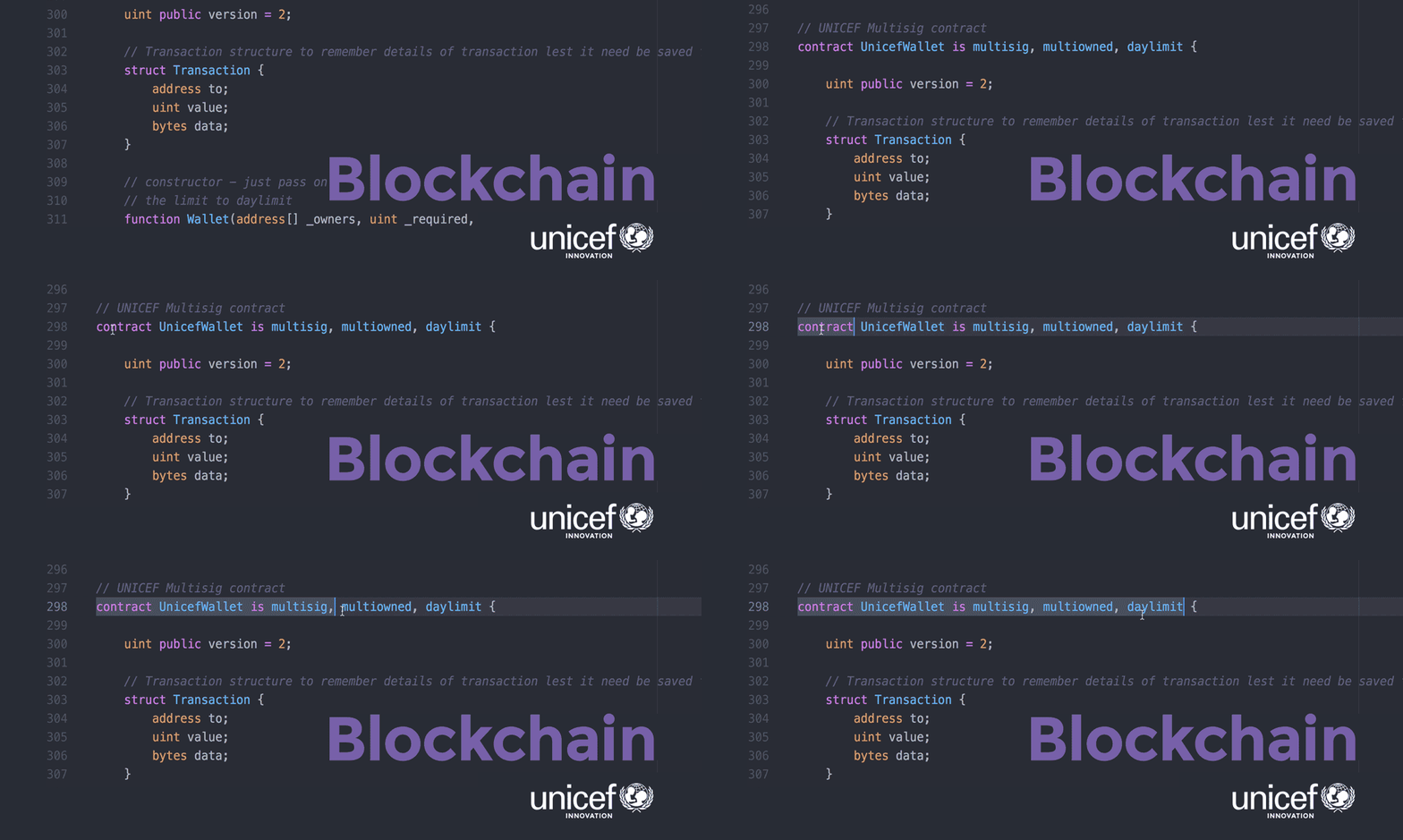
See:
https://tribune.com.pk/story/1638161/8-blockchain-revolution-comes-world-humanitarian-aid
Conclusion
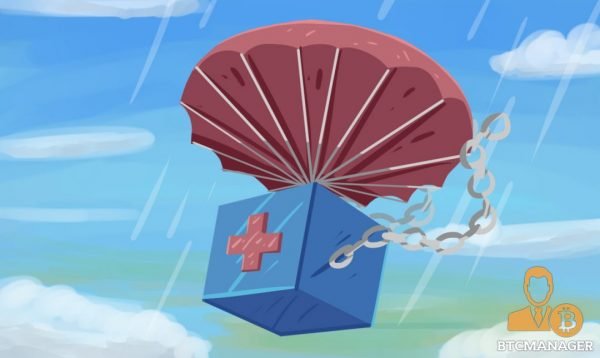
Blockchain has a great scope to revamp industries, and if its potential is harnessed for humanitarian assistance, aid and identity management; it would add a human touch to its use-case, making it one of the most significant contributions of a technology.
By JaiChai

Thanks for stopping by.

About the Author
Believing that school was too boring, he dropped out of High School early; only to earn an AA, BS and MBA in less than 4 years much later in life – while working full-time as a Navy/Marine Corps Medic.
In spite of a fear of heights and deep water, he performed high altitude, free-fall parachute jumps and hazardous diving ops in deep, open ocean water.
After 24 years of active duty, he retired in Asia.
Since then, he's been a full-time, single papa and actively pursuing his varied passions (Writing, Disruptive Technology, Computer Science and Cryptocurrency - plus more hobbies too boring or bizarre for most folk).
He lives on an island paradise with his teenage daughter, longtime girlfriend and three dogs.