
Zcash (ZEC), Monero (XMR), Bitcoin (BTC) & Ethereum (ETH).
Because much of the modern business world runs on the Internet, data security has become a critical issue for both businesses and individuals. The Blockchain that seemed to be the hope for many could find problems in the future.
But of course the blockchain security structure has only been tested with a current computing power set. Those who invest in cryptocurrencies should be aware of what is to come in the future, specifically the rise of quantum computers.
The blockchain is meant to be secure, however some quantum computing scientists have expressed that the rapid advancement of quantum technology poses a vulnerability for the blockchain.
Blockchain technology, the foundation on which cryptocurrencies like Bitcoin were built, has been praised for being highly secure. Every transaction on a blockchain is linked to those around it, making it very difficult for a hacker to manipulate and alter records. But in the future, quantum computers may have the ability to break Blockchain codes.
Alexander Lvovsky, an experimental physicist at Oxford University said: “However, blockchains are especially at risk, because they are completely anonymous. They are only protected by public key cryptography, while banking has human ATMs, plastic cards, and ATMs. You have to be human to use a bank, but you don't have to be human to use the blockchain. ”
Now, the advent of quantum computing certainly allows us to achieve a number of impressive benefits. And how could it be otherwise, it also contains many dangers.
In general, the main benefits of quantum computing come from an improvement in our technology. We said that we would be able to make enormous advances in areas such as computer security, medicine, economics, artificial intelligence, economics, material design, and scientific research in different fields. Without a doubt, it would be an era of a great amount of new knowledge that as a species we can achieve.
Analyst Johann Polecsak believes that it is impossible to deny that current crypto is fragile in the face of the great capacity of this new generation of machines to come. In this sense, the analyst suggests that developers begin to prepare for the near future.
But that is perfectly feasible. If quantum computers are able to crack codes, they will also be able to generate even stronger encryption. This is precisely the function of quantum cryptography, an area that uses the principles of quantum physics to ensure the security of codes.
The future of cryptocurrencies will depend on the ability of developers, investors, and the crypto community at large to adapt to the new challenges posed by quantum computing. The future knocks on our door.
Of course, we could make quantum crypto systems that would be the line of defense. But making quantum computing in general use will take a long time, at least another 50 years of work and research. Given this perspective, whoever manages to obtain the first quantum computer for general use will have a potential in their hands capable of putting the world's cybersecurity in check. Something that represents a huge risk for everyone, and that especially puts cryptocurrencies in a delicate point. For in quantum computing theory it has already been shown that quantum encryption systems would be virtually invulnerable to attempts to decrypt any information. However, that is the theory and our current knowledge of quantum mechanics is incomplete.
This clearly demonstrates that quantum cybersecurity is advancing rapidly, and giants like Google, IBM and Microsoft, have come a long way in this regard. With that said, it won't be long before we see crypto systems that allow us to use the principles of quantum computing in our current computers.
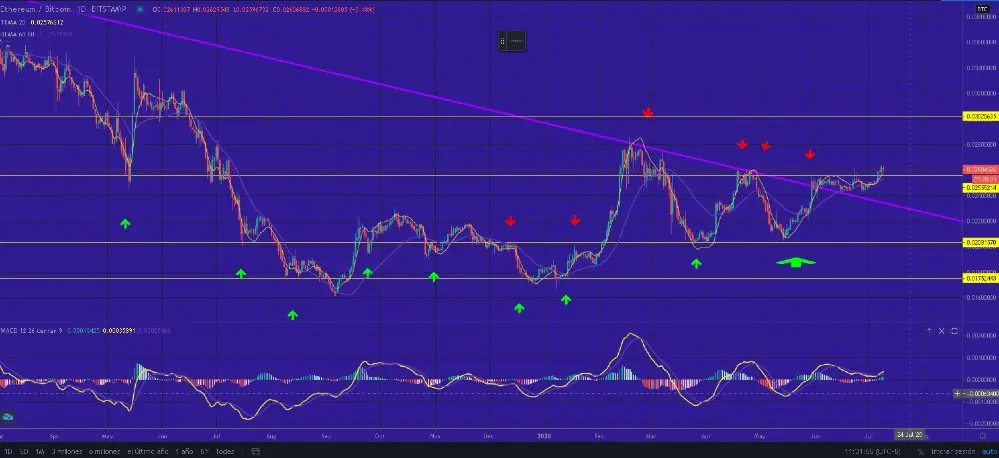
Of course, this does not mean that cryptocurrency projects are not aware of this and have taken action to correct it. In the case of Ethereum, since there is a system that encourages the reuse of addresses, according to the developer Justin Ðrake, the possibility that quantum computing affects the second cryptocurrency on the market is greater.

ETHEREUM
With this in mind, at the Ethereal Ethereum Summit held in 2019 Justin Ðrake presented the concept of Ethereum 3.0, which will be an important plan to resist the threat of quantum computing on the Ethereum platform. The Ethereum Foundation is paying attention to the field of quantum computing, and it would have already invested $ 5 million in research in this area.

BITCOIN
Meanwhile according to Bitcoin developer Pieter Wuille, in Bitcoin the creation of P2PKH (Pay To Public Key Hash) type transactions adds an additional security measure to protect public keys from a possible attack of this type. By applying a SHA-256 and RIPEMD-160 hash on public keys, we managed to obfuscate the key to avoid that they can be attacked directly. In addition, the Bitcoin Core has already been studying changes in the Bitcoin signature to implement a scheme of security signatures resistant to quantum computing.

ZCASH
Would Zcash transactions be at risk of being discouraged through an adversary who decrypts all protected transaction information?
It's easy to get rid of concerns about quantum computers, as really useful quantum computers can be decades away.
It is possible for a government agency to store the blockchain until it develops a quantum computer, and then retroactively discourage everyone who has used Zcash (if Zcash's anonymity is quantum vulnerable), since they have all the records of each transaction already stored, just waiting for the technology to process it. Even if Zcash is updated to use later quantum crypto at some point in the future, all transactions made before that point will be vulnerable for all eternity.
Is Zcash's anonymity quantum vulnerable? I'm not that worried about Zcash being quantum safe (since the possibility of an attacker equipped with a quantum computer creating a new Zcash is something we shouldn't worry about until a quantum computer that can factor key pairs is developed), only the anonymity aspect of the information stored in the Zcash blockchain. I understand that even if the underlying crypto is broken while money could be created, privacy would never leak (there just isn't enough identifying information in the test itself).
Could quantum computers break Zcash?
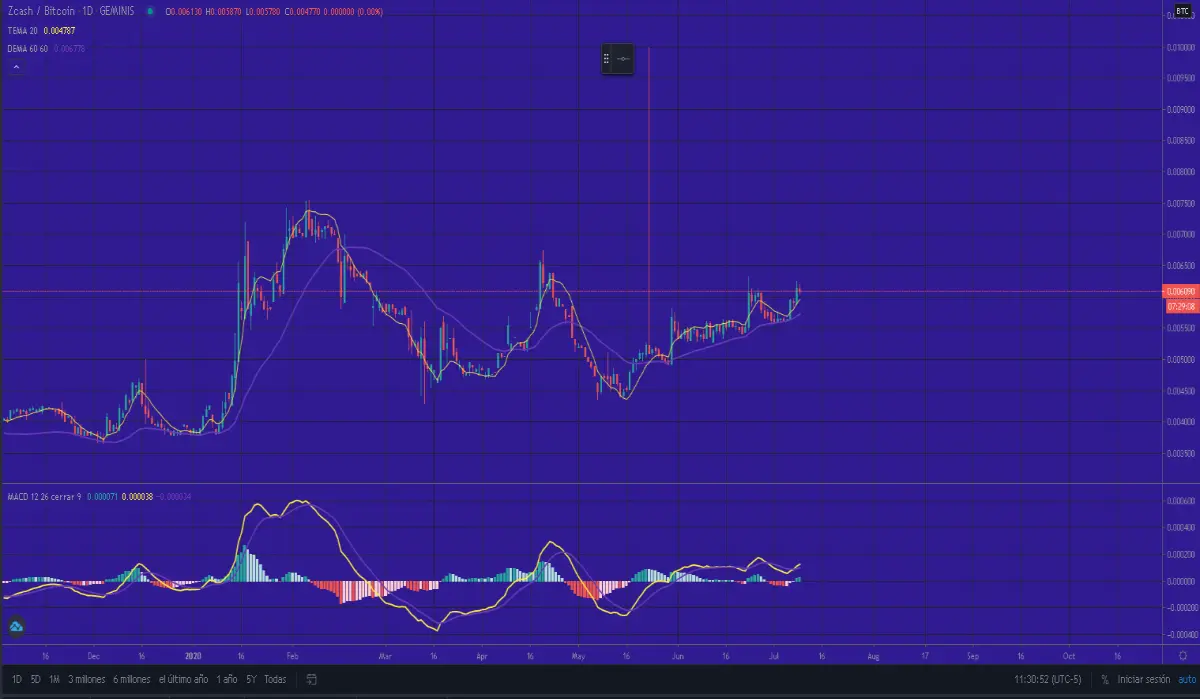
Large quantum computers, if built, could break an encryption scheme used by Zcash. As a result, an attacker with access to such a computer could verify whether the recipient of a transaction matches any given address. If so, the attacker could now discover the amount and the encrypted note attached to the transaction (but not the sender). You could also calculate the note override, which means it could track when the recipient passed this note later. Note that armored addresses do not appear on the blockchain, and those that are shared privately and unknown to an adversary would not be vulnerable. (Again, you cannot extract information about the address of the sender of a transaction, even if the attacker knew the address.)
Also, large quantum computers could trick zk-SNARK verification and hence spoof ZEC.
Both attacks would require quantum computers with thousands of qubits (capable of solving the problem of the discrete logarithm), which are at least decades away from the current state of the art according to the estimates of most experts.
Scientists at the Electric Coin Company, and the Zcash company, are actively investigating secure post-quantum alternatives to the affected crypto components. They plan to monitor component developments with postquantum security and, if mature and practical, update the Zcash protocol to use them.

MONERO
I don't want this publication to be longer, that's why i leave you this link in which it talks about the identification of practical post-quantum strategies for Monero itself shows a Roadmap of the project. monero.org/research-post-quantum-monero
Discussions are still at an early stage, but it is very important that developers have publicly assumed that the top cryptocurrencies on the market may be affected by quantum computing.
In short, we are already in the construction of the pieces that can protect the blockchain and cryptocurrencies against this threat. A great example is MONERO, and as I mentioned in Zcash they already use advanced cryptographic techniques that are resistant to quantum computing. Bitcoin as we have mentioned has also done this work, and continues to work to deploy Schnorr signatures and Confidential Transactions to its network natively. Projects like Ethereum are considering changing their signature schemes as well to deal with this problem.
One of the solutions that has been discussed is the SNARG program proposed by researchers at the University of California at Berkeley, which does not use SHA256 encryption but "combines" different types of encryption.
Meanwhile, it remains only a myth that Bitcoin will come to an end when quantum supremacy (the ability to create high-capacity quantum computers) is achieved.
This myth is based on the fact that ECDSA and SHA-256 could be broken with this method. As in any myth, there is some truth and a lot of misinformation. For example, to break ECDSA we need a quantum computer with a capacity of about 1500 qubits, as I mentioned before this is still a long way off. In fact, the most powerful system we have now is only 54 qubits, in the hands of Google. This debunks that we are in imminent danger.
My conclusion is that we are confident that these projects will continue to protect our money as they have done so far. Best of all, it is knowing that when faced with the threat, there are already appropriate responses to avoid danger. Something unique that maintains trust in these large cryptocurrency projects and the blockchain technology that underpins them.
Thanks for reading have a great day or a great night whatever 🤗





