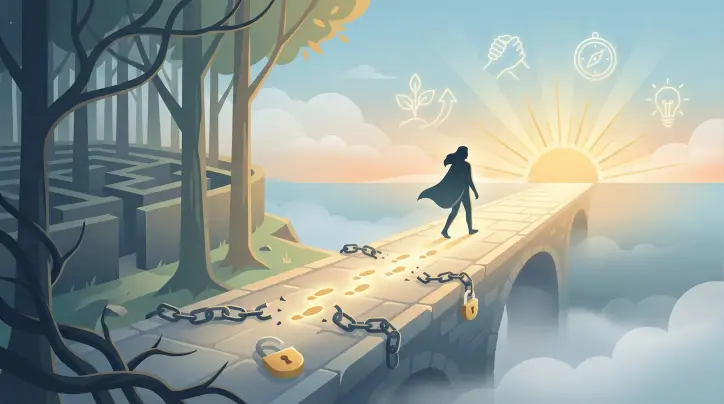
Where did you learn your beliefs?
Every decision we make, every choice we take,
is influenced by our values and belief system.
Sometimes we feel uncomfortable communicating with someone,
a friend, a colleague, even a partner.
Is it really just "Dislike"?
Or is there something deeper and invisible underneath?
What we notice in daily life is usually the effect side,
"I don't like this."
"This doesn't feel right."
"I don't want to do it."
But when there's an effect, there's always a cause.
Instead of arguing about who is right, a better question is,
have we ever reflected on how we learned the beliefs that
make us like or dislike certain things in the first place?
Beliefs are often built through reinforcement,
humans naturally prefer benefits over losses.
When an action leads to a good outcome,
the brain rewards that pattern.
(Often linked with dopamine and reinforcement)
Over time, the brain "locks in" the connection,
Action > Good outcome > Repeat.
That's the same mechanism behind habit formation,
repeated patterns become automatic.
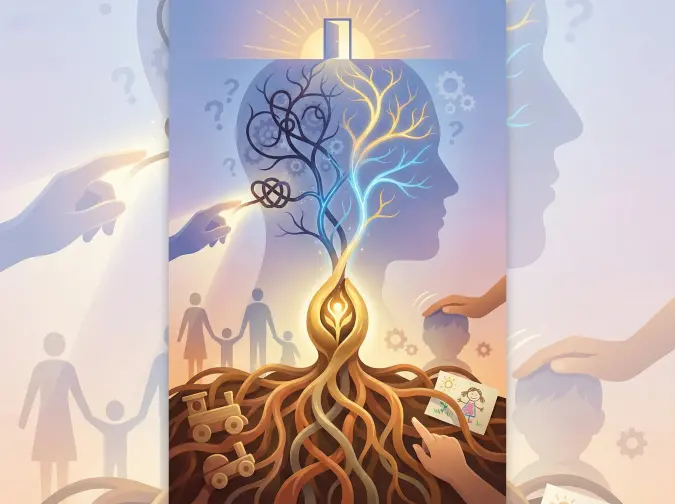
Why family influence is so powerful?
This is why people often say,
"It started in my family."
And honestly, it's true.
Think back childhood,
we got scolded when we did something
"wrong" and praised when we did something "right".
Even small moments can plant the first seeds of our belief system.
For example, Jennifer was taught not to cry when she failed,
because crying made her "look weak".
Worse, if she cried when she felt sad,
her parents would take away her toys.
From the parent's point of view,
it may have been good intention.
They didn't want their child to be seen as weak.
But that small seed teaches the brain something else,
negative emotions must be hidden.
Jennifer learned how to suppress emotion,
but not how to cope with it.
As she grew older,
that unresolved emotional pressure had nowhere to go,
and she began struggling with persistent low mood and emotional heaviness.
Over time, she build beliefs like,
"No one really cares about me."
"Nobody understands me."
"I'm safer alone."
"I can't trust people."
If these beliefs were learned, they can also be unlearned.
One powerful starting point to ask,
when did this belief first begin to form?
That question interrupts the unconscious program and brings it into awareness.
We don't notice breathing, until we pay attention to it.
Once we notice it, we can influence it.
Beliefs work the same way.
The earlier the memory you can access,
the closer you are to the original "belief seed" before it grew intto a life rule.
So here's the real question,
Which belief is stopping you from advancing right now?
And who taught you to believe it?