
INTRODUCTION
Cykura finance is a decentralized concentrated liquidity protocol designed to allow traders to optimize their liquidity by submitting it into liquidity pools they create themselves. Formerly named “Cyclos” due to its dependance on Serum liquidity the protocol was renamed “Cykura” after owning its.
What is meant by « optimize » is that they actually take profit for lending their liquidity to the public but only within a selected price range in pools they create themselves. So far, such a definition doesn’t break out with the classical idea of what is liquidity mining: you lend your funds into a pool and get paid for it.
Nonetheless, to fully understand how Cykura finane actually works briefly explaining its main discrepancy with traditional permissionless cryptocurrencies market lending protocols is needed.
Also, rolling out differences and similarities between Cykura and Raydium will help better figuring out how does algorithmic market making works along with constant product market maker ( CPMM ) method and how it empowers Cykura to actually deliver a product that adds to concentrated liquidity scheme a given of decentralized exchanges on Solana.
So far, market making had been imagined solely through active roles of markets makers on the back office. They get liquidity pairs ready to offer users a liquid market and charge thereby high fees for this. A couple of years ago, if you wanted to trade BNB against ETH then you would have had to look for a trading pair entitled BNB/ETH on centralized exchanges and pay takers fees and makers fees which are used to be quite expensive. This way of trading is based on traditional order books mechanism provided by famous exchanges like Binance or KuCoin.
Due to Ethereum low throughput and relative high fees, nowadays decentralized trading brought a new paradigm to swap tokens whereby trading pairs are organized by bots that calculate both value of your tokens during your swap based on real time market conditions. As there will be an algorithm organizing trading pairs, fees to be charged on users get less expensive.
On Cykura, the CPMM method will be used to manage all ongoing swaps within the application. It will be as follow:
When you swap tokens on decentralized exchanges that uses CPMM method, there will be a bot calculating the respective value of any tokens to be swapped in real time. This method allows bot to know about global quantity of every assets. From then we could only know the initial price.
I have then apples and potatoes to swap with each other. There are 50 000 potatoes in total. I want to change them against apples. How do I know how many apples I am likely to get in return if no active market makers work in back office ?
Cykura bot will solve this issue by introducing an unchanging formula which is X*Y=k.
X and Y refers to the respective reserve for two assets.
K will be the constant.
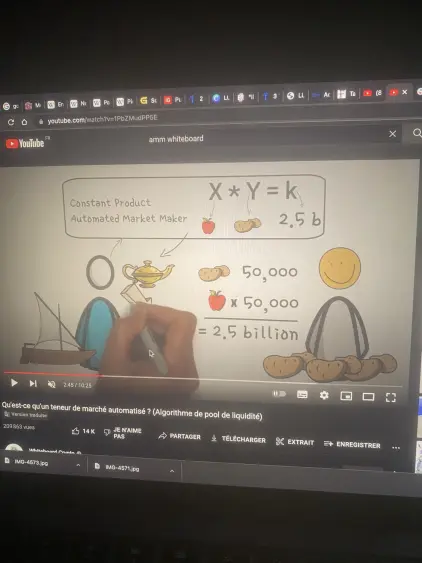
X= 50 000 potatoes
Y= 50 000 apples and
k= the constant that never changes.
Thereby, let’s say algorithm sets a trading ratio for your fruits trading pairs which will be at 2,5 billion.This constant of 2,5 billion remains the same and the algorithm uses it everytime to give you the exact amount of apples you will receive amid market conditions.
Then 50 000 potatoes * 50 0000 apples ( based on supply ) = 2,5 billion. Both priced at 1$ for their supply is equivalent.
CPMM lets you know 3 major informations: quantity given for what you give, price impact of adding of liquidity and withdrawals within the protocol and eventually the value of tokens according to the market.
Let’s say at the time I wanted to swap potatoes against apples both were priced at 1$.
But what if someone had traded 7 000 more potatoes.
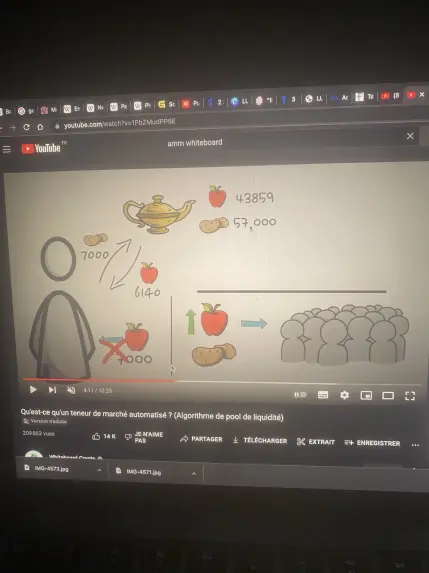
Algorithm would now say that there are 57 000 potatoes as the additional 7 000 potatoes were sold for apples and pooled.
How many apples would you receive for 7 000 potatoes given that 50 000 potatoes initially worth 50 000 apples ?
Trading bot will solve it easily. It will actually calculate the amount by dividing the ratio of 2,5 billion by the new amount of potatoes traded: so to know how many apples you get for 7 000 potatoes traded Cykura bot will divide 2,500,000,000 by 7 000 and this will give 43859 as a number.
43859 is now the supply of apples as there were apples withdrawn from the pool in exchange of potatoes to give it to trader. And since there are less apples, value will rise in price. Conversely, value of potatoes will lower as there are more of it in the pools.
Eventually so as to find out how many apples you get for 7 000 potatoes the bot will just take out 43859 of the 50 000 supply and that gives you 6141 apples.
Cykura protocol will resort to a widely used method on Solana ecosystem when it comes to calculating what quantity of a token you receive if one of the two supplies is about to rise or decrease in quantity because of the market.
Such a calculation method is a boon for swapers as it enables a limitless support of trading operations through an unstoppable formula. As Cykura is about to host lot of liquidity in the future, the constant product market maker formula will reinforce concentrated liquidity feature.
As stated in the white paper, Cykura will mimic Uniswap v3 style « letting users construct individualized price curves of their choice ».
But although market moves may affect all combined liquidity just like on a regular DEX, concentrated liquidity paradigm hopefully offsets potential massive losses resulting from volatility.
I will then try to make you step into Cykura Defi protocol by focusing on how devs actually overturned algorithmic trading with concentrated liquidity scheme on Solana network.
Actually, the main goal of the protocol is offering smart money traders but also basic traders an imparable tool designed to offset impermanent losses burden or more or less neutralize it.
I — Usage of the protocol and utilities: concentrated liquidity a new scheme for capital efficiency
Cykura was created to increase capital efficiency. Capital efficiency means earning a better yield on risky positions. Basically, if you traded on long-dating DEX you could only supply liquidity into a pool near the market price. You couldn’t benefit from any additional decentralized trading tool likely to gain you more capital . For instance, on PancakeSwap or Orca DEX you cannot add liquidity within a determined price range thereby locking your funds into a certain price curve. Cykura is the first concentrated liquidity protocol to enable this on Solana.
Concentrated liquidity means that you can pool your assets at a very wide price range that includes price variations. Here is how it will display on the screen so you can add some liquidity:
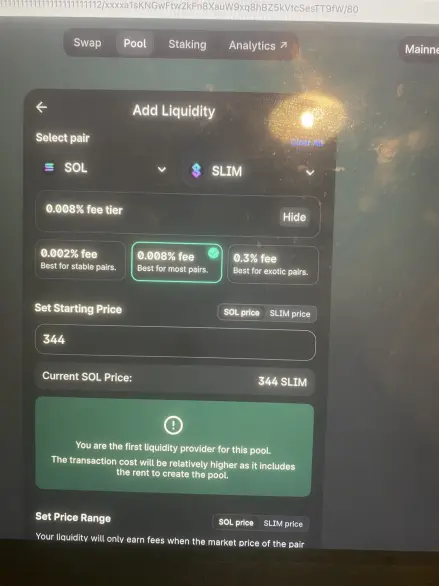
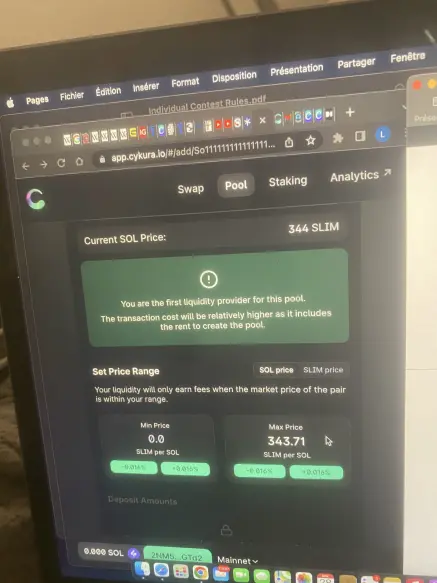
Here is how the main page to add liquidity displays. You just set a min price and a max price. Max price could either be the current market price of chosen token pair.
* Setting a max price ( high value but low in price )
For example here a user would like to add liquidity to open a SOL-SLIM position on Cykura. To set a price range of your choice you would need to calculate the equivalence between SOL-SLIM. The max price from which your liquidity will start working should be stated either in SLIM or SOL. It depends on your ease with calculation. You just need to know how much SLIM you can have for one SOL considering ongoing market conditions.
Therefore, I decided that I would lend my SOL from the market current price that is to say 100$ and I know that 100$ equates 344 SLIM right now as SLIM is priced at 0,28$. So we got 344 SLIM as a max price.Here our max price relies on current market conditions.
Nevertheless, your max price could also rely on a future price that isn’t yet reached. You just have to ask yourself how worth will SOL and SLIM be in the future. If I think that SOL will keep going down, to set a max price I just need to recalculate to obtain targeted price in SLIM and open up my position.
You think SOL will dip to 85$ but SLIM remain at that price. Then you won’t set a 344 SLIM max price to start lending. You will have to divide the Solana targeted price to SLIM market price:
So it will give us 85$/ 0,29$= 293 SLIM.
Now you know that your positon will start earning you fees when price of Solana reaches 293 SLIM.
But you could also say that SLIM will also experience a time of reflux and worth less recent price curve . Let’s say it will be worth 0,21$ then you reproduce the calcul as follows: 85$ / 0,21$= 404 SLIM. As SLIM lost in worth in the example, we no longer set a 293 SLIM max price for this position but we set 404 SLIM. When the market reaches that target your position starts generating fees.
Depending onto which price your position starts earning fees, you could earn money from a downward trend on both Solana and Slim if you were to state your high price at the market. Cykura pretty much allows variable choices about price curves handing you out possibility to really assume facing the market.
Remember that on Cykura protocol, max price should always be higher than the min price within the range in terms of value not in price: minimal price represents a highest price below which you start earning and max price does represent a lowest price from and above which you gain money.
* Setting a min price ( low value but high in price )
With Cykura protocol, setting a min price commands using the same calculation method and trends analysis so as to make the best trades ever. Such a technical approach of concentrated liquidity could be highly profitable especially in pre-bull run period where majority of cryptos are priced very cheap.
Cykura will be your playground as you can anticipate the market just by reviewing charts, trends, long-term purchase reload zone, long-term selling reload zone amid tools provided by Bonfida DEX.
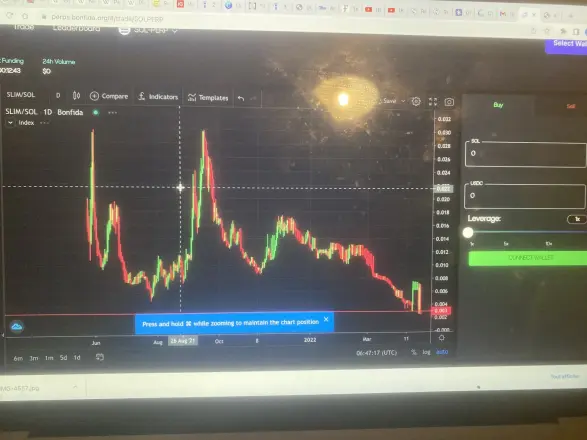
As we see on the screenshot SLIM chart has not been good lately losing almost 80% of its value in a single year. Solana has also shown low performance lately.
This is perhaps a nice opportunity for users to open a position aiming at a higher price.Then your min price in SLIM has to be above within the range if you are bullish. How do I set my min price then ?
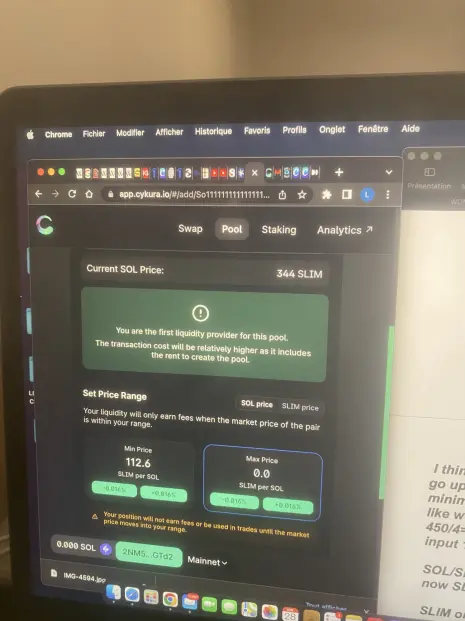
I think SLIM alone could possibly or along with Solana go up to like 4$ and SOL to reach 450$.
Now to set min price you need to divide the 450$ to the 4$ just like we did above to set our max price:
450/4= 112,5 SLIM if those are my predictions I would then input 112,5 SLIM as min price.
Now that we saw how to set both a max and min price our position could then be summed up as follows:
SOL/SLIM — starting price for earning fees on swaps is now 343 SLIM one SOL
SOL/SLIM — last price for earning fees on swaps is 112,5 SLIM one SOL.
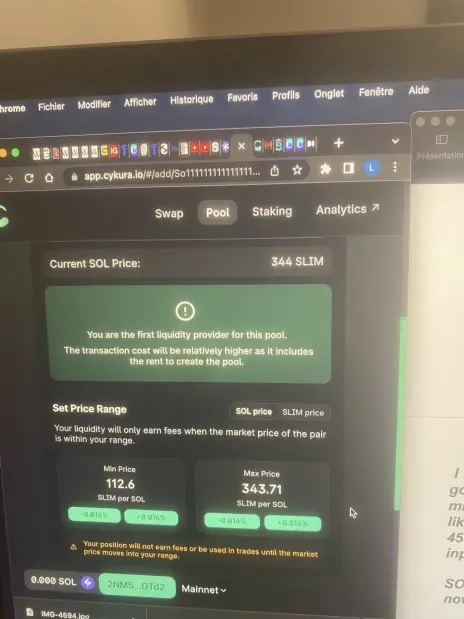
On the whole, this how a LP could benefit from concentrated liquidity with price ranges system that enable individualized orders with wide price curves. Price ranges mechanism will optimize your liquidity yield and fully reward a risky position where an LP lended his crypto but at a very wide price range therefore algorithm will only take into account the range selected for consequent remuneration. It is related to the fact that a wide price range would put any LP at an exposure to market. Liquidity will remain used as long as prices flow up and down but within that range.
Outside of your price range you won’t earn any fees as it is another LP’s money which’ll be sorted out the bunch to provide users the wanted tokens. In case of a tight price range position, rewards in terms of fees will be less remunerative as LP takes less risk on his liquidity. It’s also because liquidity in such case will be used only casually by swappers.
Actually, risk for LP who supplies liquidity on Cykura would be getting wrong on the global market feeling, thereby choosing a somewhat unlikely price range and let an unused liquidity in pools.
If my funds never reach my stated price, then no fees are distributed. In that case, you are not really able to offset price impact on your tokens. Remember that trades, no matter whether they would occur inside or out the app, obviously do affect your liquidity in real time.
Comparatively, on Raydium DEX as the scheme is permissionless, it results in traders not having so much freedom with their funds: supply is limited by a smart contract, trading pairs are chosen by the protocol (which means the protocol imposes you trading pairs you don’t really create them yourself unlike on Cykura and sometimes you cannot get the exposure you want as there are plenty stablecoins correlated pools ). Above all, on Raydium or even Cropper finance which is an aggregator DEX offering higher yield on liquidity, you can just drop funds near the market price. This isn’t likely to gain capital efficiency because your liquidity is submitted near market price only.
As a result of that, algorithm will tend to draw funds from the heaviest pool provider so as to allocate it to user. Most of traditional permissionless pools AMM does not reward the risk: rewards are given based on the amount you deposit. The protocol here won’t reward the fact that you expose yourself to impermanent losses. In such case where you could lose money, farming interest rate poorly offsets volatility.
Cykura will easily solve price impact caused by constant product curves by granting fees to LPs.
On Cykura, your risk leverages your yield. Any trader would be paid depending on the risk degree he picks ( additional fees rewarding ) when adding liquidity in addition to the farming interest rate.
We now notice that permissionless liquidity differ from concentrated liquidity for this concern; it’s almost like if you were paid twice by the protocol instead of just rewarding you daily.
Risk is highly valued when you voluntarily select a volatile price range as your liquidity will be utterly utilized for swaps. Fees get widely distributed to LPs and $CYS stakers during flows within the selected range.
Besides, talking about fees drives me to now focus on how to pick a good fee tiers on Cykura.
*Picking a good fee tiers for your liquidity
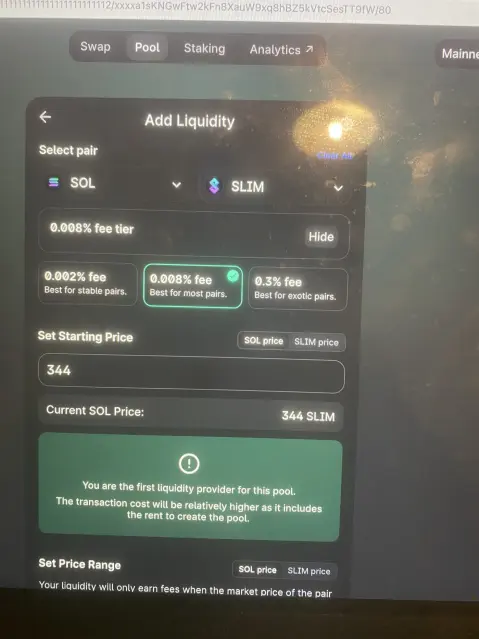
Here are the different fee tiers included in the application.
To know which one to pick is simple. It all depends on your strategy at first but also on your tokens typology. You may submit stablecoins into pools and if the case you would set either a cheap fee of 0,002% or 0,008% since it’s stable and there’s less volatility on it.
You would set a convenient fee tiers. You wouldn’t charge high interest rates on swappers since you don’t really lose money on your coins. However, what about if you choose to lend out more « exotic » pairs or Solana Defi altcoins . Consequently those are subjects to much frequent variations. For instance, you trade SOL and LANA today.
Here are the current created individualized pools on Cykura with mention for fee tiers selected:
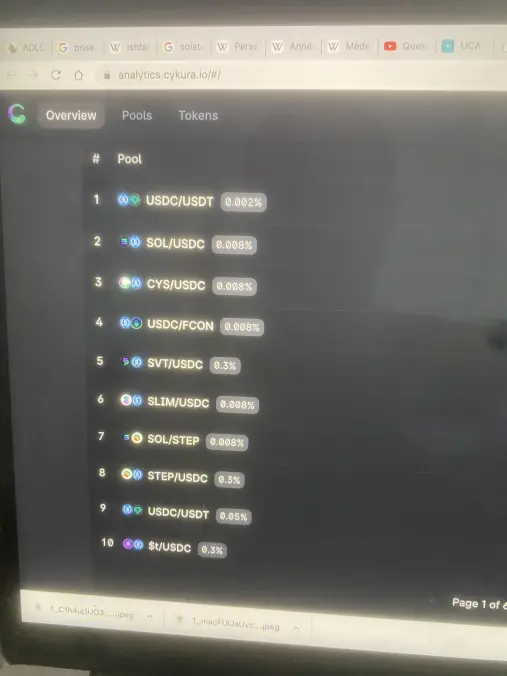
The good pick would be setting a costly fee tiers for users as your trading pair is made up of two exotic and volatile pairs . You would offset this by selecting the corresponding fee tiers.
*An NFT- issued position
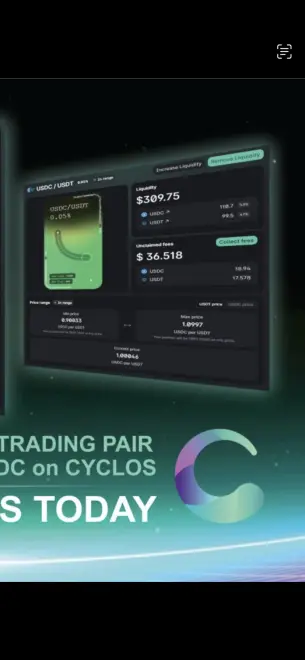
As Cykura brings traders new tools for capital efficiency so they can open individualized positions, every positions within the ecosystem result in a generated NFT.
This NFT actually specifies your fee tiers, price range selected, unclaimed fees and above all the exact amount of your positions in dollars.
Every NFT issued off a position characterizes it and remains unique just like a classic NFT.
As a result of that, liquidity within Cykura isn’t fungible that is to say if a user swaps algorithm cannot draw funds from any pools.
Let’s give it an example:
5 different pools belonging to 5 LP’s were created. They are all entitled SOL/CYS. For those pools, LP’s didn’t select the same price range though. Let’s say the 5 pools all have a different price range which would give:
— 1st pool : min price 50 CYS
Max price 454 CYS
— 2nd pool: min price 30 CYS
max price 215 CYS
— 3rd pool: min price 87 CYS
Max price 123 CYS
— 4th pool: min price 46 CYS
Max price 212 CYS
If at the time of the swaps, the wanted tokens prices are included in one of those pools price range then algorithm has to give you funds from the corresponding pool. It can also split trade into concerned pools.
But this is on the whole why we say liquidity isn’t fungible on concentrated liquidity protocols.
*CYS tokens — how to thrive your capital with main app incentives.
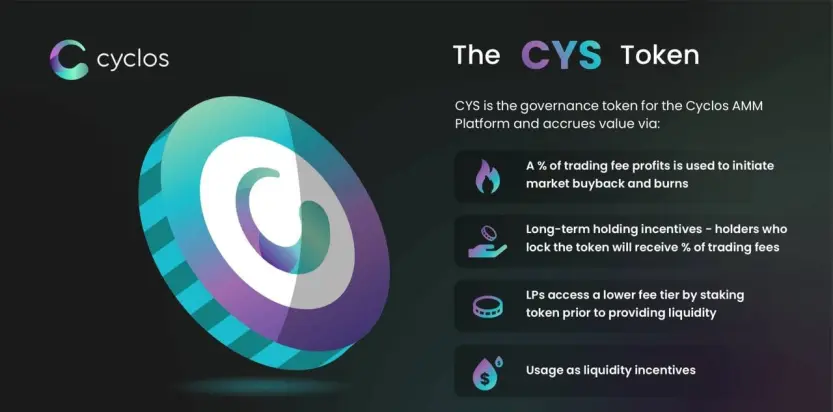
CYS token will be part of the global growth program of the protocol by the play of global incentives. As CYS is the token distributed as fee reward it will contribute to growing the value over time. An increasing trading volume on Cykura combined with a massive TVL is likely to boost CYS token value in price.
CYS tokens will gain value through CYS pools creation and distributed fees to CYS holders and LPs.
Amid these main app incentives will farming also be included. CYS will then be the main incentive token for liquidity mining. To avoid having a too much inflationary token buy backs & burns will regulate token circulation.
Furthermore, CYS will be a governance token. This is highly important along with staking since detaining governance rights on such an innovative Defi protocol.
So far we dived into the protocol just from LPs point of view exploring benefits of price ranges to rationalizing a position.
What about users benefits in such an overturning scheme ?
II — Usage of the protocol and utilities: concentrated liquidity a new scheme for a more convenient user trading experience.
To the user eyes, concentrated liquidity will facilitate swaps and avoid them paying too much fees between 2 swaps thanks to direct pairing.
As a matter of fact, on a protocol that is made up of permissionless pools on the overall most of time you need to swap twice so as to get your tokens sometimes even a third time. 3 swaps to get your token is too much.
On Raydium for instance there will be SOL/USDC and APT/USDC but it won’t show you SOL/APT. Therefore you will have to swap your SOL to USDC at first and then USDC to APT. That operation is likely to charge consequent fees above all if there are a lot of traffic at the moment. Unlike Raydium, Cykura allows any lover of algorithmic trading to directly swap his token to another without passing over a stable coin paid.
Besides, many exotic pairs are about to get created over time. This is possible if so-called pairs exist on the platform. Thus, you could have SOL/APT and easily swap them with each other.
Providing exotic and unstable pairs to users will enhance algorithmic trading experience as you will be able to place an order in a single swap helping with bonfida decentralized order books chart.
Also, algorithm will help main user benefit from best tokens pairs prices as Cykura is now integrated within Jupiter Aggregator. This is called «smart routing». Actually, smart routing on Cykura will operate based on trade splitting.
So as to execute your swap, bot will try to find the best prices amongst various routes purposed by Jupiter DEX thereby splitting up user swaps by taking liquidity among Cykura pools but also from purposed Jupiter routes.
Let’s say a user swap SOL/USDC : algorithm will use Jupiter routes to seek to distribute the trade along with best prices for instance it will use 50% of a SOL/USDC Cykura pair, 30% of liquidity from Orca and the last 20% from Raydium. Cykura pools will most of time effectively support majority of trades as those are made up of concentrated liquidity.
In this case, pairs selection will depend on where tokens desired are primarily the most liquid in the market. In fact, seek of the best prices around the ecosystem drives bot’s research at the time of swap.
If your aim is buying or selling something, you will be displayed multiple routes granting you possibility to either sell half of your tokens at a slightly higher price than elsewhere on another DEX routes or buy half of it at a cheaper price than elsewhere on a DEX.
Chosen routes are never the same from a trade to another as market conditions frequently shift from to DEX to DEX and pairs are ranked by price.
Here is how Jupiter pattern works:
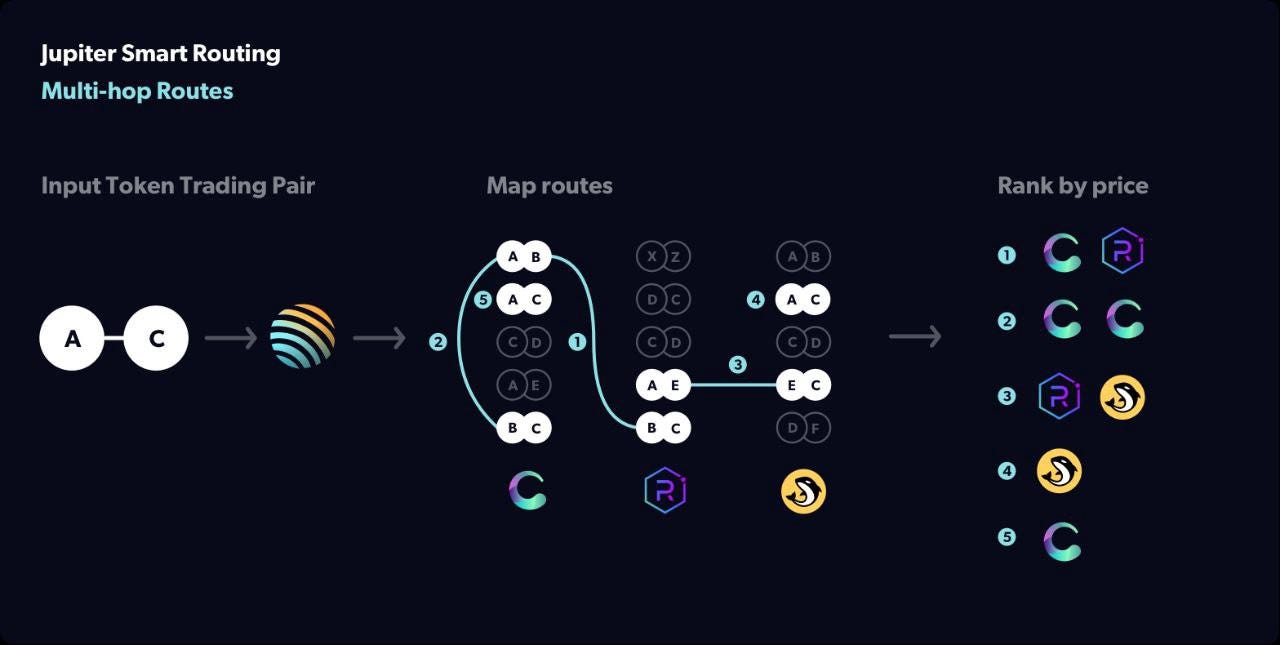
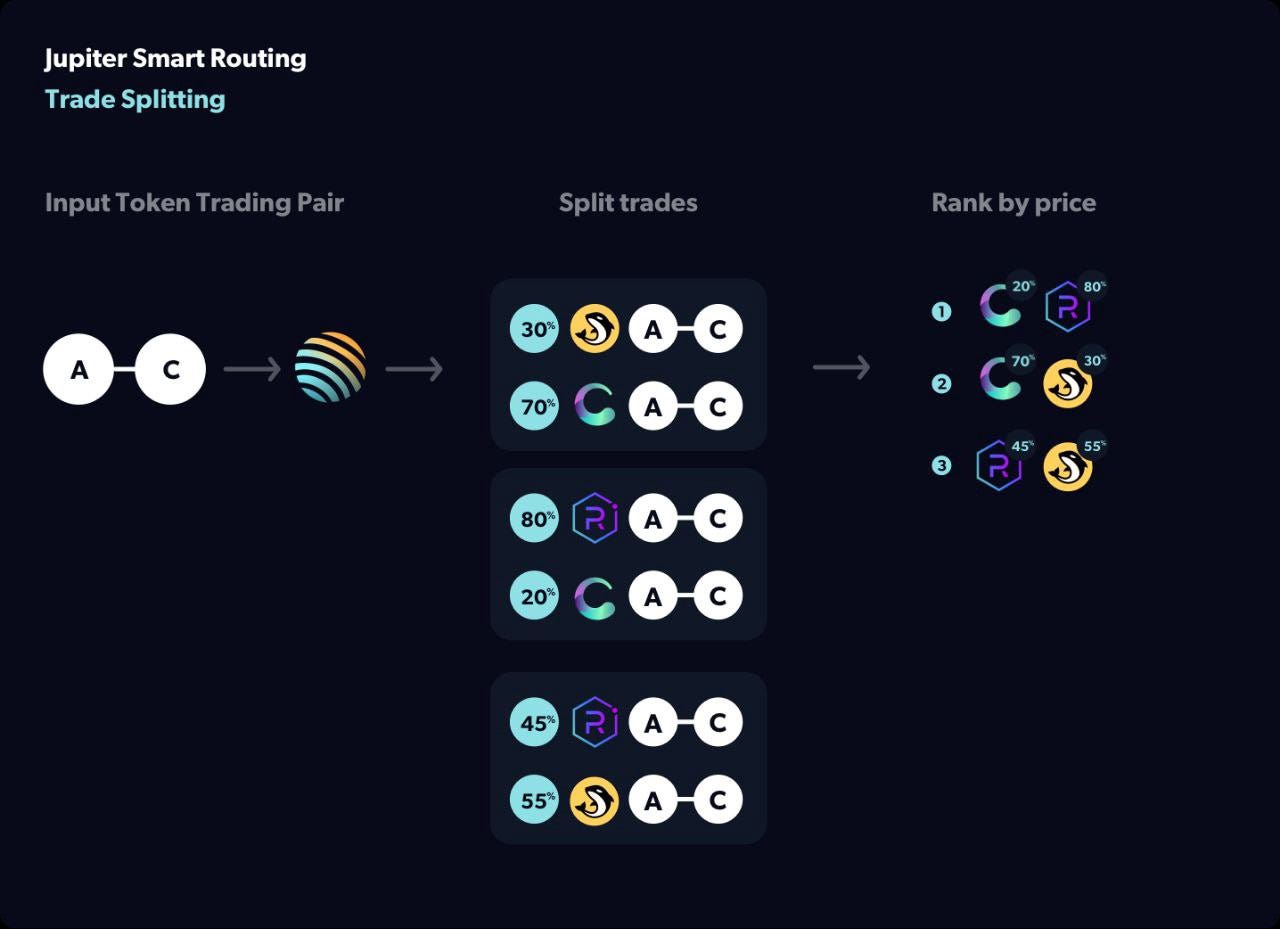
Trade splitting will compare pools rates among various Solana DEX. According to your wish it will offer you the best solution. Liquidity that’ll be given to you will be provided by different pools optimizing user trade.
Along with smart routing and concentrated liquidity on the overall, users would also benefit from Solana network lightning speed transactions. Since a growing of TVL is expected on Cykura over time, Cykura pools will always remain massively used for swaps which means a constant growing of trade volume over time and also a high percentage of used Cykura pools for swaps.
Therefore Cykura perfectly allows LP’s and $CYS holders gaining value around $CYS at the same time users get profitable through trade splitting wining here and there a small percentage on volume at sell or profit from a discount at purchase. Even though only 5% of swap distribution is issued by another DEX pool, user would benefit from it.
Furthermore, users will be able to capitalize on staking. Cykura finance integrated a staking interface which’ll value governance rights. You could either stake your $CYS to value your support to the protocol or just to gain yield around the token itself.
Staking main page displays as follows:
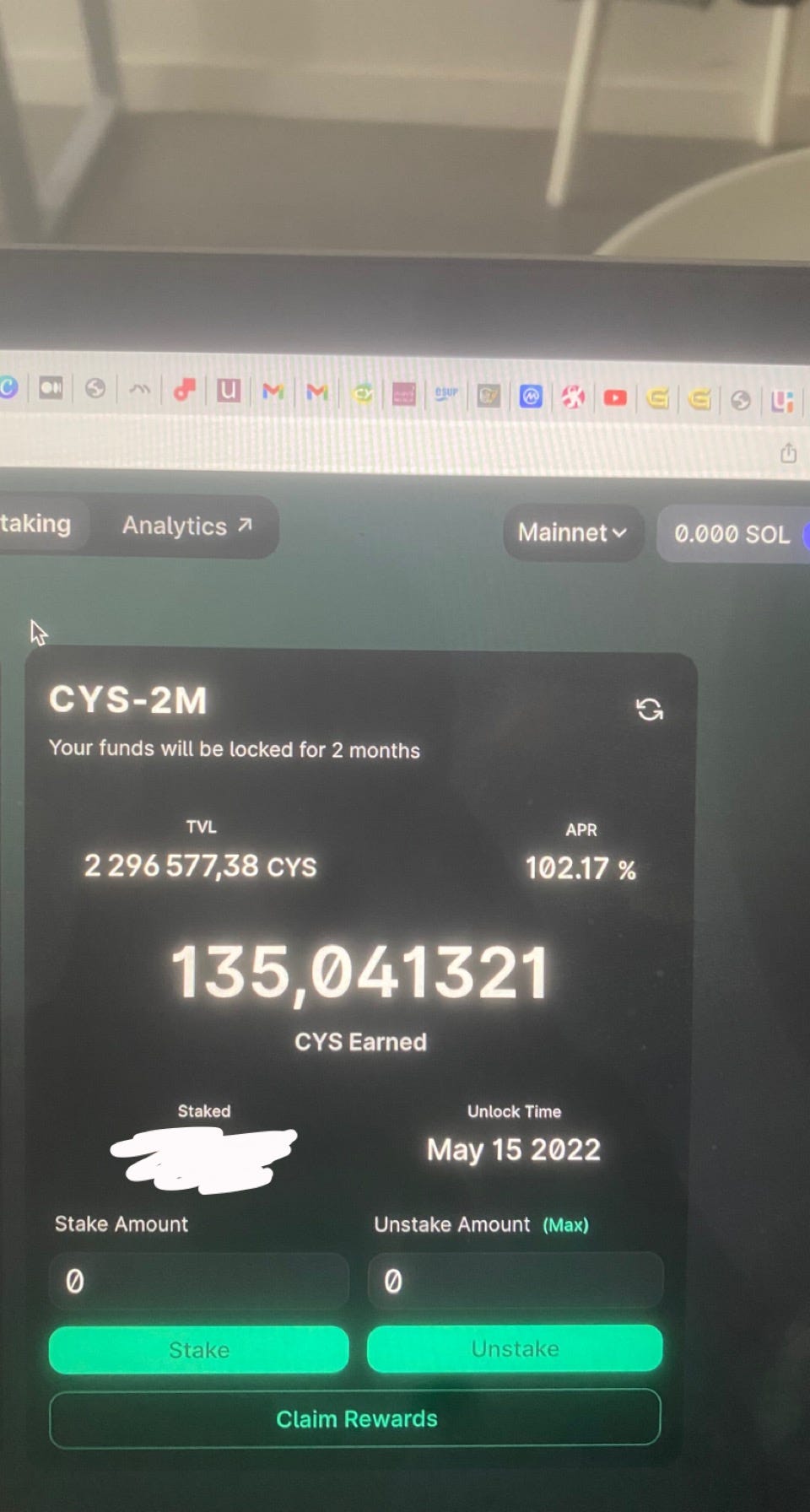
You are already able to stake some $CYS despite the protocol not having yet hosted much smart-contracts at the moment in terms of pools created. Currently, TVL equals roughly 3M$ which is quite encouraging for the future.
By the stake button, add some $CYS and withdraw some by the unstake button. As you can see on the screenshot, this is the 2 months period staking.
Cykura finance also lets users stake their $CYS without any locking period which means you can stake and freely withdraw your $CYS at any time without no locking period.
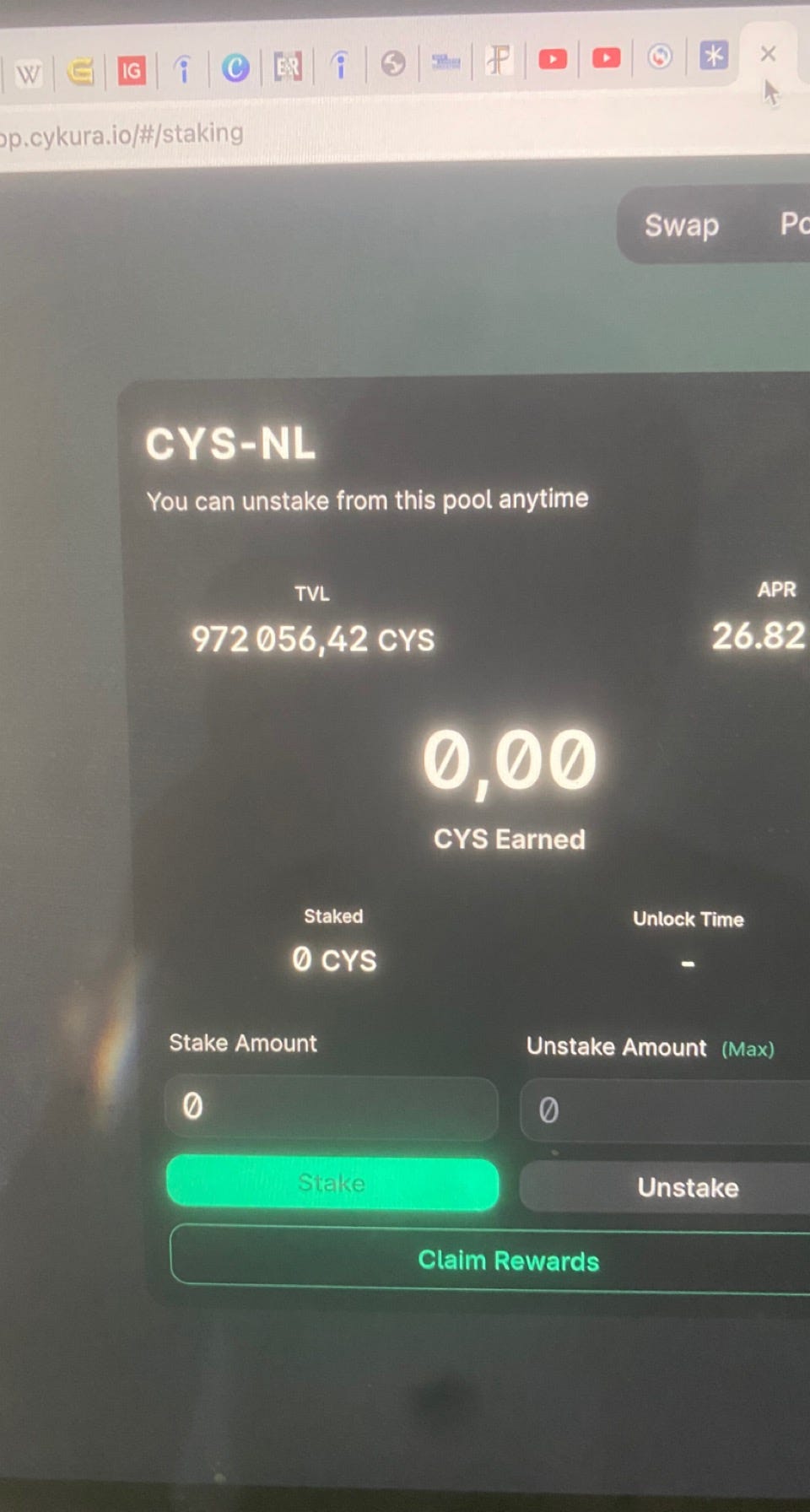
As stated you can unstake from pool at any time. Selection varies according to everyone’s long-term or short-term plan… Some users will be willing to avoid casual volatility and prefer keeping the right to withdraw funds whenever they want. Some other will trust a long-term view on $CYS and keep locking back their funds after period ends.
You are now ready to make your first steps into the Cykura protocol whether it is as an LP trader or a simple user who trades on swaps. If we take a little height on it, Cykura could be one of the most performant and requested protocol in a few years as it merges concentrated liquidity scheme with algorithmic trading on Solana network.
Not only that it does so, it surpasses an old vision of decentralized trading With the most speedy blockchain that is Solana, Cykura will run at full capacity and this will contribute by a lot to a potential permanent use by users.
There is no financial advice within this content. This walkthrough paper aims at giving you a reading grid of a cutting-edge Solana protocol to optimize your use of decentralized trading.






