
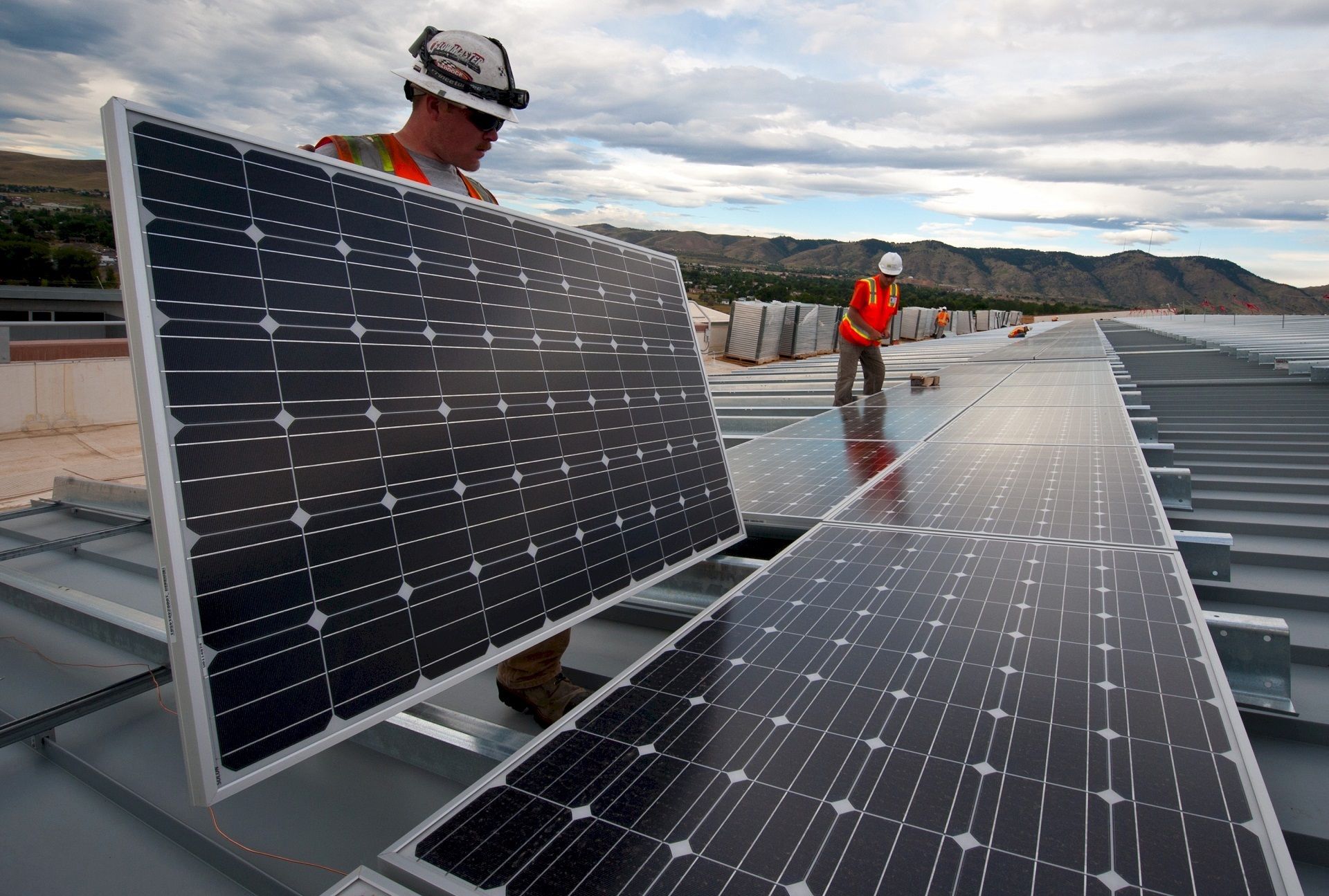
Not only people, but also perovskite solar cells function better with some caffeine in them. They are better able to cope with high temperatures, last longer and generate more energy.
Perovskites are a promising class of materials for solar cells. Perovskite cells are cheaper and more flexible than current silicon solar cells. But the performance of such solar cells is not yet stable enough over a long period of time and they break down quickly at higher temperatures. This makes them too vulnerable to be a sustainable alternative to silicon.
A group of Chinese and American researchers published in Joule magazine that the performance and durability of perovskite increase when caffeineis added. Just like with most people, caffeine ensures that people work harder.
Joke during coffee
It started as a joke during coffee. "While we were talking about perovskite solar cells, our colleague Rui Wang said: 'If we need coffee for energy, what about perovskite? Would they perform better with coffee?''', PhD student Jingjing Xue of the University of California Los Angeles says.
The scientists didn't just have to laugh at this. There was also a discussion about the chemical properties of coffee. They realized that caffeine from coffee is an alkaloid . Alkaloid substances can connect to the layer in perovskite that absorbs the energy from sunlight.
The researchers decided to investigate the effect of caffeine in the laboratory. The boosting substance was found to bind well to lead particles that are in perovskite. Thanks to that strong connection, absorbing sunlight costs less energy. With caffeine, the energy yield of the solar cells increased from 17 to 20 percent.
In addition, the strong connection with caffeine ensures that fractures are less likely to occur in the perovskite. That protective effect remains intact at high temperatures. In this way, caffeine extends the life of solar panels. The tested solar cells remained stable for 1300 hours at a temperature of 85 º C.
Caffeinated research
The researchers note that the caffeine only binds well to a certain type of perovskite. The current solar panels of silicon and other perovskite variants probably do not benefit from a shot of caffeine.
Also, the efficiency with which the caffeinated solar panels convert sunlight into electricity is not even higher than that of the best perovskite panels. But the service life and heat resistance are promising.
The researchers write that a good result for a cheap addition to cheap solar cells. In a follow-up study they will look for ways to further improve this combination of materials. Probably with the necessary coffee breaks.






