

Every transaction in cryptocurrency definitely requires a market. Activities in the market often occur in DEX and CEX.
DEX ( Decentralized Exchange )
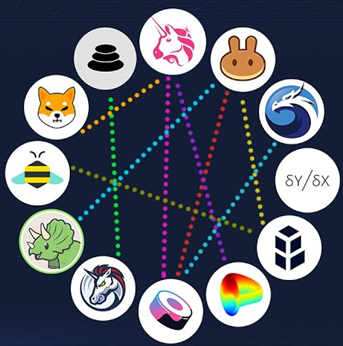
DEX (Decentralized Exchange) is a peer to peer (P2P) platform that connects buyers and sellers to exchange and trade crypto assets. DEX uses smart contracts and utilizes blockchain technology with a decentralized concept.
Every transaction on the DEX will be recorded on the blockchain without a centralized / supervising authority. DEX has a decentralized nature that allows everyone to carry out trading activities of buying and selling crypto assets using smart contracts.
Characteristics of a DEX (Decentralized Exchange) :
- Users / users do not need to include their identity (KYC) on every transaction
- Transactions do not use each individual's order book but the liquidity pool
- Security is largely the responsibility of each individual
Example of a DEX (Decentralized Exchange) :
- Pancakeswaps
- Sushiswaps
- Uniswap
- Osmosis
- Katana dex
CEX ( Centralized Exchange )
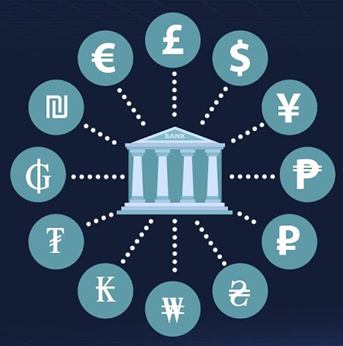
CEX (Centralized Exchange) is a platform for trading and exchanging crypto assets regulated by a centralized company. CEX provides facilities as a third party in bringing together buyers and sellers of crypto assets to store and carry out buying and selling activities of crypto assets. Within CEX, trading volume of crypto assets is higher when compared to DEX.
Characteristics of a CEX (Centralized Exchange):
- Users need to state their identity (KYC) for each transaction
- Transactions use the order book to reconcile supply and demand between sellers and buyers
- Security is largely the responsibility of the exchange
- CEX transaction volume is generally bigger than DEX
Example of a DEX (Decentralized Exchange)
- Binance
- Coinbase exchange
- Kucoins
- OKX
- Kraken
To see the top CEX and DEX, you can visit https://coinmarketcap.com/rankings/exchanges/ or https://www.coingecko.com/en/exchanges
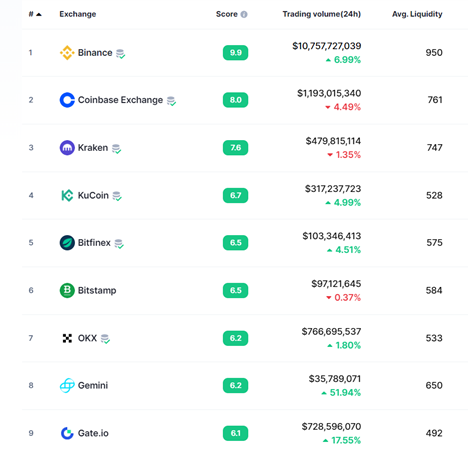
Coinmarketcap.com
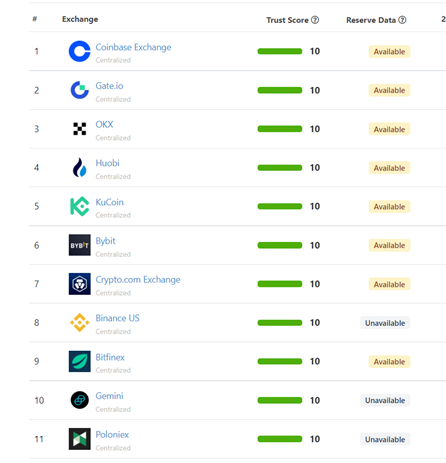
Coingecko.com






