Recently I saw an advertorial for Crypton (CRP) token, and their eco-system which claims to be a privacy focused, decentralised platform offering anonymous browsing, domain name services, crypto wallet and even a mining offering for its users. I'll admit, I was initially quite sceptical, especially when I realised that the name abbreviation of this project is literally 'crap' token*, but the claims about being a privacy-first focused initiative sounded good, and it led me to spending a few minutes checking out the project to evaluate the accuracy of the claims being made.
It would prove to be very disappointing experience.
"UTOPIA IS YOUR ALL-IN-ONE KIT FOR SECURE INSTANT MESSAGING, ENCRYPTED E-MAIL COMMUNICATION, ANONYMOUS PAYMENTS AND PRIVATE WEB BROWSING."
As far as general consensus within the crypto-community is concerned, the majority of users are very mindful of the threat of centralisation, and when evaluating projects (and filtering out all of the potential scams - of which there are many in the crypto universe) it's best to keep an eye out for any potential points of weakness relating to centralisation which could be a threat to the project. When there is a lack of decentralisation such as the network being run by a handful of nodes, or the majority of the supply of a token being concentrated around a handful of wallets, there exists an opportunity for the people running the project to 'pull a fast one' and make off with their ill-gotten gains. Given the pseudonymous nature of crypto, it is almost always impossible for these people to be held to account for their actions.
 A screen grab from the site.
With this in mind, I set about evaluating the Utopia project website, trying to establish if it would be worthwhile 'mining' to earn CRP tokens. At the time of writing this, CRP was trading at 0.17c USD, and although I have had some fun earning Bananos with the Folding@Home project, I am not opposed to putting my modest (read: really shit) GPU to work on another project, provided the long-term fundamentals make sense. There's no point in mining a stash of shit tokens if the community has poor memes along the way, or at least that was my sentiment behind checking out the Utopia offering. Side note: the hunt for a good project that you can mine without having a hydro-electric powerplant in your garden is still underway, until further notice, Bananos seem to be where things are at for the moment - although as Bananos actually run on a network of validators - there is nothing to mine, but you're committing your PC hardware to a good cause, and the Bananos community has some great memes.
The Quest for CRP...
Upon arriving at the website, I immediately noticed a ghoulish rendering of the Statue of Liberty literally hovering around the right hand side of the page, and strangely, she seemed to be wearing a face mask. Was this the Utopia project trying to stay relevant? My mind started to race with the possibilities...Do I take this to mean that the future has COVID19? Or have they migrated to COVID30 by that stage? Maybe COVID50? Also, did my cat notice a difference in pixel density between my old TV and the new one? What about between a Retina and a non-Retina display, or did she actually prefer Samsung?!? If so, would this change when she had COVID19/COVID30/COVID50?
This was all starting to become a confusing mess, so I looked to the design aesthetic of the website to assist me in understanding what I was seeing. If I had to describe the website design, it would be "cyberpunk meets space-themed RPG game with liberal use of the matrix font" and it really does remind me of the late 2000s style of advertising that was used for video games. All that's missing is a bimbo dressed in fake leather with an exposed mid-riff and some perky cleavage. That can be fixed easily enough.

(C) EA Games and the Command & Conquer Series. Source.
Moving on past the look and feel of the site, I delved a bit deeper into the underlying technology and the value offering being made. Utopia claims to be an "all in one" platform that integrates anonymous payments, secure instant messaging, encrypted email, and private web-browsing all in one go. This is achieved by installing their software, which is available for Windows, Mac and Linux. This was certainly a big proposition, and before downloading and installing the software, I wanted to get an idea of who was behind the project, what centralisation weaknesses there were, and whether this project was open source or not.
Big Brother is Watching.
Browsing through the FAQs, I learnt that Utopia has been developed by 1984, who are an anonymous "group of networking technology enthusiasts who can no longer just stand by the sidelines watching what is happening in the present world and seeing how the basic value of freedom in our society are being eroded". This description is actually quite open-ended. Depending on the context, it could be a description for a rogue collective of hackers and scammers, or it could be the rallying cry for a generation of libertarian cyber-anarchists. The group claims core values which emphasize human rights for all, and especially those that relate to the right to privacy and freedom of commerce and communication, which they have set out as a 'manifesto' behind the project. This was an interesting choice of a name for their document, but I suppose it is designed to create the same impression as the rest of the branding and design related to the project: onwards towards the cyber utopia revolution!
Being the world of crypto, one would almost take it for granted that there would be a whitepaper published in support of the project, but the manifesto is the closest one will get to the motivation and rational behind the project. It is a short document, and again speaks somewhat cryptically about historical events, and ominous activities on the internet perpetrated by nation states, and big tech, against the innocent citizens of the interwebs.
Finding the lack of substance frustrating I dived into the FAQs - surely this would be the source of knowledge that I craved. Wading through this part of the website, I felt like Neo in the Matrix, as the streams of endless neon green text burnt into the back of my eyeballs. I pressed onwards in my quest to truly know and understand the way of the CRP token.
Actually, the FAQ addressed my concerns directly and the answer was there, in clear black and err.... neon green.
"Utopia is very knowledge-intensive software. A lot of time, effort and resources went into this product, and we do not want to share all of our know-how as it will result in forks which in turn may result in instability of our main network."
Well there you go, I guess I had my answer. In light of the fact that the project was closed source, I now had serious reservations about proceeding with installing it. Going further, the same paragraph stated that:
"The bottom line here is that a lot of software is closed source, and this does not hurt them a bit. In addition, we will audit our code."
I am not sure what it was, but something about the way this sentence was written really rubbed me the wrong way. Maybe it was the authoritarian way in which the reader is told what the bottom line is, instead of being left to come to their own conclusions. Whatever it was, it was clear in my mind that I would not take the chance of installing and running this project on any of my equipment. There are several reasons for this.
Ummm, I'm going to pass, thanks.
Firstly, if the code is not open-source, then we are required to accept the anonymous dev team is acting in complete good faith in terms of what the software is intended to do, and what it actually does. Are the team competent enough to harden the system against possible attacks or leaking of identifying information? If the team have made any mistakes, will their internal quality assurance mechanisms (if any) actually pick these up and remedy them? The claim that they will audit their own code does absolutely nothing to create any reassurance. It's like trusting Tether when they say that they have done an audit on their reserves and that we can "trust them" when they tell us not to be worried.
Secondly, the team explains that the developers will always remain anonymous (until they decide not to be) which means it is that much easier for them to disappear as and when necessary should the need arise. That anonymity also happens to mean the users have no assurance of the competence, experience and qualifications of the team. Finally, the closed source nature of the software opens up a potentially massive backdoor on the system it is installed to. It could be logging all your keystrokes, harvesting your personal information, populating a bot net, distributing illegal content, or any other hundreds of malicious possibilities. And the reality is that unless the code is made accessible to all there is no way to determine if the communications and privacy objectives that the protocol seeks to establish are being implemented properly, and are working as intended.
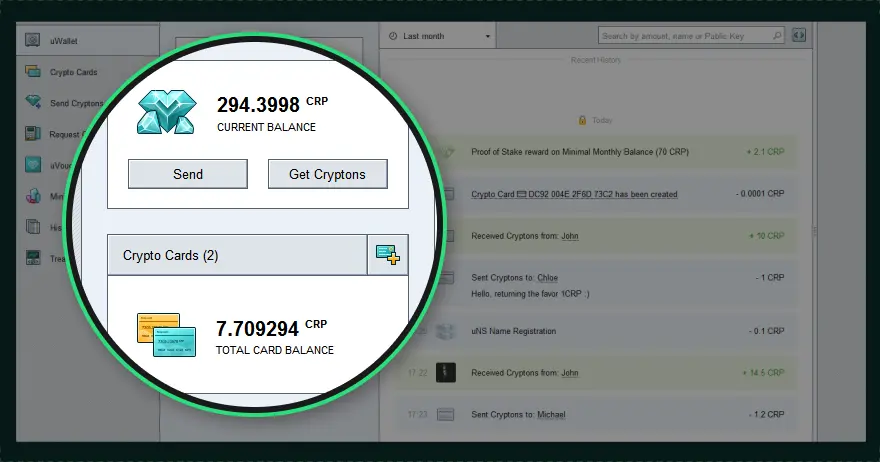
I never installed their software, but here is a screen shot from their website. It seems this user is sitting on a modest pile of CRP. It may be too much CRP for me to handle. This CRP is getting out of control. I promise I will stop for a bit now.
What seems odd to me, is that as people who are IT professionals, I would imagine the dev team to be familiar with the concept of OPSEC. If you are not familiar with this term it comes from the US military and their OPerational SECurity component, which applies to all of their missions. Within the context of the IT field though, OPSEC speaks to what strategy you have implemented to maintain and ensure the security of your project - and usually also sets out the tactical steps that have been taken by the system administrators to protect the system or network against bad actors, exploits, unauthorised access and so on. As I would imagine, being familiar with the concept of OPSEC, the Utopia dev team would also know that the value of making a project open-source is that it allows its users to not just have to trust, but to actually verify that the software does what it is supposed to do, and exactly no more and no less than that.
It is interesting that Utopia have in fact forked a version of the Tor browser, making certain additional (and unspecified) changes to the Tor project, and then presenting it as part of the all-in-one closed-source platform that Utopia offers. There is no-doubt in my mind that the decision to make the project closed source was not an oversight, omission or error, but rather it was a very deliberate choice - the so-called "bottom line" - and that if the dev team were familiar enough with the Tor Project to fork it, then they unquestionably also understood the disadvantage that many would see with their offering if it was closed-source.

The anonymous dev team (probably) squirrelling away their time on the next Utopia update (actually, it's just a stock pic sadly).
Computer AIDS.
Look, maybe I have been too harsh in my criticism of the project and its website (although the Statue of Liberty thing was a bit creepy), and the dev team do really have the best of intentions, but as someone who feels very strongly about the exact principles that the Utopia dev team claim to be championing, I can't help but feel they have really gone around it the wrong way. At least for me, browsing their site and reading their FAQ did not convince me that this was something I wanted to be involved with. An anonymous dev team hardly allows for project longevity, succession planning or provides the structure necessary to maintain a successful decentralised eco-system.
The actual 'mining' process that is referred to on the site amounts to you keeping their client software running all the time. In return, you will receive c̶o̶m̶p̶u̶t̶e̶r̶ ̶A̶I̶D̶S̶ ̶a̶n̶d̶ payout of CRP tokens for every fifteen minutes that you keep the software running.
Careful inspection of the site didn't reveal exactly what the app would be doing, but if I had to guess, you are being paid for keeping your computer as a node on their peer-to-peer network. What traffic, the volume of that traffic, and the content (legal or illegal) is entirely unknown, and by the way, we are also to trust that all of this has been encrypted and is safe away from prying eyes. And as politicians love to state time and again, just trust us, because "we said so".
I suppose the moral of this rambling story, is that privacy orientated projects such as this must be open-source, and if they aren't, then there is simply too much room left-over for speculation as to what the project is supposed to be. I guess, you can't be assured of privacy in this context without transparency and in the absence of that transparency there is just too much room left-over for doubt.
What if the entire Utopia project was actually a cleverly deployed front for some kind of elaborate honey-pot operation? You fly the false flag of a cyber utopia based on popular Western culture for the disenfranchised youth, and watch as all the kiddy-hackers, wannabes and privacy dorks flock in droves to sign up rapidly when incentivised by the promise of free CRP. You can then manipulate this fringe-group of libertarian crypto-anarchists to say, storm the capitol of a nation, or overthrow a democratically elected government - or maybe you keep it all about the money and just steal their seed-phrases and crypto holdings.
I can't easily imagine what kind of country, nation or state would be capable of such deception, or their motivations for doing so - and with so many unanswered questions, I have decided that no amount of CRP is worth the compromises and potential abuse that could stem from running un-audited software by a centralised and anonymous development team. I'm not saying it is a scam, and while I empathize with what they claim to stand for, overall, it just doesn't add up for me. For that reason, I am out.
* For the balance of this article, and to keep my childish mind amused, I decided to keep the crap name for this token.
Disclaimer: I am not a carrot. Neither am I a financial advisor, unless you are a hamster, in which case I have an insurance policy to cover your loved ones after you are gone. Of course, this piece is just my view, you may conduct your own research, and realise that Utopia is the holy-grail, all in one solution that mankind needed, and that everyone should YOLO into it like an ape. If that is the case and you are right, please remember to give me some of your CRP when you are rich and you see me pan-handling on the side of the road.






