
A Gallup poll shows that only 54% of Americans consume alcohol. This is a clear sign of how a massive $1.5 trillion industry is facing serious challenges as generational attitudes continue to change.
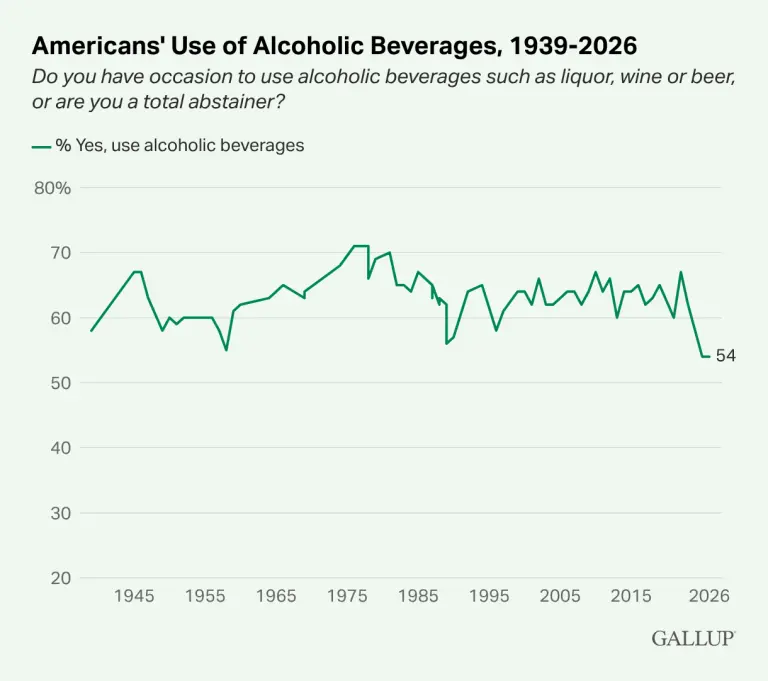
According to Gallup's historical data covering the period from 1939 to 2026, the share of US adults who consume alcoholic beverages has fallen to 54%. And to put this into perspective, this is not just a temporary fluctuation in the alcohol market. It is a record low in nearly 90 years of tracking. Historically, this figure remained within the 60-70% range, with consumption peaking at 71% in the late 1970s. The alcohol industry is facing one of its most significant existential challenges in decades.
It is also worth understanding who is driving this trend.
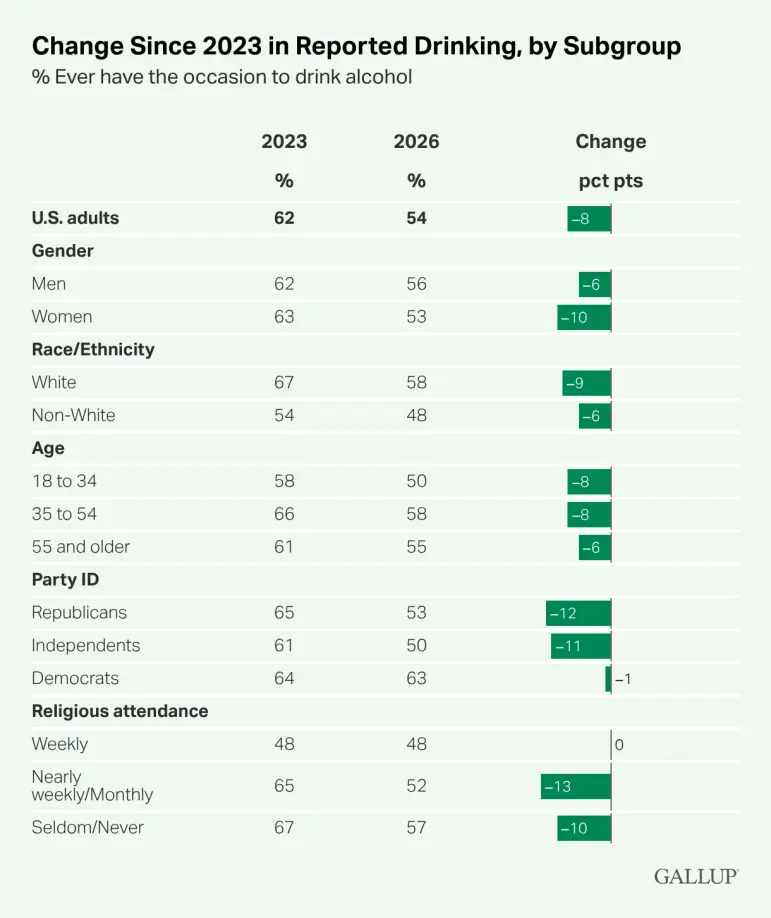
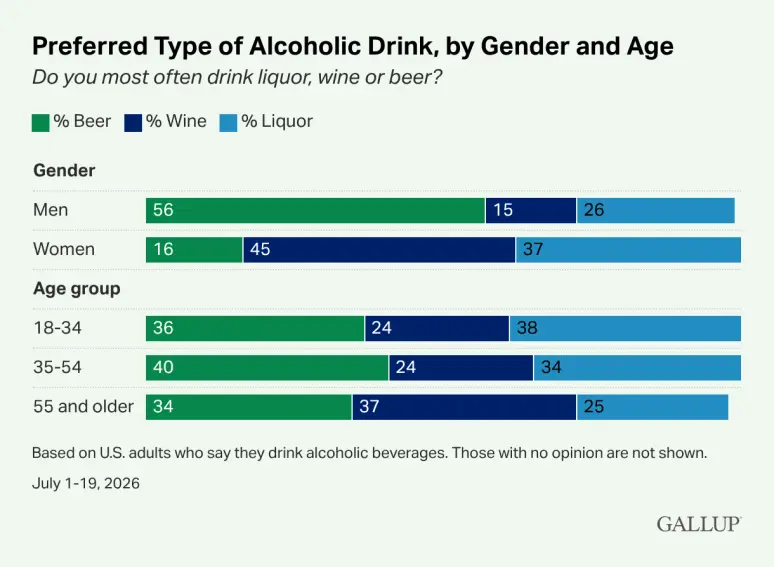
The first group reshaping alcohol consumption is Gen Z. ( I think you may have seen videos or articles explaining how Gen Z is becoming one of the most sober generations. Socialization has largely moved into the online space for them, while the culture of drinking and going to bars is gradually losing its status as a marker of adulthood ). Young adults aged 18-34 are demonstrating some of the lowest alcohol consumption rates on record, with only around 50% of this age group consuming alcohol at all.
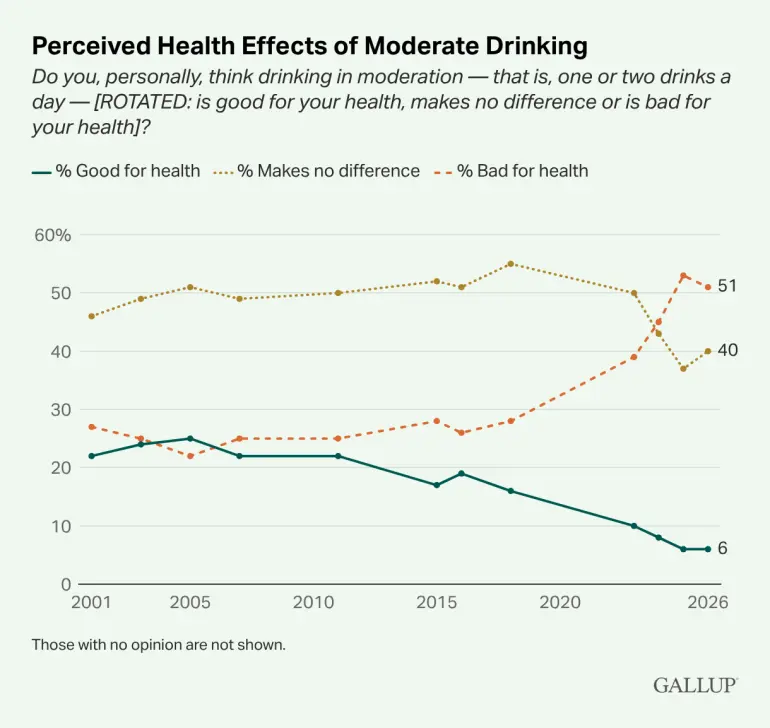
For years, marketers promoted the myth of a "healthy glass of red wine for your heart". Today, scientific research and the WHO increasingly emphasize that no level of alcohol consumption can be considered entirely safe in terms of health. Alcohol is a carcinogen and can negatively affect the body, including by accelerating certain aging processes. For the first time in Gallup's tracking history, more than 53% of Americans, including 66% of young adults, consider even moderate alcohol consumption harmful to health.
And, of course, our favorite inflation has played its part. Drinking at bars has become incredibly expensive. A regular cocktail in New York or Los Angeles can cost $18-23. Naturally, this kind of pricing will push some customers away.
This raises an important question. If the alcohol industry is gradually losing some of its consumers and billions in capital are beginning to shift direction, where exactly is that money going?
1. Non-alcoholic alternatives to alcohol
As strange as it may sound, instead of investing in traditional alcohol giants such as Diageo or Anheuser-Busch, investors are increasingly paying attention to producers of non-alcoholic beverages and alternatives to traditional alcoholic drinks.
2. The AI era and the growing value of the human brain
In the age of AI, as this field continues to develop at an incredible pace, human cognitive abilities and the capacity to adapt are becoming increasingly important.
It is worth remembering that alcohol can negatively affect cognitive functions even after drinking has stopped, disrupt sleep quality and its overall structure, and cause slower reaction times, impaired coordination and speech, memory lapses, dehydration, headaches, and nausea. It can also reduce self-control, increase impulsivity and aggression, and, in large amounts, cause acute poisoning and toxic effects on the liver and other organs.
And these are just some of the short-term effects that can occur even after a single episode of excessive drinking. With regular alcohol consumption, the risks to the body increase significantly. And just to be clear, I am not promoting anything here. I am sharing this for general awareness.
That is precisely why clear thinking and the ability to maintain concentration are becoming increasingly important, as well as a competitive advantage in today's labor market.
3. Rethinking personal spending
An American may spend up to $300 a month on alcohol. Of course, this is my own rough estimate, which can vary significantly depending on a person's lifestyle, income, and habits, rather than a universal figure for all Americans. If you give up this habit, however, you free up money that could be directed toward savings and investments. Modern consumers, especially younger generations, are increasingly considering asset accumulation as an alternative to short-term gratification.
There is actually enough material here for an entire separate article about why young people are increasingly interested in building assets and investing, as well as how the internet, social media, and cryptocurrencies have influenced this shift. But, as I have already mentioned, that is a completely different and very long story.
Finally, I would add that this growing trend toward sobriety may be connected to changes in the capitalist economy, the development of technology and medicine, and a shift in personal priorities. For traditional alcohol brands, this is a serious signal that they need to diversify their portfolios, develop non-alcoholic product lines, and look for new sources of growth. If consumer habits continue to change, companies will have to adapt to the new realities of the market.






