
This short article attempts to summarize and explain how cryptocurrencies and the blockchain are a game-changer in the fight against climate change. Toucan Protocol is bringing the carbon market on-chain, while KlimaDAO is using cutting edge decentralized finance (DeFi 2.0) to create the first ever carbon-backed reserve currency that aims to make fighting climate change more lucrative than not doing so.
Intro: Climate Change is Real
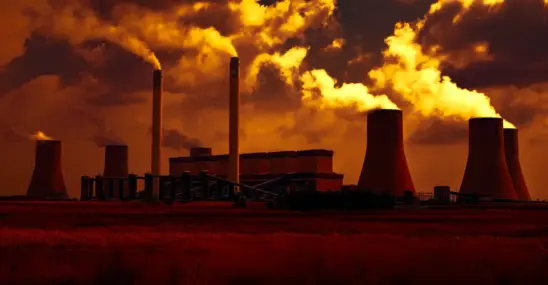
As most of us accept, catastrophic global warming is driven by man-made greenhouse gas emissions, principally CO2. The 1997 Kyoto Protocol was the first major global agreement to reduce greenhouse gasses, yet we have only been increasing emissions since then, following the infamous Tragedy of the Commons scenario that has lead to civilization collapse in the past.
How is carbon counted?
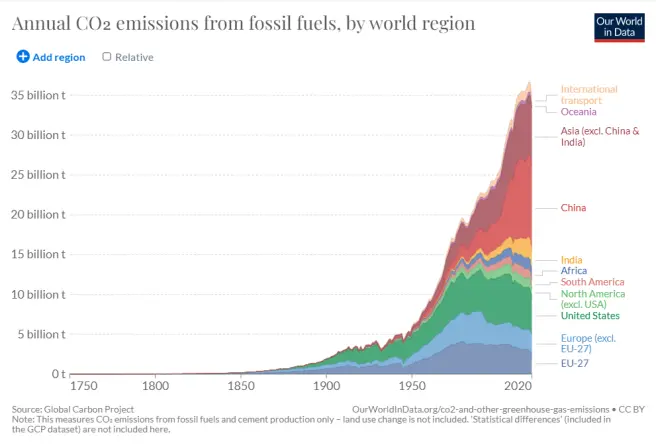
Quantifying greenhouse gas emissions from man-made activities like mining, heavy industry, transport and agriculture is done in Metric Tonnes of CO2 (tCO2). Accounting this carbon is not easy and methodologies are constantly changing as legislation becomes more stringent and measuring techniques improve. The annual global greenhouse gas emissions are currently at around 36 billion tCO2, with the US and China being the top emmiters.
Compliance Carbon Markets
When the Kyoto Protocol came into force in 2005, countries who set up emissions targets were legally bound to achieve them or face penalties (well, after a very lengthy bureaucratic process…). To ensure that all countries meet their targets, the Compliance Carbon Markets were set up to permit countries that surpassed their tCO2 reduction target to sell their ‘surplus’ tCO2 to countries that were unable to do so, creating an extra incentive to reduce emissions faster.
But trading on these markets is not inclusive as entities that have not taken part in the international agreements that require compliance cannot participate. The solution was to set up Voluntary Carbon Markets, where any individual, company or entity may be eligible to trade tCO2.
Voluntary Carbon Markets
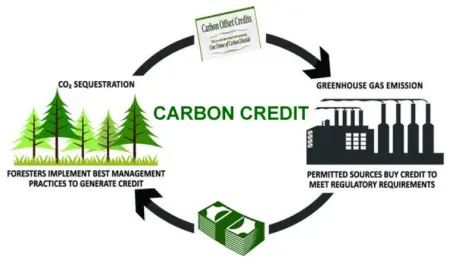
In the voluntary market, carbon-offsetting projects doing things like reforestation, conservation or setting up renewable energy, may issue the tCO2 they have removed (or prevented from getting) from the atmosphere to prevent climate change, and proceed to sell it in these voluntary markets to those who want to offset their own emissions. Doing so is called ‘retiring’ tCO2 and allows individuals and companies to do PR stunts like declaring being “carbon neutral” or having “net-zero emissions”, especially when the tCO2 were accoutned for by reputable companies like Verra and Gold Standard, who have ISO standard compliant methodologies and have their own carbon registries.
Legacy Carbon Markets

However, as with all things human, markets left unchecked can rapidly become broken, and the carbon markets are no exception. As the Toucan Protocol put it, “Voluntary carbon markets are fragmented, opaque, rife with middlemen and, as a result, suffer from questionable quality and lack transparent price signals”. With brokers doing business purely out of self-interest and many trades occurring behind closed doors, there is no way of having a fair marketplace where everyone is buying the carbon at the same price. And this goes without mentioning the bureaucratic inefficiency of buying, selling, and retiring these carbon credits from off-chain registries.
On-chain Carbon Markets: Enter Toucan Protocol

The Toucan Protocol aims to solve these problems by bridging the tCO2 from the Verra-registries and into the blockchain as a digital token. The transparency and innate verifiability of blockchain allows anyone to query any tCO2 transaction (which for all intents and purposes, is essentially instantaneous and permissionless), making the amount and the sender/receiver accounts public information.
This makes foul play very difficult, while creating open-source data for any bright minds out there to analyse and draw immediate conclusions on how the markets are helping climate change. On top of this, brokers and any other ‘trusted intermediaries’ who add no actual value to this digital setup would be automatically made redundant.
The process of bridging over carbon is actually pretty complicated since not all carbon offsets are equal, but Toucan elegantly does this through a series Carbon Pools which groups them together and issues liquid $BCT (Base Carbon Tonne) tokens which are each backed by one bridged Verra-issued tCO2 . $BCT are ERC-20 tokens available on Polygon and may be purchased on Sushiswap, one of the best known AMM DEX (A decentralized crypto marketplace), allowing anyone with an internet connection to buy high quality carbon offsets ($BCT) without anyone’s permission.
The Power of DeFi 2.0

Having a much-improved digital carbon market is a great start, but only scratches the surface of blockchain’s problem-solving capabilities. Big problems like climate change require even bigger solutions, and crypto’s answer to this is DeFi 2.0.
Earlier this year, a DeFi platform called Olympus DAO came up with the idea of creating a de-Central Bank and reserve currency for the entire crypto space, by amassing a gigantic treasury filled with stable crypto assets that are representative of DeFi. As such, $DAI (a dollar-pegged stablecoin which is backed by crypto-assets like Ethereum) was accumulated into their treasury as backing to the platform's own $OHM token, in the same way as the US Treasury used to hold gold in its vaults to back the circulating US Dollar.
But unlike the US Treasury (who now have no physical assets to back the US Dollar), OlympusDAO is governed by $OHM stakeholders, who vote on how the platform should be run, in return for lucrative rewards for owning part of this giga-treasury. Meanwhile, investors are encouraged not to sell their $OHM because if they unlock their tokens and do so, the rewards go up, leaving them feeling like they missed out on a lucrative future.
All of this together is DeFi 2.0, which is designed to last.
But what the hell does any of this have to do with climate change???
Enter KlimaDAO: The de-Central Bank and Reserve Cryptocurrency of tCO2

Some clever chaps from OlympusDAO decided to use the same Defi 2.0 design to create the de-Central bank and Reserve Currency of tCO2 by hoarding and locking $BCT (and any corresponding Liquidity Pool positions, which are outside the scope of this text) in their treasury to issue cryptocurrency token $KLIMA, which is backed by this carbon in the same way as $DAI backs $OHM, or as gold used to back the US Dollar.
As the treasury owns most of the $BCT liquidity and therefore exchange fees, financial incentives can be paid to investors who stake (crypto term for ‘locking’) their $KLIMA and take part in governance. As more $KLIMA is bought, more $BCT is absorbed by the treasury and removed from the open market.
In the meanwhile, the Toucan Protocol is working hard to keep issuing more $BCT as it bridges in more Verra tCO2 from real-world registries and into the blockchain, giving KlimaDAO the opportunity to keep ‘feeding’ its treasury with more $BCT and to keep issuing more $KLIMA to pay rewards to its existing investors and incentives for the new ones (lol, I know, it sounds a bit like a pyramid scheme, but remember, each $KLIMA is backed by at least one $BCT in the treasury).
Gradually, the amount of carbon locked in the treasury will become so large to start having an effect in both on-chain and off-chain global carbon markets, increasing the price of carbon in all of its shapes and forms: VCUs, tCO2, $BCT, etc. This is great news for investors, as holders of locked $KLIMA are compounding their gains through an increasing amount of appreciating carbon in its hungry treasury, with old investors discouraged from selling because of the game theory dilemma mentioned earlier for OlympusDAO.
...but going back to the question: How the hell is this good for climate change???
Money makes the world go ‘round

Any person or entity who wants to (or needs to) meet a particular emissions target has to offset their carbon footprint by purchasing tCO2 available in the open market. However, if the price of buying their way out of polluting is too damn high, physically reducing emissions suddenly becomes the only possible way to achieve the targets. Suddenly, that procrastinated decision to install solar panels, or to start composting organic waste may become an urgent matter, as not meeting emissions targets may become a PR disaster for some companies or individuals who want to claim being 'green'.
Kickstarting a Regenerative Economy
And since Carbon Offsetting projects are the issuers of new tCO2, the increase in price means that they have suddenly found a way of raising unprecedented amounts of capital. Reforestation, Conservation, Renewable Energy or any projects of this sort is suddenly a lucrative affair, to the point that perhaps even real-estate developers may find it more profitable to conserve or restore a natural space and issue tCO2 than to develop it into copy pasta cheap housing. Perhaps reforestation projects will suddenly have the capital to expand their operations into adjacent lands, or attract top talent that is usually snatched by more traditional businesses by offering better wages.
It’s only been 6 weeks of KlimaDAO
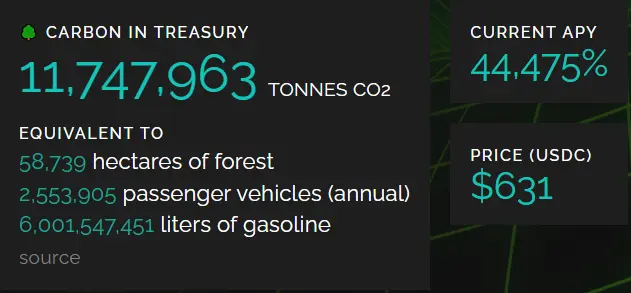
Six weeks since launch and the KlimaDAO treasury holds 12 million tCO2 in $BCT, which is equivalent to over 80% of all carbon offsets in the blockchain, or the annual emissions of Panama. It is also pertinent to note for any potential investors, that in this build-up phase, locking $KLIMA on the protocol currently pays >40k% annual interest, which paid out every 8 hours. There are currently over 50,000 users doing so, most of whom have also voted on the five governance proposals that have taken place so far, with fervent, congress-like debates taking place on the protocol’s online discord channel.
The KlimaDAO Roadmap
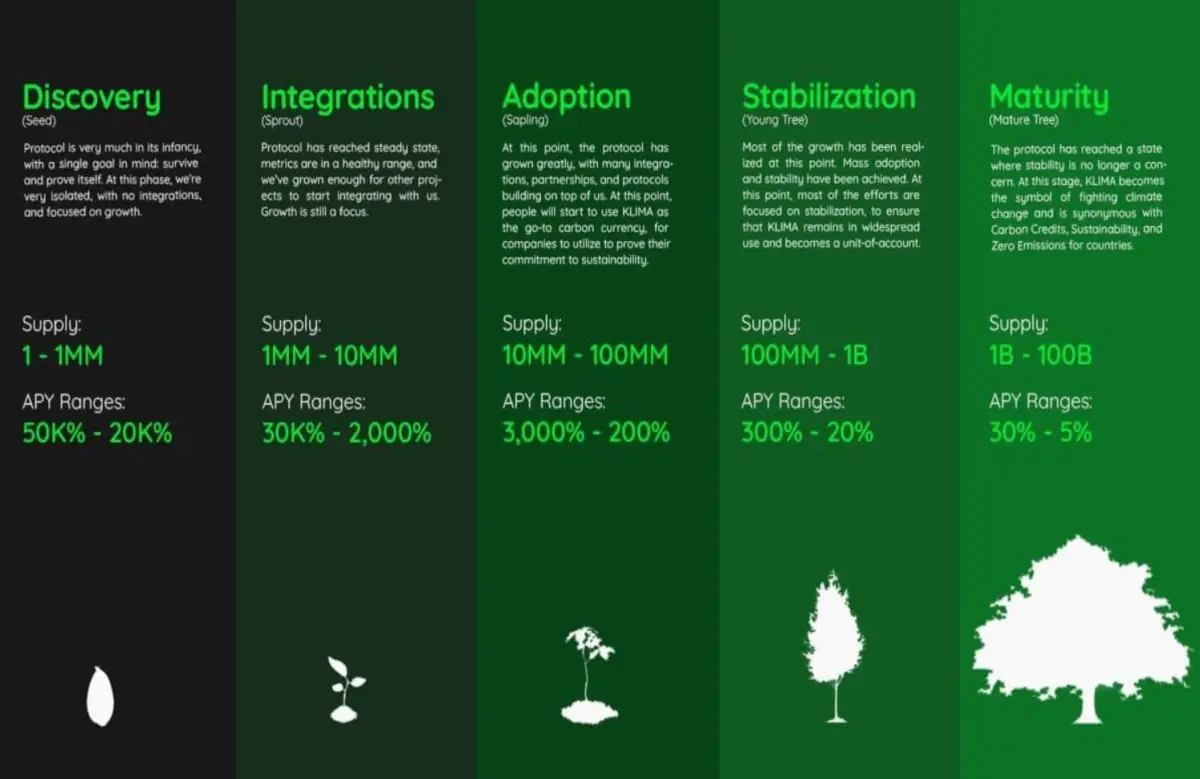
The top priority is to keep building KlimaDAO into the carbon blackhole that will supercharge global de-carbonisation, with driving adoption and stabilizing the treasury the current top priority. This includes assisting Toucan Protocol in any way necessary to make sure the stream of off-chain tCO2 continues to flood the blockchain.
It is worth mentioning that Decentralized Finance (DeFi) is still in its infancy and one month in crypto is like 10 years of real-world development. Novel approaches to leveraging the ever-improving blockchains are constantly being implemented, many which will undoubtedly build on top of $KLIMA and $BCT.
For example, borrowing and lending platforms that accept $BCT and $KLIMA as collateral for crypto loans are only in its inception stages, and introducing Biodiversity Credits to the KlimaDAO treasury is something that I have seen discussed. What we could be seeing in the next couple of months is perhaps beyond our imagination, and therefore outside the scope of this humble article.
Get Involved in the Revolution

The idea of web 3.0, better known as the ‘Internet of Things’, is that all of these platforms are run by communities of collaborative users, and not by a single, centralized entity like traditional companies in the Legacy web 2.0 world. I suggest following both Klima and Toucan on Twitter (KlimaDAO, Toucan Protocol) and introducing yourself on their discord (KlimaDAO, Toucan Protocol) to ask questions, take part in discussions, volunteer, etc. Beginners to both carbon markets and crypto are most welcome.
If you do so, I can guarantee that you will find an engaged, collaborative community of people from all over the world who believe in WAGMI (We’re all going to make it). Welcome to the future fren!
If you have any comments, feedback or what not, please do so below.
If you enjoy my content, you can also follow me on Twitter.
Disclaimer:
None of this content is or should be considered financial or investment advice. I am no financial advisor; I am merely a content writer using freely available information to produce the best OC I can come up with for informative and entertainment purposes.
Reference for text and images below.






