
Basic Attention Token (BAT) is a functional token created especially on the Ethereum platform for the adventurous browser. It was launched in 2015 by renowned American programmer Brendan Aitch, Mozilla browser and founder of JavaScript languages.
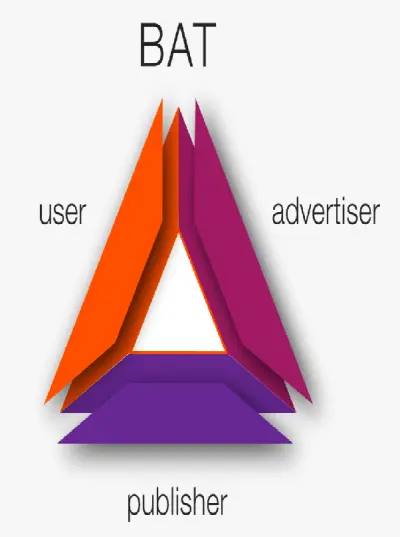
Aich's main idea was to change the current situation in the online advertising sector. Specifically, an aspect in which users pay to access content when they see the ad. There was an ICO on May 5, 25, during which half a billion dollars worth of $ 35 million was sold in just under half an hour.
Since Brave launched its privacy-focused Internet browser, many have been catching up with their local Basic Attention Tokens (BAT). But should users buy these tokens from the exchange or earn them using the browser?
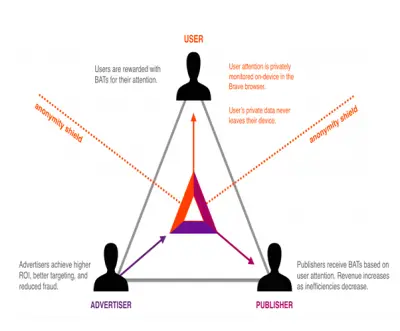
BAT was discovered to pay for the functionality of the new adventurous web browser. The BAT project with the adventurous browser is quite impressive as it seeks to solve some of the basic problems that exist in digital advertising today.
- Brave and BAT work together to create a new media economy that prioritizes users.
- 70% of ad revenue for bold advertising is paid to selected users for advertising rewards.
- There is no biological demand for BAT because the token has no use case beyond the bold ecosystem.
Statscoin provided bravery better functionality than assumptive tokens like BAT.
Introducing an Internet browser with native tokens, Brave World took the plunge The Basic Attention Token (BAT) allowed the browser to function as its own mini-economy. The browser also provides value as a privacy-enhancing web tool in the era of surveillance. But the actual utility of the BAT demands further investigation.
Synergy: Brave and BAT
Keeping one's online content private is becoming more of a challenge.
Almost every website tracks users and sells their data, which has become one of the most powerful markets on the Internet.
In a world where people can no longer trust their browsers, Brave created a product that tackles this problem. A native ad-blocker is installed in the adventurous browser, blocking all third-party ads.
Brave doesn't just block ads; It also blocks trackers.
If you are a frequent visitor to financial news websites, you may notice that you often see a lot of online advertising from financial companies. This is because a tracker on news sites allows for targeted advertising based on your interest in money at similar companies.
Don't remove the notion of bold advertising, though it does limit the misuse of data within advertising. Encrypted user data is gained to run targeted ads, but the data never actually leaves the user's device; Even dare not have access to this data.
Bat Browser native is a cryptocurrency. Using Brave's integrated wallet, users can earn a token to watch ads or use the token to "tip" their favorite content creator. Tips can be given to creators of various platforms including BAT Twitter, Reddit, YouTube, Vimeo and many more.
Default settings to block ads. Users have to opt-in to view ads and collect their BAT rewards.
BAT's value proposition
As the primary currency of the daring ecosystem, BAT is used as a medium of exchange in this niche economy.
The browser now has a crypto wallet that supports Ethereum-based assets. Still, this wallet doesn't offer the same functionality that the standalone BAT wallet offers.
For example, users cannot tip their favorite content creators or earn rewards with a token other than BAT.
Advertisers are currently dominating the landscape rather than the users, whose focus is on creating value. In contrast, BAT and Brave condemn this classification and instead allow users to decide who gets compensated.
Advertisers and intermediaries no longer collect user data, sell personal information, or put a lion's share in revenue. Advertisers go to nearly three-quarters of users who pay a daring price to run their ads in browsers; Brave keeps the remaining 30%.
This, in turn, gives rise to a new source of monetization by creating videos on YouTube and Vimeo. Twitter and Reddit content creators also have real sources of revenue that they can make directly from their social media accounts.
Overall, this creates a user-driven source of monetization for the platforms through Brave's tipping feature.
Brave and BAT are creating a distributed media economy where rewards will flow from token holders to recipients of their choice. These rewards not only make a small economy but the vision is great.
BAT token economy
In practice, Brave might be better off integrating a BTC or ETH wallet to run on its platform. A widely used cryptocurrency has the obvious advantage, the primary being the impact of the network. Users receiving BAT are usually liquidated tokens for a widely used cryptocurrency such as Fiat or Bitcoin.
In order to transfer it from bold wallets to BAT to another wallet for sale, however, the user must first submit the KYC to Brave's wallet partner Afolf.
BAT is used as compensation and has more than 250,000 e-commerce and brick and mortar partners with which users can earn tokens. This is thanks to Brave’s partnership with the Tap Network.
The Tap Network will allow brave users to use their BAT to pay for the service or convert the token into a gift card offered by the partner brand. The Google Play Store has more than 50,000 downloads of the company's app Hooch.
However, this partnership was announced a year ago. The tap network was only integrated into the Nightly version of Brave, making it easy for developers and users to experiment with new features.
Another inherent problem is the lack of quality capture.
Popular stacking tokens like Tejas (XTZ) and Cosmos (ATM) capture value through stacking yields and transaction fees. BAT has no such features. This is just an incentive for users daring to look at advertising and monopoly exchanges within the "bold economy".
Brave BAT controls the delivery and supply. As a result, they do not have to worry about the risks involved with using third-party tokens.
Risks triggered by a token that cannot control bravely like BTC, ETH or LTC can cause unnecessary trouble for users.
If Brave wanted to launch a token to ensure that no third-party asset could create an inevitable risk, a smart choice would be to launch BAT as a prudent statistician. Currently, BAT prices fluctuate according to estimates on assets. It can affect user behavior when using bold and BAT.
So, investing in BAT may not be the best option. And, despite the KYC barrier, BAT income is likely the best option. This is because users need to switch to a privacy-centered Internet browser to start earning.
Excluding the small financial rewards included with adventure, it is convenient to be in control of one's privacy.
Is BAT Worth Investing In?
Since there is no biological demand, there is no real basic or narrative-driven investment thesis for BAT. The only ones one can rely on are technical analysis and other cost-focused metrics.
BAT has gained a lot of attention from the crypto community as it introduced new levels of functionality for crypto. However, these plodits should be handled in a daring browser instead.
On the whole, the case is bound to be as daunting as a private browser with the inbuilt economy. But in this economy, BAT's value proposition can undoubtedly be called into question.
As mentioned above, earning a BAT is better than investing in digital assets.






