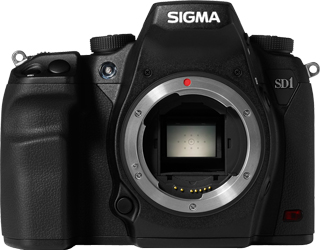
Mark Wieczorek wrote a nice little Ode to the Sigma Foveon Sensor. I came across the sensor years ago, when my father decided to buy a camera with it. Honestly, I think he wasted his money, not because it wasn’t an interesting option, but rather because he simply lacked the skill to use it properly. But I digress.
What’s interesting about the Foveon sensor is that it uses a layered process where it stacks the blue, green, and red sensors on top of each other. I’m not going to go into detail on the difference between this method, the Bayer sensor layout, and Fuji’s x-trans. Wieczorek does a great job of explaining all three in his article. However, here’s a graphic from the SIGMA blog explaining the basics.
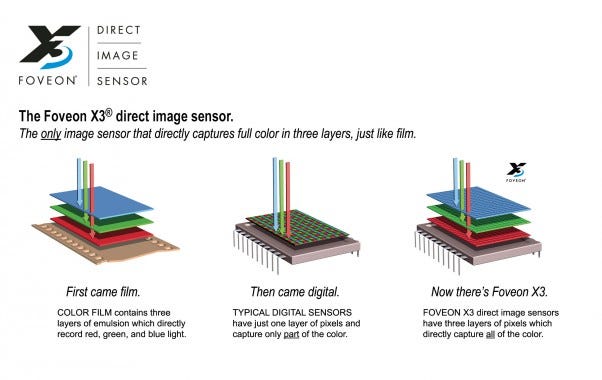 Explanation of the Foveon X3 Sensor (rights unknown)
But early on I had a random thought. What if both options were used? What if we used the Bayer configuration, but each “pixel” in the layout was actually a stacked sensor similar to the X3’s layout. Moreover, what if instead of each sensor being configured to handle the visual light spectrum, we had three new types of stacked pixels, one for visual light, one that was sensitive to the infrared end of the spectrum, and a third that was sensitive to the ultraviolet end of the spectrum.
The EM Spectrum
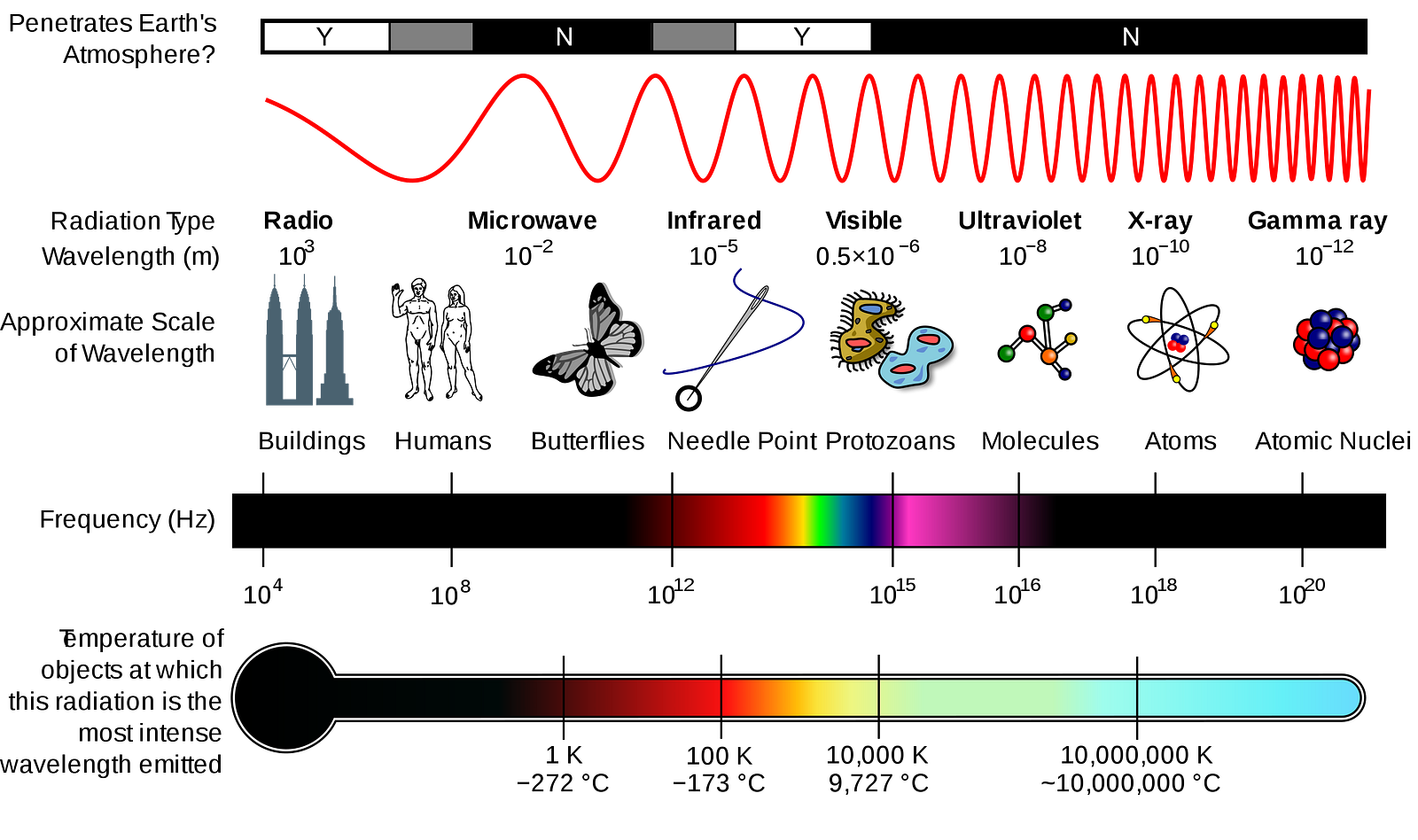
So a quick discussion of the electromagnetic spectrum. Light is an electromagnetic wave. So are radio waves. So are x-rays. We think of light as the part of the spectrum that we can see, but it’s all really the same, just with different wavelength and energy. Many animals actually see a slightly different section of the spectrum. Some animals have higher sensitivity towards the UV end of the spectrum, for instance.
Ultraviolet Photography vs Florescence
When we think of ultraviolet light, we usually think of black lights and florescence. But florescence is a different beast. We don’t actually see ultraviolet light when we’re looking at something under a blacklight. Florescence is the process of a material absorbing light in one part of the spectrum, and transmitting it back out in another. So in the case of florescent paint, it absorbs UV light and transmits it back out as visible light.
With UV photography, we’re relying on reflected light, usually light that’s from the sun, as sunlight is far more than just visible light. And what part of the EM spectrum is reflected by different objects and materials varies. That’s why we can get a lot of different detail based on what kind of light we’re using, as this series of portraits shows.
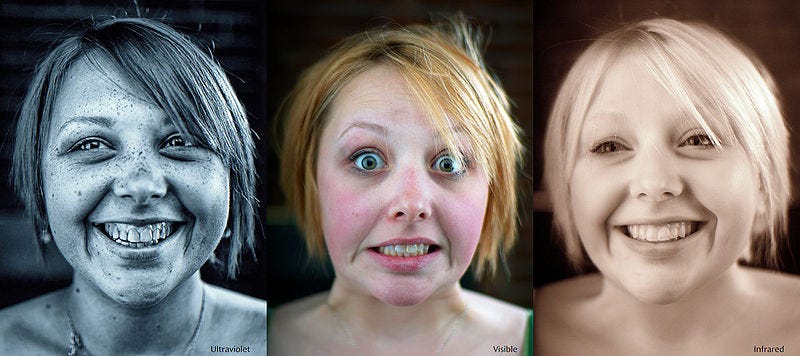
Ultraviolet, Visual, and Infrared Portrait (CC-SA 3.0)
Applications
I honestly can’t think of too many uses for the sensor, except perhaps in scientific research, where a person might want a high resolution image that spanned a large swath of the EM spectrum, spanning from deep into the infrared region all the way though the ultraviolet range.
Of course, just being able to do nature photography, where you can get three separate parts of the light spectrum, could be really interesting. Just looking at the above portraits show how different visual, infrared, and ultraviolet images of the same subject can be.
Originally published on the Technology: Past, Present, and Future publication on Medium.