
As a reminder, the mainnet of Polkadot in its version 1.0 was launched on May 26, 2020.
It was at this time that the network moved from its development phase to an operational phase where users could start participating fully in the Polkadot blockchain. Soon, Polkadot 2.0 will be launched, what are the innovations? Polkadot is a blockchain competitor of Ethereum that aims to be more scalable while being secure and scalable, it allows the interoperability of specialized blockchains. In other words, Polkadot allows other blockchains to communicate with each other in an environment with common security guarantees.
Polkadot is composed mainly of a relay chain (layer 0) and parafins and parathreads (Layers 1). The relay chain (Layer 0) allows to make the main transactions of Polkadot and connect the different parachains and parathreads. The aim is to delegate more specialized functions to the latter.
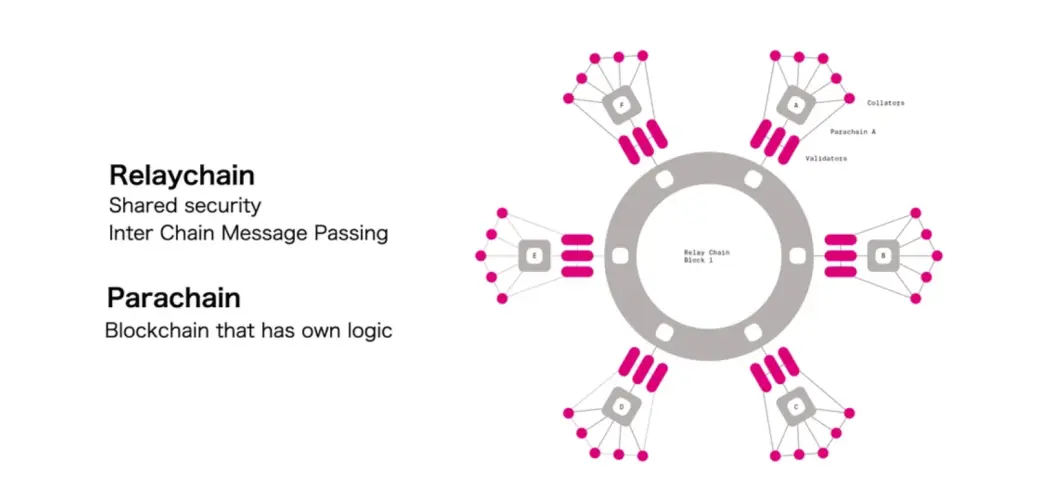
The parachains (Layers 1) are secondary blockchains attached to the relay chain. They have a lot of freedom to build their network and even have the possibility to create their own native token for their blockchain. These parachains are thus connected to each other by the relay chain while having common security guarantees.
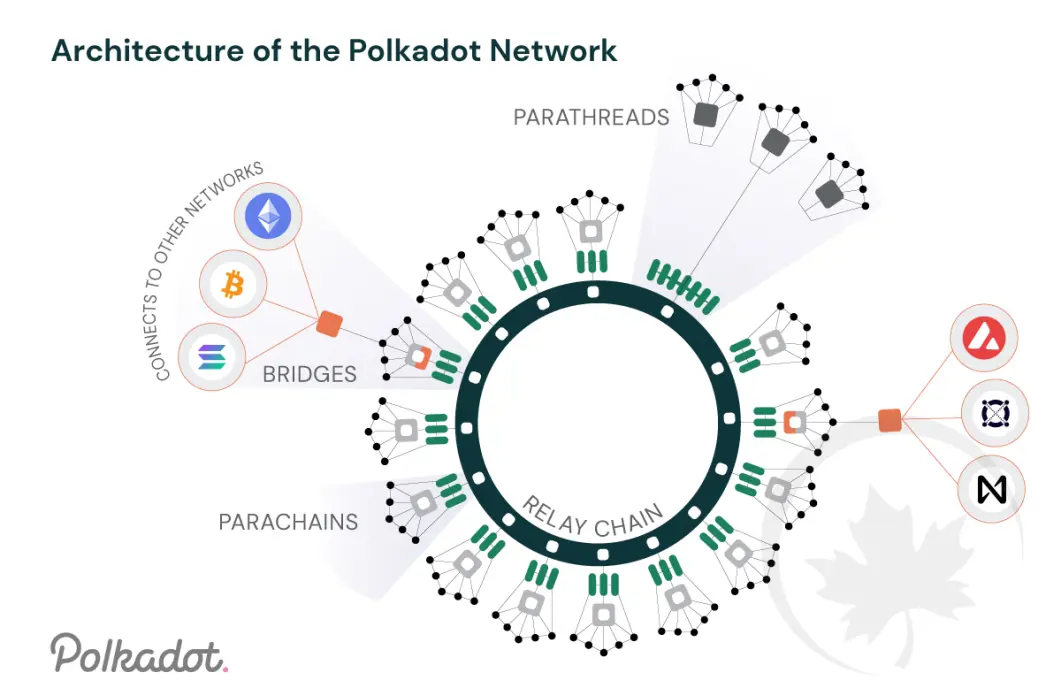
The parathreads are also secondary blockchains connected to the Polkadot network. The difference is of economic order. Unlike paranationals who have guaranteed access once elected, parathreaders do not have this access and must pay an additional fee when using. However, they have the same access to the relay chain from a technical point of view without having to win an auction (crowndloans). This network structure allows Polkadot to qualify as “Forkless” and “Future proof”, since the biggest changes in the network will be made via the parajumpers and not on the main channel. The implementation of such a methodology allows for greater elasticity in the development of the various actors. This system, although complex to describe, is much more responsive and elastic compared to the Ethereum network for example.
Although successful, this business model has been widely criticized. Many are interested in reviewing the mechanism for allocating resources to the relay chain to be optimized. The blocking of the Dots for 2 years in crowdloans prevents you from taking advantage of staking and accessing returns of up to 15%. Not enough interactions with blockchains that are not part of the Polkadot ecosystem. Still too little interoperability. An inflationary token... The interfaces are too focused on developers and not enough on users. You understand that despite the significant innovation of the DOT protocol, it still needs to be perfected. This is what Polkadot 2.0 will try to do.
What will be the innovations of Polkadot 2.0?
The bulk of the work has been done on user interfaces allowing easier access to the functionalities and services of Polkadot and its parkings. Ecosystem wallets are also evolving to make services such as decentralized staking more easily accessible. Simplified accessibility to voting is also a topic under development. Defi services are available to allow the swap of Dot tokens with tokens in and out of the ecosystem.
The biggest change is expected to affect the economic model of the Polkadot ecosystem. At the recent Polkadot Decoded conference, Gavin Wood, proposed the concept of Polkadot 2.0. One of the crucial points is that Polkadot 2.0 will change the allocation method of the blockchain’s core resource, Coretime. Gavin Wood’s proposal is to adapt the AWS model to the Polkadot ecosystem. The governance system also needs to change, but I have little information on this.
Polkadot will therefore undergo changes in scope that could boost its adoption. It is difficult to say if Polkadot will update all its changes in one go or if they will be done gradually. To follow!





