Recently, there has been increased focus on Bitcoin's significant environmental impact, and while steps are being taken to reduce its carbon footprint, some investors are looking for more sustainable alternatives. With over 4,500 mineable cryptocurrencies available, there is a question about which ones are the most environmentally friendly.
One notable example is Chia, a cryptocurrency that was developed to be an environmentally friendly alternative to Bitcoin. Chia is based on a proof-of-space and time consensus algorithm, which requires less computational power and energy consumption compared to Bitcoin's proof-of-work algorithm.
Another cryptocurrency that has been touted as more sustainable is Cardano. Cardano uses a proof-of-stake consensus algorithm, which is less energy-intensive compared to Bitcoin's proof-of-work algorithm. This means that the network requires less computational power to validate transactions, reducing its carbon footprint.
It's worth noting that while these cryptocurrencies may be more sustainable than Bitcoin, they are not necessarily completely energy - neutral, carbon-neutral or environmentally friendly. It's important to do your own research and assess the environmental impact of any cryptocurrency you are considering investing in.
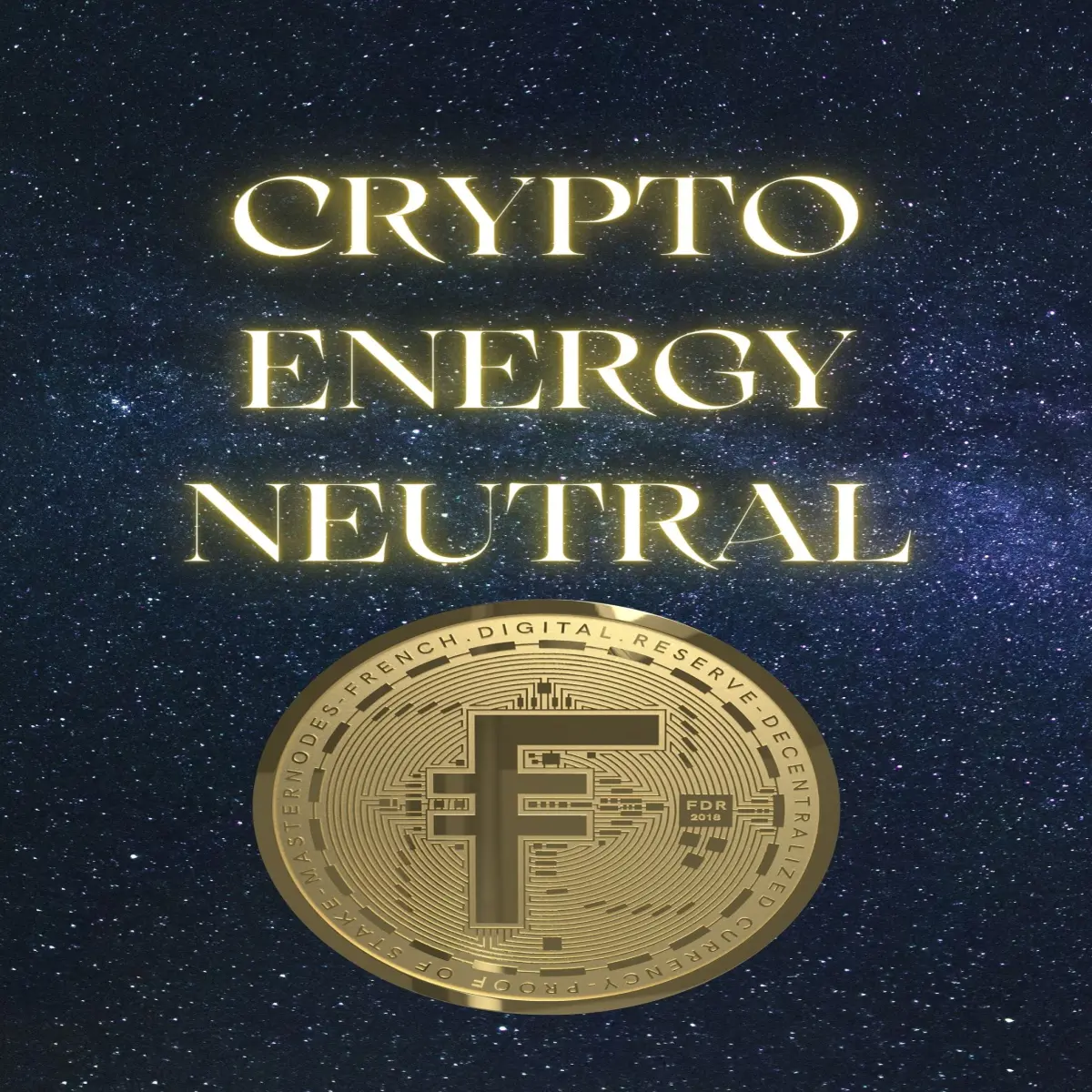
It's possible that the development of masternode technology is a response to the high energy consumption of proof-of-work (POW) used by Bitcoin. Masternodes are capable of consuming significantly less energy, ranging from 1000 to 1,000,000 times less than POW, while still supporting the same number of users and capital invested. The French Digital Reserve is reportedly leading the way in this technology. I found it interesting to conduct a brief analysis of energy consumption per dollar or BTC invested I made a few months ago take a look to this prevoius post What if FDR was the most ecological blockchain project?
However, we aim to enhance this performance by allowing users to install the wallet directly on a Raspberry P4. As far as I know, this remains the most energy-efficient computer available on the market, and with specific settings, it can consume as low as one watt per hour. Take a look to this previuos post : French Digital Reserve goes to Raspberry PI4
Carbon-neutral and plastic-neutral are two terms that refer to practices or products that have a net-zero impact on carbon emissions and plastic waste, respectively, by either reducing their carbon or plastic footprint or investing in carbon offset projects. Fdreserve decides to create a special crypto energy neutral.
Crypto energy neutral
Crypto energy neutral could be defined as a term used to describe a cryptocurrency or blockchain project that aims to have a net-zero impact on energy consumption. This means that the project's energy consumption for mining, transaction validation, and other processes is reduced as much as possible fully and not only offset by renewable energy sources or by investing in energy offset projects. The goal of becoming "crypto energy neutral" is to minimize the energy consuption as much as possible and not simply buy carbon or plastic neutral certificates in order to compensate our footprint.
French Digital Reserve, is a blockchain project that is making strides towards achieving crypto energy neutrality. One of the project's strengths is its community marketing approach, which focuses on building a decentralised community of masternoders. This approach is crucial in spreading about security in the blockchain and about sustainable practices in the cryptocurrency industry and promoting FDR's mission of becoming a more environmentally friendly blockchain.
Another key strength of FDR towards crypto energy neutrality is that it is a reserve rather than a utility token. This means that FDR is designed to have less transactions validations so less energy consumption, making it an attractive investment for those who are interested in sustainable and socially responsible blockchain projects. By holding FDR, investors are not only supporting the project's mission, but they are also investing in a long-term store of value that is designed to withstand market fluctuations.
FDR is a relatively new blockchain project that is aiming to become a leader in the push towards crypto energy neutrality. Like Bitcoin in its early days, FDR is still relatively unknown, but its potential for growth and impact on the cryptocurrency industry is significant. With its five years of development and maturity, FDR is poised to make a significant impact on the industry and pave the way for a more sustainable future.