The sophisticated trading and exchange platforms that exist today could not be in place without the ancient trading practices. On today’s episode
I explore the exchange practices from older times, with a short glimpse at a few historical aspects of this activity and how they have shaped the contemporary financial landscape. Looking at the existing information online and with the help of online encyclopedias I tried to extract some interesting facts for our usual #retroFriday episode, without any intent to cover all the various aspects and intricacies of this complex history subject that might be of interest to economists or learners of financial disciplines.
Today people can trade from the comfort of their own home but that was not like that all the time. Historically, traders on Wall Street were predominantly in-person, conducting transactions in physical trading environments, actually calling out the buy and sell, and opening positions. In the late 18th century, New York City was already a bustling commercial center. Merchants and traders gathered under a buttonwood tree on what is now Wall Street to conduct business. This informal meeting place became known as the Buttonwood Agreement location. In 1972 the New York Stock Exchange took its place but only later 1876 it officially became the central place of all traders selling stocks and securities.
The New York Stock Exchange (NYSE), for example, operated as an open-outcry auction market for many years. In-person trading on Wall Street worked like that for many years under different activities like open auctions, trading pits, hand signals, and open-outcry system - where traders physically gather on the trading floor to buy and sell securities. They use a combination of hand signals and verbal communication to convey their intentions. Later on, the trading moved on to electronic platforms such as the NYSE's Hybrid Market which soon became the dominant mode of executing trades, being both efficient, fast and cost-effective.
But what about in Ancinet Times? Sure we had trades beyond these modern-day activities.
A well-known ancient trading practice is the Silk Road, which flourished from around the 2nd century BCE to the 14th century CE. The Silk Road was not a single route but a network of interconnected trade routes that facilitated the exchange of goods, ideas, and cultures between the East and the West.
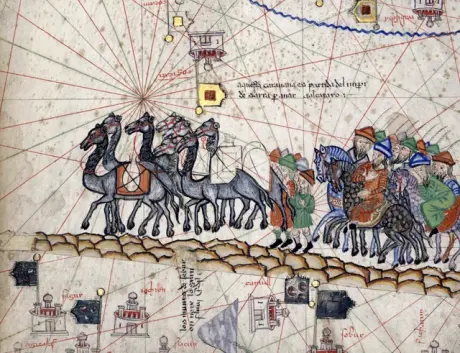
At its very core this type of ancient exchange I think very much contains the idea of value:
people exchange what they consider to be important to them and that were not always goods.
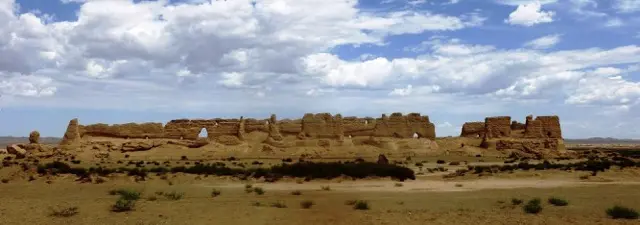
On Silk Road people did not gather to just buy/sell for physical goods but also for the exchange of cultural and intellectual ideas. It played a crucial role in the transmission of knowledge, religions, and philosophies between different civilizations. It was so popular worldwide containing both overland and maritim routes encompassing Central Asia, Middle East and Europe, connecting the Mediterranean with the Indian Ocean and East Asia.
However, at that time the journey along the Silk Road was fraught with challenges, including harsh climates, difficult terrains, and the threat of bandits. Despite these obstacles, the desire for efficient and profitable trade motivated merchants to undertake these perilous journeys.
It does sound familiar to the harsh times the modern-day exchanges of value and information happening across blockchain exchanges and Bitcoin are facing. MAybe Blockchain is a modern-day Silk Road, I am pretty sure someone already mentioned that before.

The Silk Road played a significant role in the economic prosperity of empires such as the Roman Empire, Han Dynasty in China, and various Central Asian empires. It made possible diplomatic relations and contributed to the wealth and diversity of participating regions.
The Silk Road exemplifies how ancient trading was not merely about the exchange of commodities but also about the interweaving of diverse cultures, technologies, and ideas across vast geographical expanses.
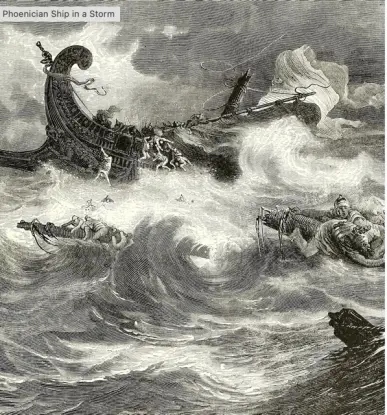
Another notable example of ancient trading is the trade conducted by the Phoenicians, a seafaring civilization that flourished between 1500 BCE and 300 BCE. The Phoenicians were renowned traders and navigators, establishing a network of maritime trade routes in the Mediterranean and beyond. The Phoenicians developed one of the earliest alphabets, which significantly influenced later writing systems. Their advanced navigational skills allowed them to explore and trade in distant regions like the Atlantic coast of Africa and the British Isles. They had their impact pretty strong on the history of commerce and maritime navigation.
The evolution of trading from ancient times to the present day shows a remarkable journey shaped by cultural, technological, and economic shifts. From the barter systems of ancient civilizations and the vibrant exchanges along the Silk Road to the establishment of formal financial institutions on Wall Street, the methods and mechanisms of trade have continuously adapted.
While times have changed and evolved I think the human need for interaction and exchange of what is valuable is still present constantly throughout periods, being in itself timeless. People with put as much values as they consider on what people find to be important, useful and exceptional. That is not always something material - it can be something of value that people exchange - cultural, emotional or simply spiritual intangible assets.
The transition from open-outcry trading to electronic platforms on Wall Street symbolises a broader global trend toward automation and connectivity in financial markets. As we reflect on the past, we see that trading has not only been a means of economic exchange but also a powerful force driving cultural exchange, technological innovation, and the interconnectedness of the world's economies. The story of trading is one of resilience, creativity, and adaptation, reflecting the dynamic nature of human interaction and commerce across the ages.
Until next time, al the best.