
# 🐍 Card Spotlight: Loki — The God of Mischief
-----
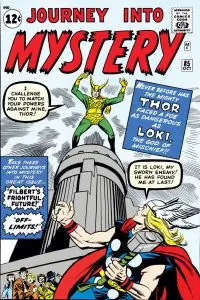
*He was a villain. Then an antihero. Then a hero. Then a god of stories. He has died more times than almost anyone in Marvel history and come back every single time. Because you cannot kill a story. Welcome to the Loki spotlight.*
-----
## The Brother in the Shadow
We covered **Thor** back in **Post #7** — the God of Thunder, Prince of Asgard, worthy wielder of Mjolnir. It was a joyful, powerful spotlight about a hero who earns his place through genuine worthiness and heart.
Today we meet his brother. And the story gets a lot more complicated.
**Loki Laufeyson.** The God of Mischief. The Trickster of Asgard. One of Marvel’s greatest villains, one of its most compelling antiheroes, and — by the end of his story in the MCU — one of its most unexpectedly beloved heroes. Few characters in Marvel history have traveled as far, changed as much, or earned their redemption as genuinely as Loki. 🐍
-----
## Who Is Loki?
Loki Laufeyson was the biological son of Laufey, King of the Frost Giants, but abandoned and left to die shortly after his birth. Following a war between the Frost Giants and Asgardians, Loki was found by Odin, who took him in as his own son. Odin and Frigga’s biological son Thor and Loki were raised together as Asgardian Princes. Throughout their formative years, Loki was always the mischievous one, while Thor was a steadfast do-gooder and a prime candidate to lead Asgard. Loki suffered from feelings of isolation and unequal treatment from his adoptive father Odin.
That is the wound at the center of everything Loki does. He was never the chosen one. Never the worthy one. Never the one Odin looked at with the same pride he reserved for Thor. And he knew it — long before he discovered the truth of his Frost Giant heritage, which shattered whatever fragile sense of belonging he had managed to build.
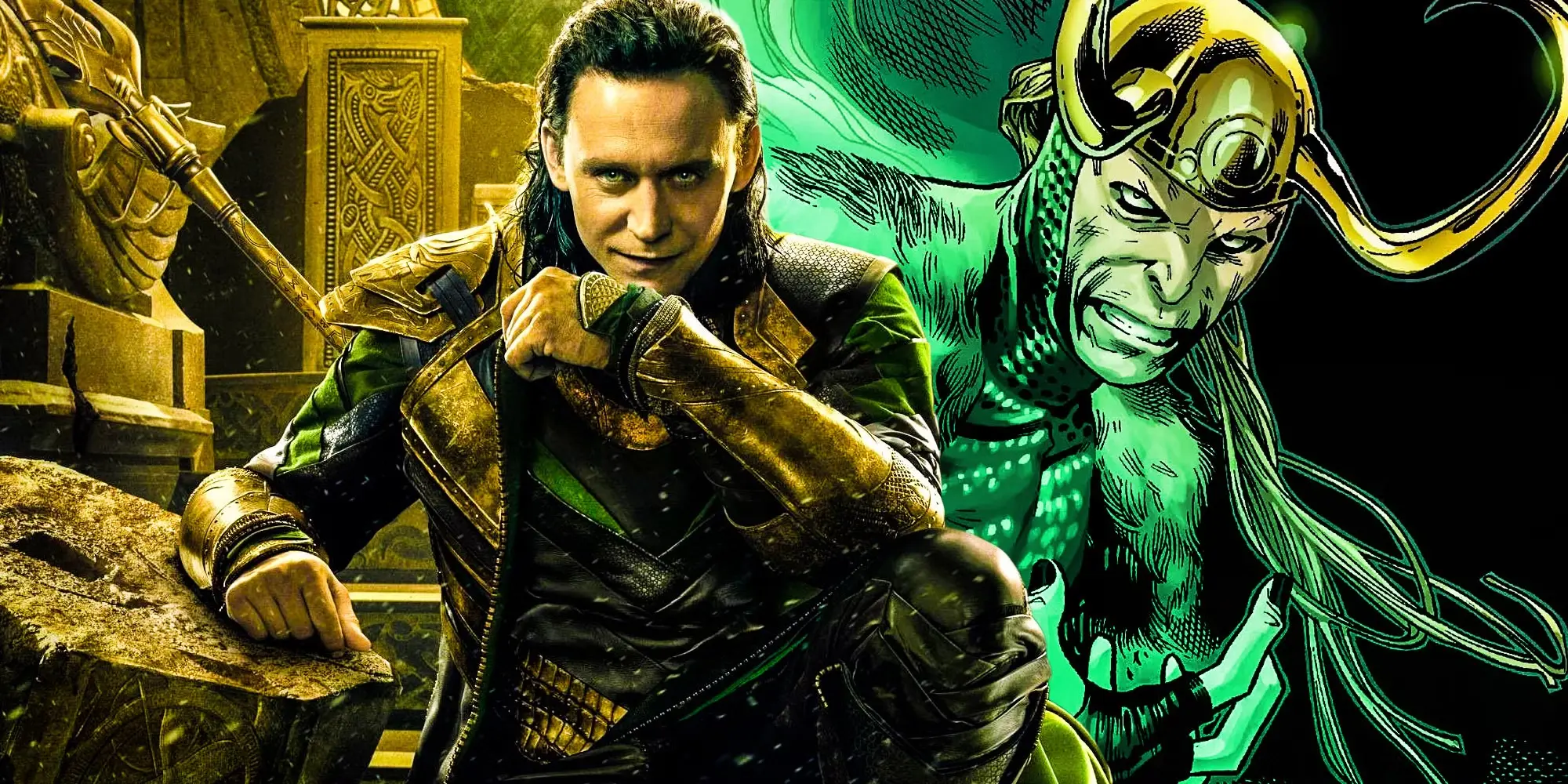
Always resentful of living in his brother Thor’s shadow, Loki studied magical arts and earned the “God of Mischief” title. And those magical arts are extraordinary. Loki holds the title of most powerful sorcerer in all of Asgard, with uncanny magical abilities including astral projection, shape-shifting, hypnosis, levitation, conjuration, and teleportation. He is, in pure magical firepower, arguably more powerful than Thor himself. But where Thor’s strength is displayed openly and celebrated, Loki’s power operates in shadow — in schemes, in illusions, in the spaces between what people believe and what is actually true.
### The Trickster Archetype
Loki is one of Marvel’s most direct connections to **actual mythology**. The Norse Loki — a shapeshifting trickster god who alternately helped and hindered the other gods of Asgard — is one of mythology’s most complex figures, and Stan Lee and Jack Kirby drew deeply from that source when they created the Marvel version. The trickster archetype is one of the oldest in human storytelling: the character who operates outside the rules, who sees through pretense, who reveals uncomfortable truths through chaos and misdirection.
What makes Marvel’s Loki work so brilliantly is that his mischief has always come from a place of genuine pain. He’s not evil for evil’s sake. He’s a man — a god — who was never given what he needed and found the only power available to him in manipulation and deception. Every scheme, every betrayal, every moment of chaos traces back to that original wound: the boy who was never enough.
### The Redemption Arc — A Long Time Coming
In the comics, Loki has died and been reborn multiple times — sometimes as a villain, sometimes as something more ambiguous. The most celebrated modern Loki story is **Kieron Gillen’s run** (2010-2012), which introduced a younger, reborn Loki trying to escape the prison of his own reputation — only to discover that destiny and identity are not so easily shed. It’s one of Marvel’s most emotionally intelligent comics runs and is essential reading for any Loki fan.
In the MCU, **Tom Hiddleston** turned Loki into a global phenomenon. First appearing as the villain of *Thor* (2011) and *The Avengers* (2012), Hiddleston’s performance was so magnetic, so layered, and so strangely sympathetic that audiences worldwide fell in love with the character they were supposed to hate. Marvel recognized this and gave Loki more and more to do — *Thor: The Dark World*, *Thor: Ragnarok*, *Avengers: Infinity War* — building toward the Disney+ series *Loki* (2021-2023), which gave him the full, epic, emotionally satisfying arc his character deserved.
By the end of *Loki* Season 2, Hiddleston’s Loki had completed one of the MCU’s most extraordinary character journeys — from abandoned child acting out through villainy, to reluctant hero, to something genuinely, beautifully transcendent. We mentioned Loki briefly in our **Kang post** since the TVA and He Who Remains were introduced through his series — but his story is so much bigger than that footnote suggested.
He became, in the end, the **God of Stories**. Which is perfect. Because Loki has always been the most interesting story in the room.
-----
## Loki in Marvel Snap — Chaos in Card Form
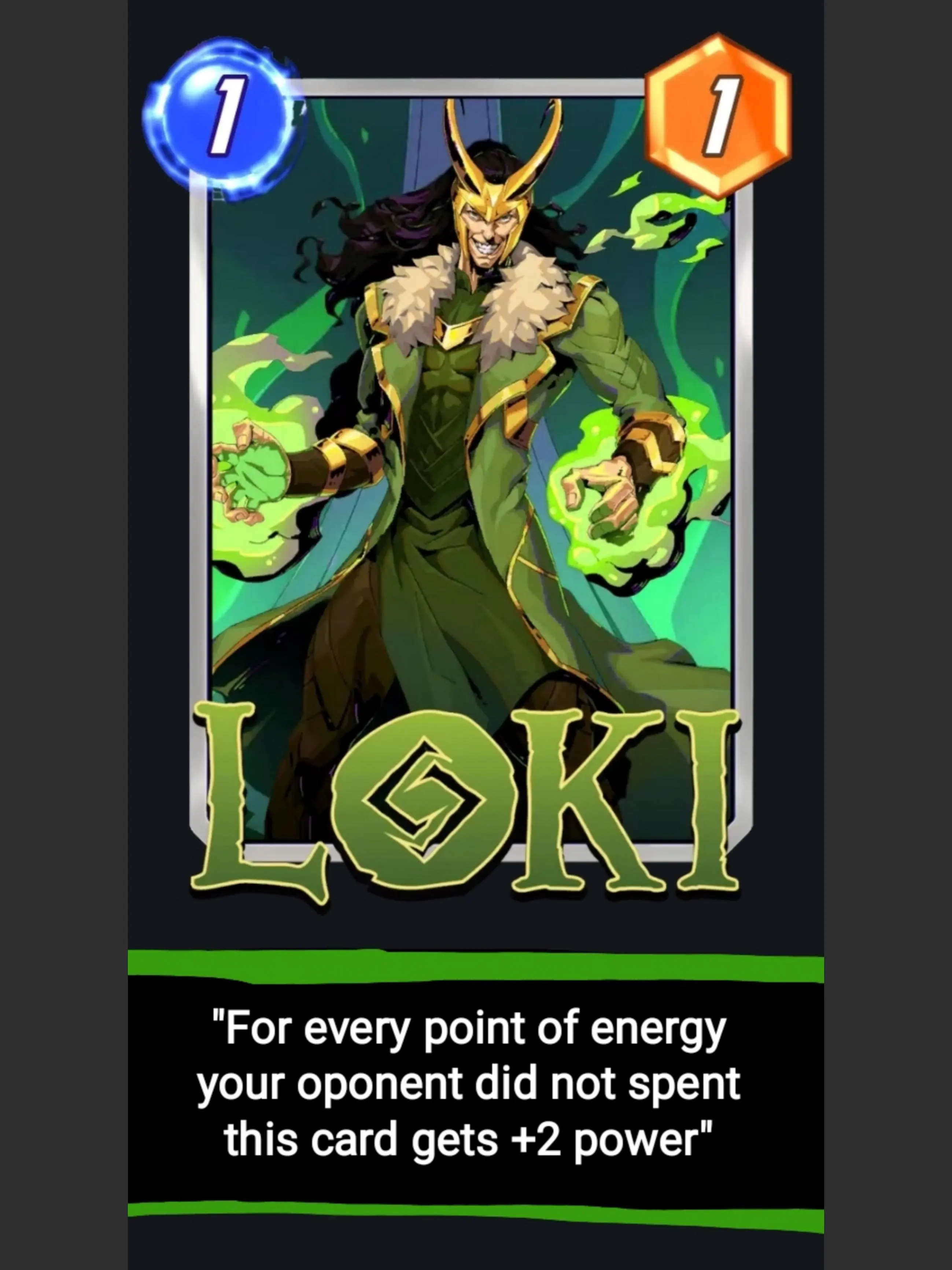
Now let’s talk about how the God of Mischief shows up on the board — because his Marvel Snap card is one of the most uniquely chaotic and creative designs in the entire game. It captures Loki perfectly: he doesn’t fight you directly. He gets inside your head and turns your own weapons against you.
### 🃏 The Card
Loki is a Series 4 card that costs 1 energy and has 2 Power, with the On Reveal ability: “Replace your deck with your opponent’s starting deck. Give those cards -1 Cost.”
Read that again. For just 1 energy, Loki **steals your opponent’s entire deck** and gives you every card in it at a discount. Your original deck is gone — replaced entirely by a copy of what your opponent brought to the game, with each card costing 1 less energy than normal.
The implications are staggering. You now know exactly what your opponent planned to play — because you have it all in your hand. You can counter their strategy because you understand it intimately. You can use their best cards against them. And you can do all of this from cards that cost less energy than they cost your opponent, giving you a tempo advantage on top of the information advantage.
It is, in every sense, the most Loki ability in the game. He doesn’t build his own power — he takes yours and uses it better than you would have. Loki’s unparalleled schemes and maneuvers are represented in Marvel Snap through his ability to make your opponent’s cards your own.
### 💡 The Strategic Depth
The beauty of Loki is how deeply he rewards **reading your opponent**. When you play Loki on turn 1, you immediately see your opponent’s entire strategy laid out in your hand. A Galactus deck? You now have Galactus — and you can play it at 5 Cost instead of 6. A Silver Surfer deck? You have all their 3-Cost cards and Surfer himself, all discounted. A Destroy deck with Death and Knull? Now you have Death and Knull at a discount.
Not only does Loki give tons of insight into your opponent’s deck — he also enables you to play their cards at a discount, which enables surprising combinations and commanding leads.
The counterplay is equally interesting. Because Loki is a known card, experienced players build their decks with the possibility of a Loki steal in mind — avoiding certain combinations that would be devastating in their opponent’s hands. Playing against a Loki deck means playing against yourself, and that mind game alone makes every match involving Loki uniquely tense and entertaining.
### 🔧 The Evolution
Loki was originally released as a higher-cost card before Second Dinner recognized that his true home was as a turn 1 play — a card dropped as early as possible to maximize the information and deck advantage across the full game. Dropping him to 1 Cost transformed him from a niche option into one of the most creative and skill-expressive cards in the game.
His current form — 1-Cost, 2-Power, replacing your deck with your opponent’s starting deck at -1 Cost — is considered one of Marvel Snap’s most elegantly designed cards. He has a huge number of variants, including the beloved **Vote Loki** variant based on the comic series where Loki runs for President of the United States (yes, that’s a real thing), and stunning art from **Artgerm**, **Peach Momoko**, **Esad Ribić**, and more — reflecting just how beloved the character is across the player base.
-----
## How to Play Loki Today
**The Turn 1 Information Drop** — The core Loki strategy is simple: play him on turn 1 at a location, immediately see your opponent’s full deck in your hand, and adapt your entire game plan accordingly. Every decision from turn 2 onward is informed by perfect knowledge of what your opponent is trying to do.
**The Discount Advantage** — All of your opponent’s cards cost 1 less in your hand. A 6-Cost Galactus costs 5. A 5-Cost Magneto costs 4. A 4-Cost Spider-Man costs 3. The tempo advantage of playing your opponent’s best cards a full turn earlier than they can is enormous — and can completely flip the momentum of a game by the midpoint.
**The Mind Game** — Even the *threat* of Loki changes how your opponent plays. If they know you’re running Loki, they have to consider what their own cards look like in your hands. Do they hold their best card back? Do they play around the possibility? Loki warps the entire psychological landscape of a game just by existing in your deck.
**The Quinjet Synergy** — Quinjet discounts created cards by 1 energy. The cards Loki generates count as created cards — meaning with Quinjet on the board, your opponent’s cards cost *2 less* than normal. A 6-Cost Galactus suddenly costs 4. A 5-Cost Iron Man costs 3. The math gets genuinely unfair.
**Best Synergy Cards:**
- **Quinjet** — Discounts all Loki-generated cards by an additional 1 energy. Essential.
- **Mobius M. Mobius** — Prevents your opponent from reducing your costs but doesn’t affect the cards you already have from Loki. Protects your engine.
- **Cornelius van Lunt** — Works well with the created cards Loki generates for hand manipulation
- **Blink** — Shuffles your hand and draws new cards, useful for cycling through your stolen deck efficiently
- **The Hood** — A 1-Cost card that adds a Demon to your opponent’s deck. Pair with Loki to further disrupt your opponent’s strategy
-----
## The Verdict
Loki is one of Marvel’s greatest characters because he refuses to be simple. He was the villain we loved, the antihero we rooted for, and eventually the hero we never expected. His journey from abandoned Frost Giant prince to God of Stories is one of the most emotionally rich arcs in Marvel history — in the comics and on screen.
And in Marvel Snap, he is exactly what he should be: a 1-Cost card that steals your opponent’s entire strategy, turns their weapons against them, and does it all with that infuriating, irresistible smile.
He was never going to play fair. That was never the point.
*Glorious purpose.* 🐍
-----
*Thanks for reading Card Spotlight #19! Have you been running Loki in your decks? What’s the most devastating opponent deck you’ve ever stolen with him? Drop it in the comments — I want to hear the chaos!*
*— **Seven-NATE-Nine***
-----






