15 minutes into the School-based Dyslexia Remediation (SDR) workshop, I had to confess to the trainers that I didn’t know how to annotate on the Zoom Whiteboard. But it was good that I plucked up the courage to ask them, for I learnt that once the host shared her screen, participants could press drop-down on the menu, select Annotate and proceed to do annotation on the document shared by the host.
This underscores the importance of annotations as a tool to impart reading comprehension skills in the SDR classroom. The trainers would draw a squiggly line underneath words deemed to be too difficult for students; presumably this is how SDR teachers would draw their students’ attention to vocabulary words during their teaching.
I don’t know if squiggly lines are the only kind of annotation SDR teachers do in their classrooms, but at Naval Base Primary School, we place heavy emphasis on annotations. In fact, there are two kinds of annotations that we are expected to teach our students: surface and deep annotation.
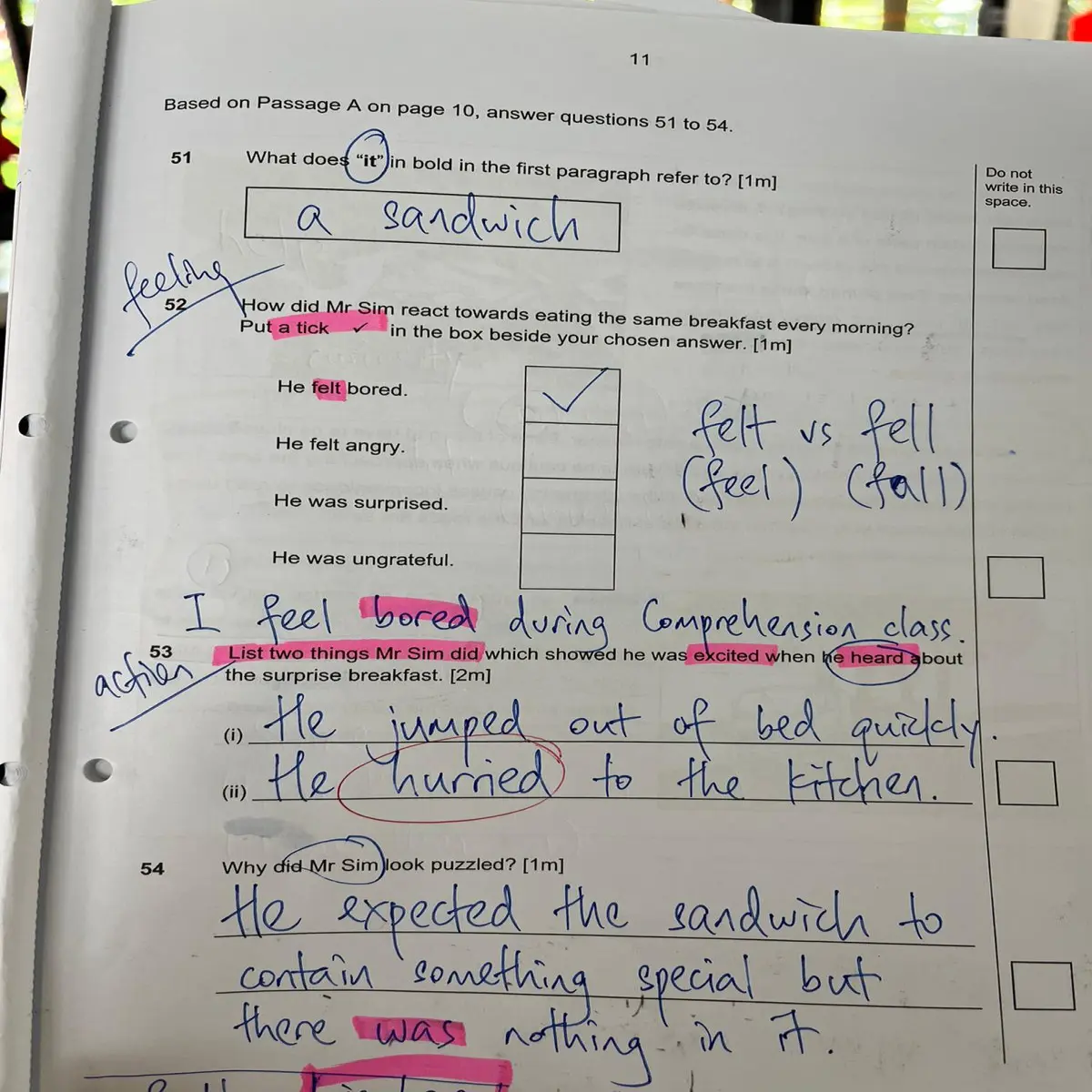
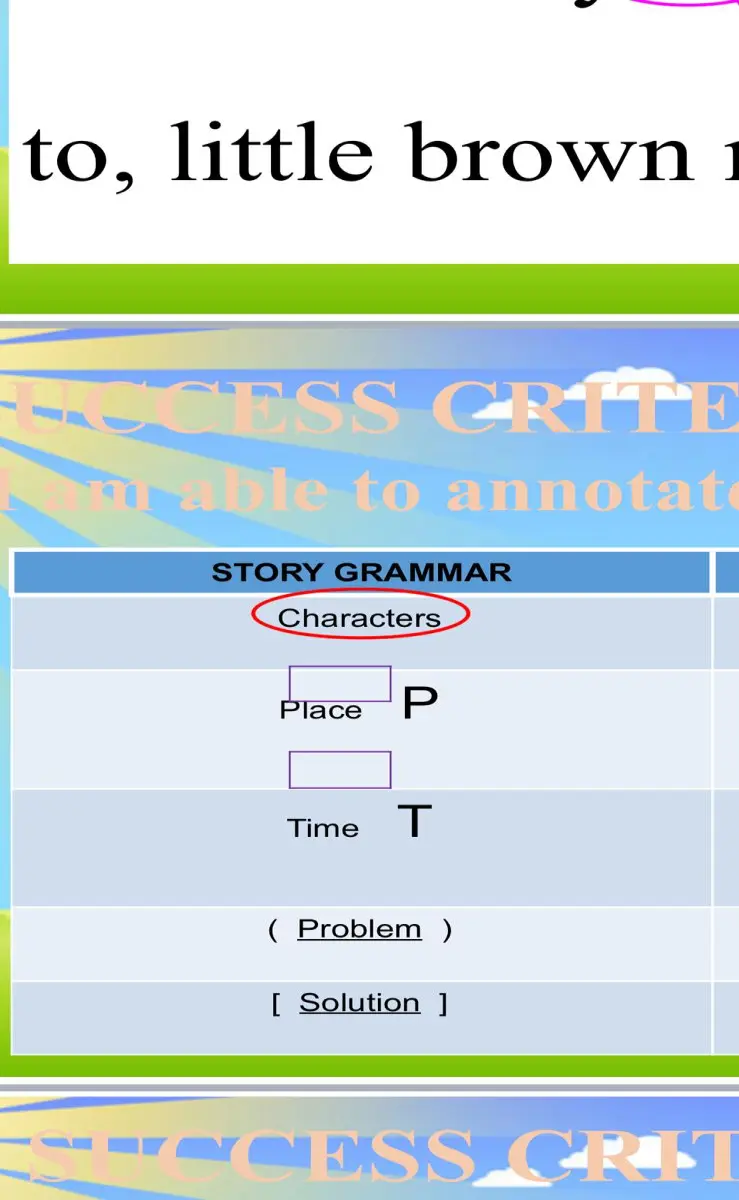
Surface annotation involves students circling the names of all characters, drawing a box for every location and annotating ‘P’, as well as drawing a box for every time reference and annotating ‘T’. Another feature of surface annotation is circling a pronoun and drawing an arrow to the person or thing this pronoun refers to. Students are expected to do surface annotation at the same time when they read the passage as doing so is said to help them grasp the setting/characters/problem/solution better and thus, engage more meaningfully with the text.
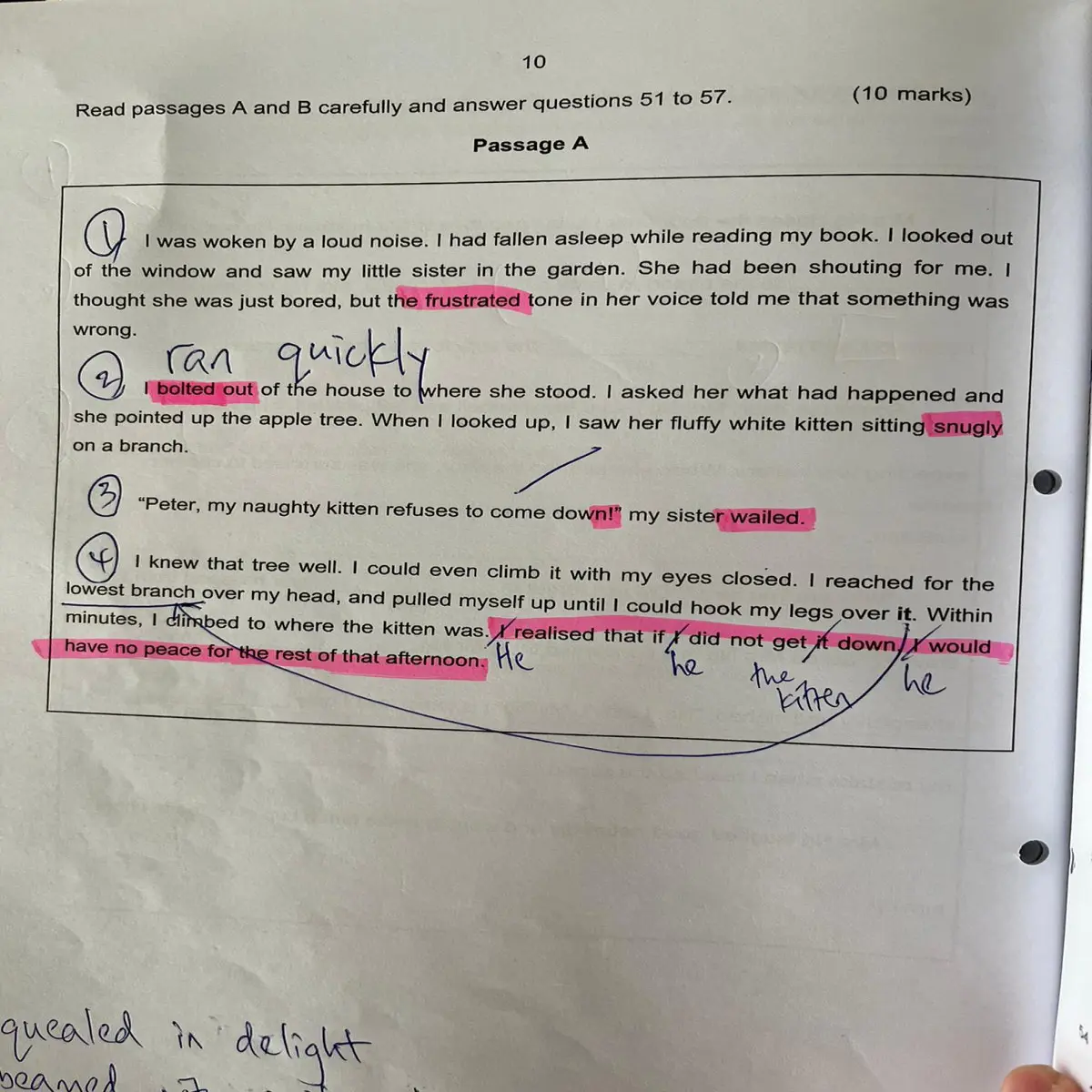
Honestly, I have my doubts about the effectiveness of surface annotation because it seems to me that the few conscientious students who do surface annotation under exam conditions and draw arrows all over the passage will still answer the comprehension questions wrongly anyway. Maybe it’s just something they do on auto-pilot without really seeking to consider what their annotations mean. Nonetheless, I liked to get students to do surface annotation as a practice because it facilitated the process of me going through the answers with them. This was especially relevant for the referencing question. (What does “it” in bold refer to?) If students drew an arrow to the correct referent, they would understand why “it” refers to it.
It seems that the annotation method used by the SDR trainers doesn’t require students to draw boxes and arrows, but instead aims to get them to underline the parts of the passage that are the “details that lead to the answer”. Students need to consider whether these details are sufficient to answer the comprehension question.
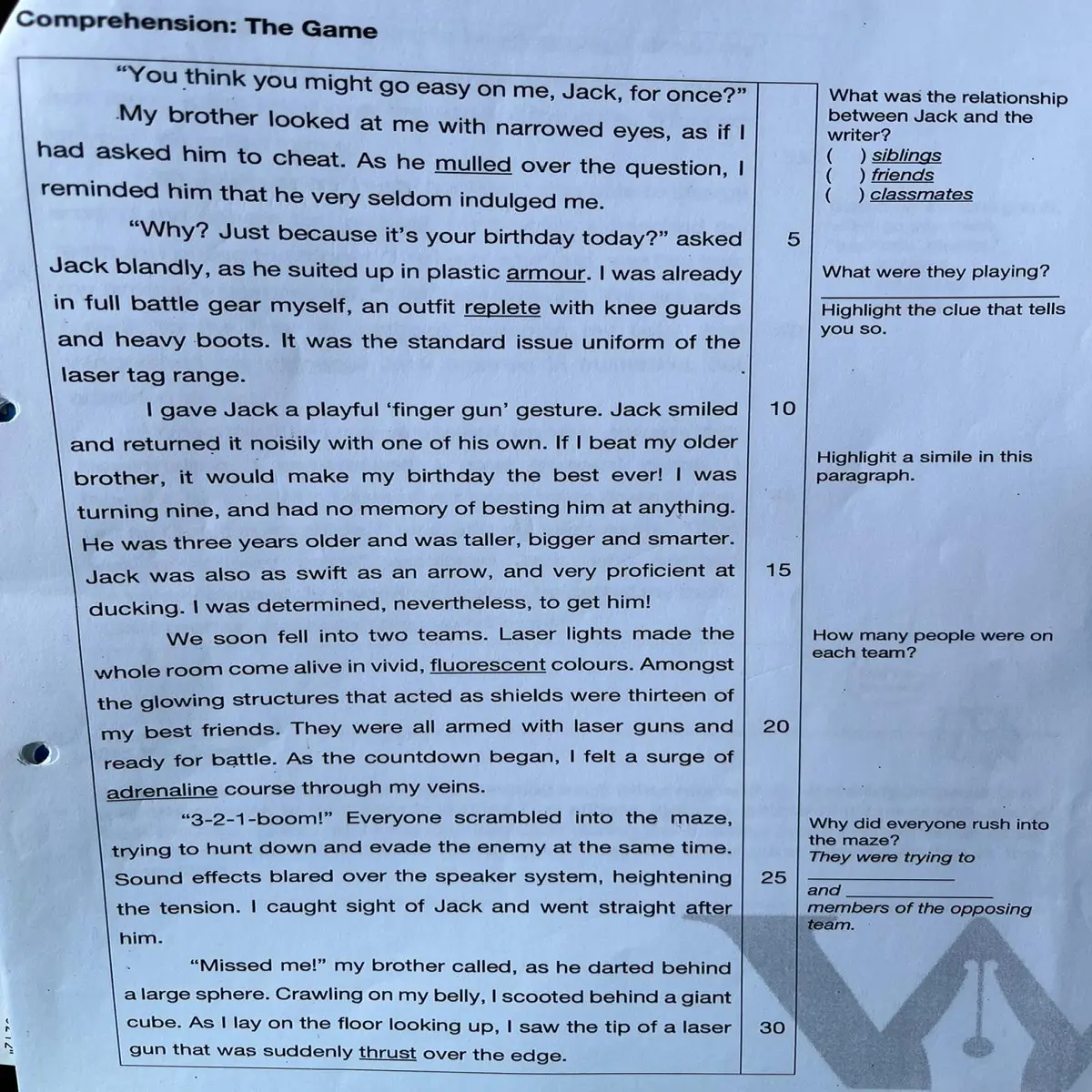
So in a previous life, I taught at a tuition centre. What I liked about its materials was that guiding questions were placed alongside the comprehension passage, so students learnt how to annotate the text by answering these questions when I marshalled them through the reading. This might be something we wish to do for our Units of Work.
Annotation is meant to help students answer inference questions because they are made aware of the fact that the details are insufficient to answer the comprehension question. Hence, they will know to apply the formula what's in the text + what i know = answer to inference question. I checked the PSLE Foundation English papers from 2018 to 2020. Actually, inference questions are seldom asked in the PSLE for foundation students. I could only find one such question in the 2020 paper. I venture that it’s safe to say that the majority of our students will not know the distinction between literal and inference questions because if their teachers were anything like me, they simply have never been exposed to inference questions. Haha.