
If you read my articles regularly, you will know that I am trained to teach students with dyslexia. I am still learning along the way though. Definitely not competent enough. But because of my training, I told my reporting officer that I would volunteer to come up with a roadmap to incorporate the teaching and learning of affixes into the curriculum from Year 1 to Year 4 students.
I am a hoarder and like to keep random workshop notes, worksheets and other exercises for future reference. Unfortunately, I am not the most organised person, so my stuff is strewn all over my workplace table and home. Initiating this passion project would necessitate me to find my things and consolidate them together. I love the process of organising - it clears my mind!
Since no one has come up with the roadmap yet, I was hesitant about how I should do it. So I began with the end goal in mind because that was how Stephen Covey advocated we problem-solve in the 7 Habits of Effective People.
My end goal is that if I could come up with a progressive and systematic way to introduce affixes into the curriculum, I would want to utilise this road map for my school’s edition of the Spelling Bee. As in test Year 2 students ‘creative’ and Year 4 students ‘creativity’ because the older students should be challenged to add the suffix ‘-ity’ to the word ‘creative’.
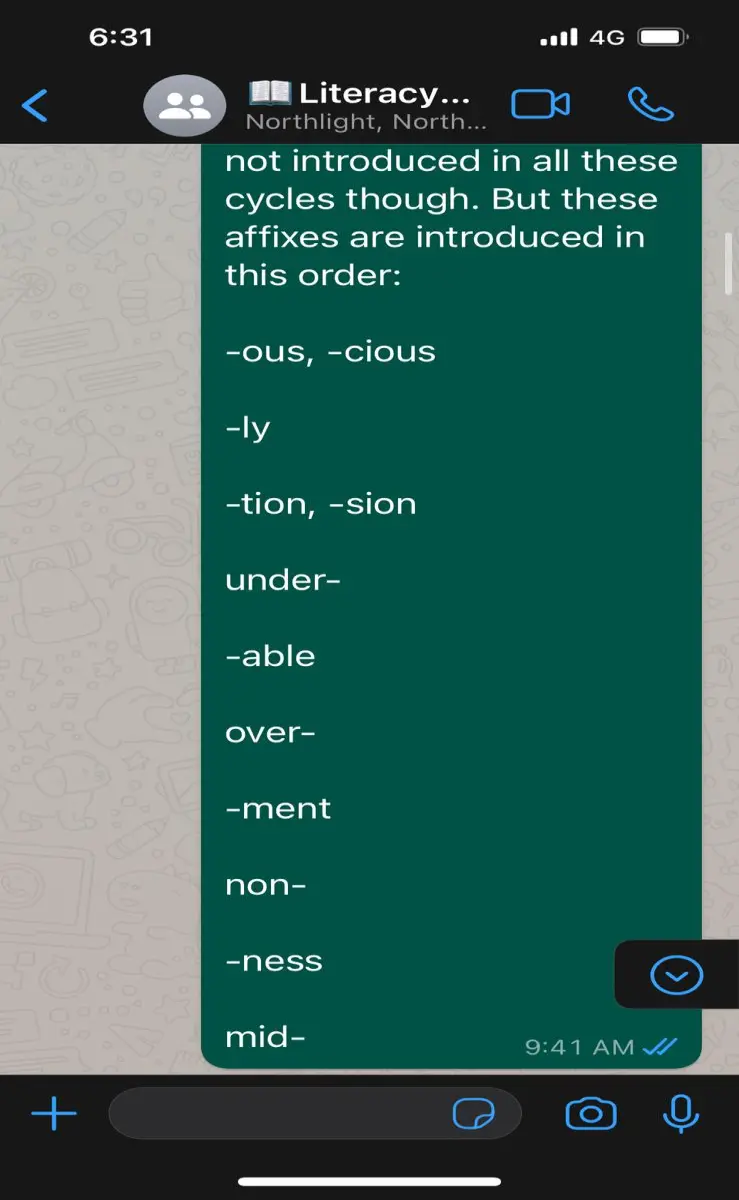
Each year has 4 school terms and there are four levels in my school. This means that I need to spread the introduction of the top 20-40 affixes (I haven’t exactly decided how many yet) over 16 workbooks. Of course, I would need to repeat the teaching of the most commonly used affixes over several years to reinforce student learning. So that they would internalise the meaning of these affixes and apply them for life. A list of affixes I would be using for reference is shown as below.
After deciding on the affixes for TWO workbooks, I came up with notes to explain their meanings. I also came up with word families that consolidated all the related words of a key concept by using Canva to design posters. 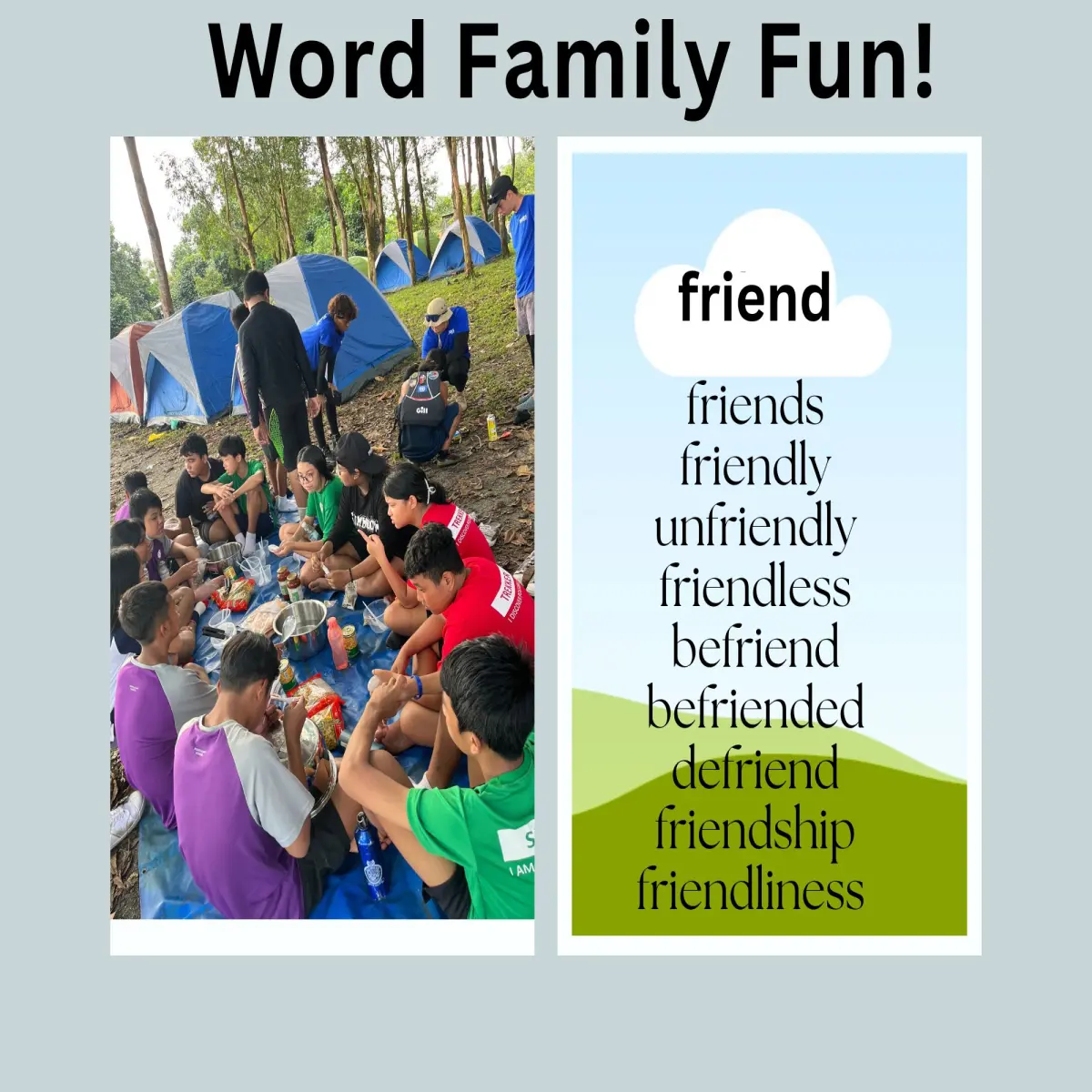
I didn’t rest on my laurels. I felt that it was important for my students to understand how words build on other words, so I took the extra mile to build a word chain chart. I believed that if students understood the relationships between related words in a word family, they would be more likely to spell words correctly.
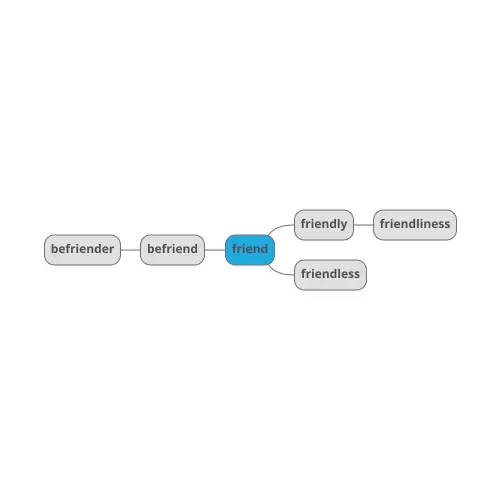
Now, I’m in the process of repeating and rinsing the process for 14 other workbooks. After I come out with explanatory notes for all 16 workbooks, I want to come out with exercises to review students’ understanding of the concepts taught.
A simple exercise is word recognition. Pair the correct spelling of a word with a misspelling and have students scratch their heads and figure out which is the right spelling.
Secondly, because words should be learnt in context, I intend to come out with an exercise that integrates the spelling word within a sentence. Something like “the doctor informed Mother that it was a successfull surgery.” So students must spell the word ‘successful’ correctly. I think these exercises will provide the opportunity for me to explain why some words are spelt with the ‘-able’ suffix whereas other words are spelt with the ‘-bile’ suffix. You know, the different versions of a suffix.
Next, I want to come up with multiple choice exercises where the options are composed of the correct spelling and several misspellings. I want to test whether students are able to distinguish the right spelling from the misspellings.
Last but not least, I aim to come up with an exercise that has the target word and have students infer its meaning through the prefixes and suffixes contained within the word. So the focus isn’t on spelling but on whether students are able to work out the meaning of words they are unfamiliar with.






