I received training as an Educational Therapist by my school this year, and my increased responsibility was to help dyslexic students overcome their difficulties with reading and writing. Now, I am given the chance to state my frank opinions in order to better the processes and curriculum managed by my English department. After thinking long and hard about it, this was what I came up with:
Prefixes and suffixes need to be incorporated into our curriculum in a structured manner, especially since students were exposed to them in their primary school years, but might have lacked the opportunity to consolidate their knowledge in this area.
In order to apply the pedagogy of Differentiated Instruction, students are often divided into 3 groups: low progress, middle progress and high progress.
Recommendations For Low Progress Students
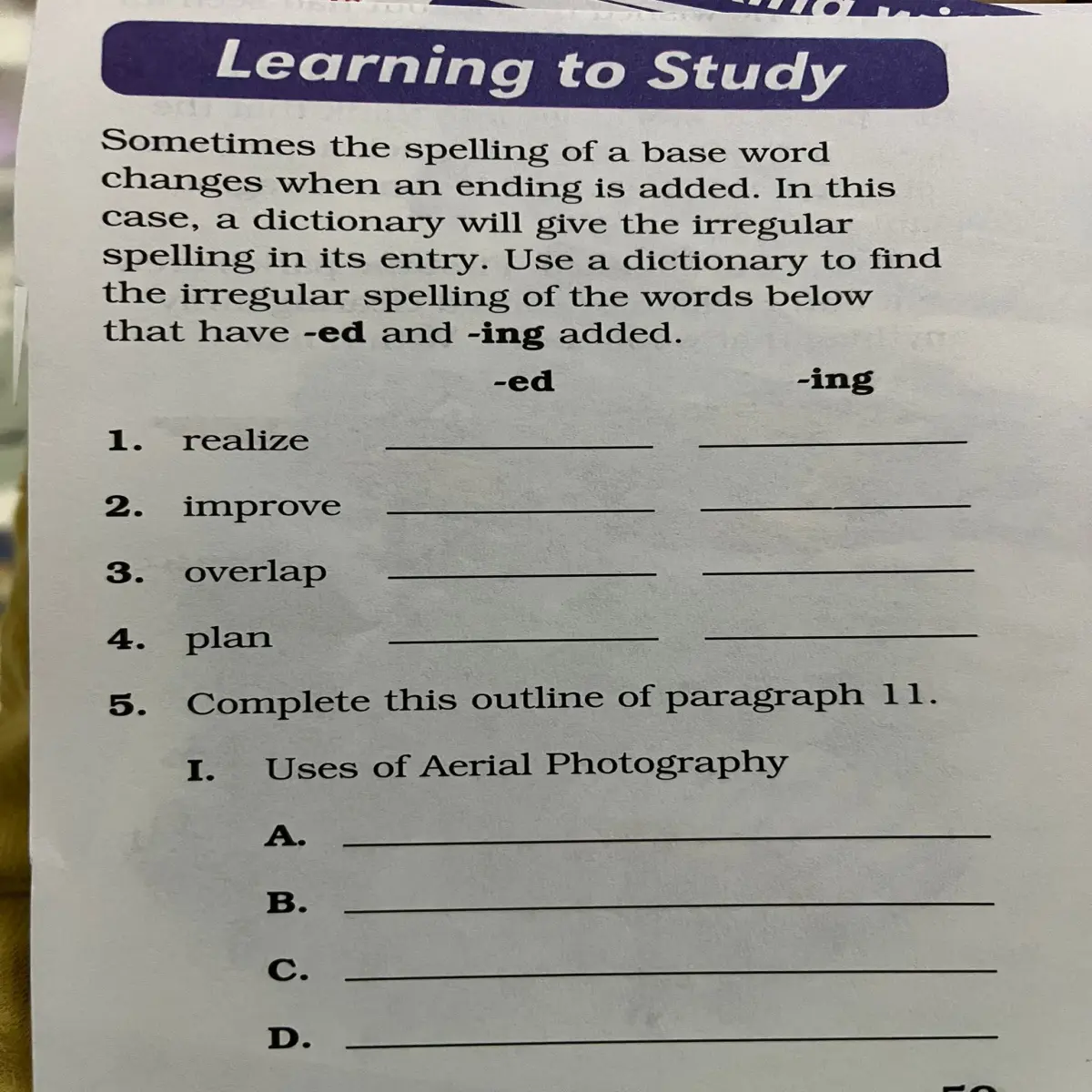
For the low progress students in my school, I am of the opinion that they should at least know -ed and -ing because there are spelling and pronunciation rules governing their use. Students should be aware of the following:
- enunciate the 3 different pronunciations of -ed at the end of words, namely /iz/, /s/ and /z/
- drop the e spelling rule
- You should drop the “e” from the end of a word when adding a suffix that begins with a vowel (e.g., “-ing,” “-ed” or “-able”)
- double the final consonant rule
- If a one syllable word ends with a vowel and a consonant, double the consonant before adding the ending
- In a word with 2 or more syllables, double the final consonant ONLY if the word ends in 1 vowel + 1 consonant AND the final syllable is stressed.
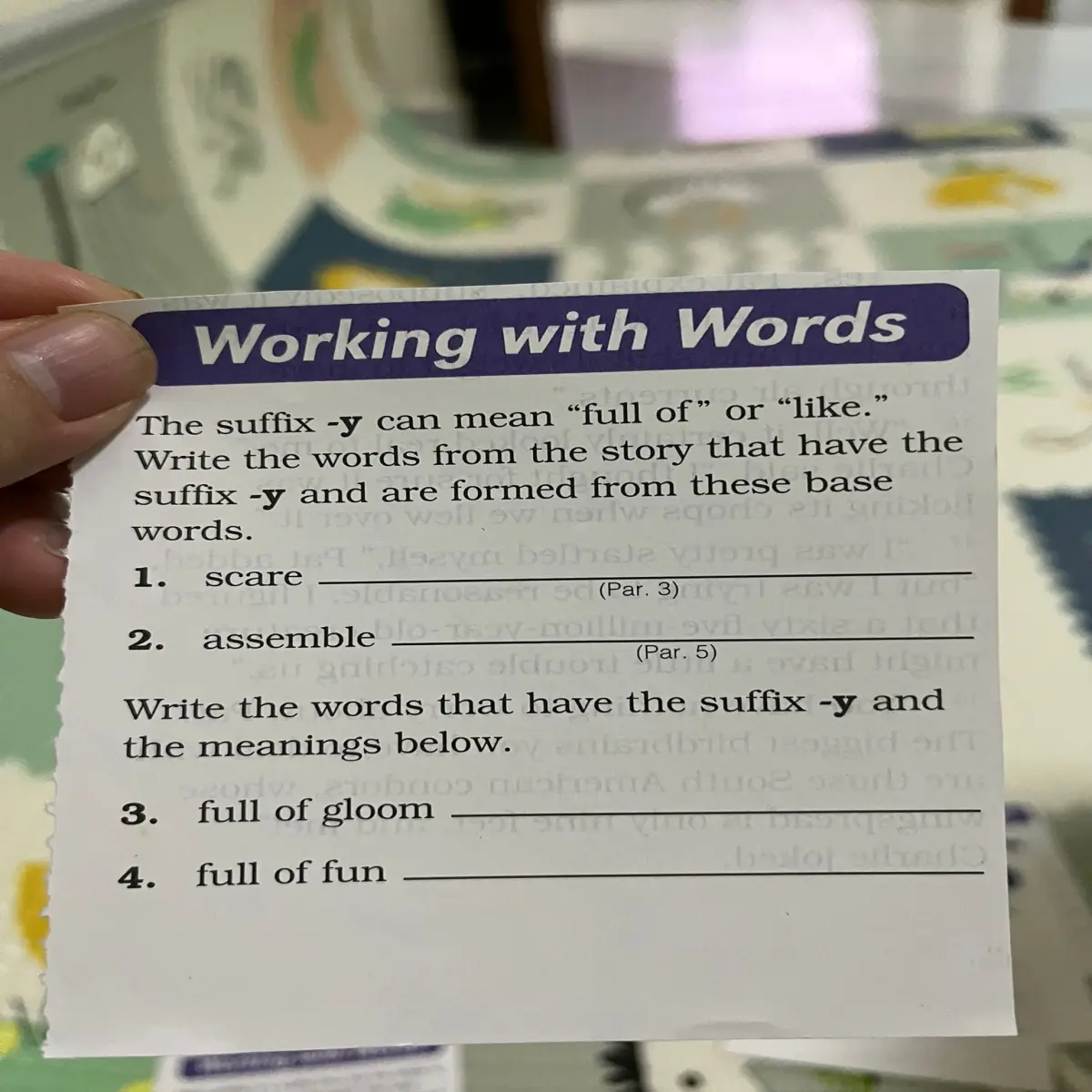
Low progress students should also know the suffix -y because this will help them with their pronunciation. If a word is two syllables, and ends in a “Y”, pronounce it as the long E sound. Likewise, they should be introduced to the suffix -ly because we typically pronounce it as the long E sound (i.e. "lee") as in quickly, carefully, unfortunately, dangerously, finally, happily, currently, promptly, previously and usually. '-ly' carries the meaning of "like or to act in a way that is..."
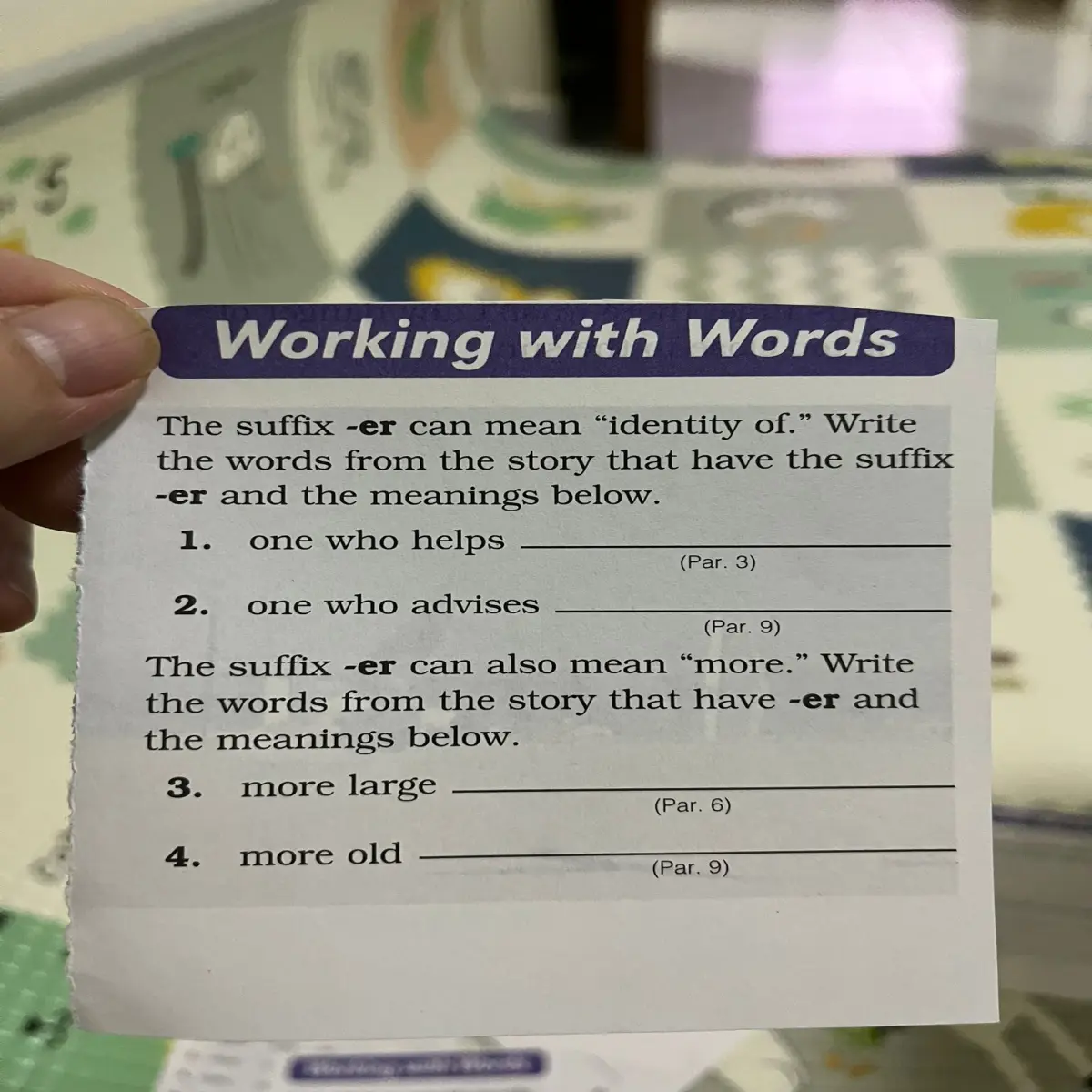
Additionally, low progress students can also be taught the ultra utility Suffixes. "-er" and "-or" come to mind because the facility students will encounter words like regulator, condenser, conditioner in their curriculum. "-er" and "-or" can mean "identity or occupation of".
For Middle Progress Students
More affixes could be taught to our middle progress students. Take -ous, -cious, under-, over-, -ment, non-, -ness, -ful, mid-, mis-, ir-, dis, im-, -less for instance.
"-ous" and "-cious" carry the meaning of "having qualities of". Examples are gracious, courageous, continuous, adventurous, humorous and spacious.
"-tion" and "-sion" carry the meaning of "act/state of". Examples are reflection, impression, imagination, observation, confession and discussion.
"under-" carries the meaning of "below". Examples are underline, underground, underwater, underweight, underage and underpaid.
"-able" carries the meaning of "capable of". Examples are adaptable, comfortable, remarkable, reliable, believable and agreeable.
"over-" carries the meaning of "above". Examples are overnight, overjoyed, overflow, overweight, overage and overthink.
"-ment" carries the meaning of "act/process of '-ment'". Examples are movement, agreement, excitement, punishment, treatment and amazement.
"non-" carries the meaning of "not". Examples are nonstop, nonsense, nonfiction, non-living, non-metal and non-dairy.
"-ness" carries the meaning of "condition" or "quality". Examples are illness, thickness, kindness, sweetness, brightness and sharpness.
We could challenge our students who display familiarity of several suffixes to attempt fill-in-the-blank exercises:
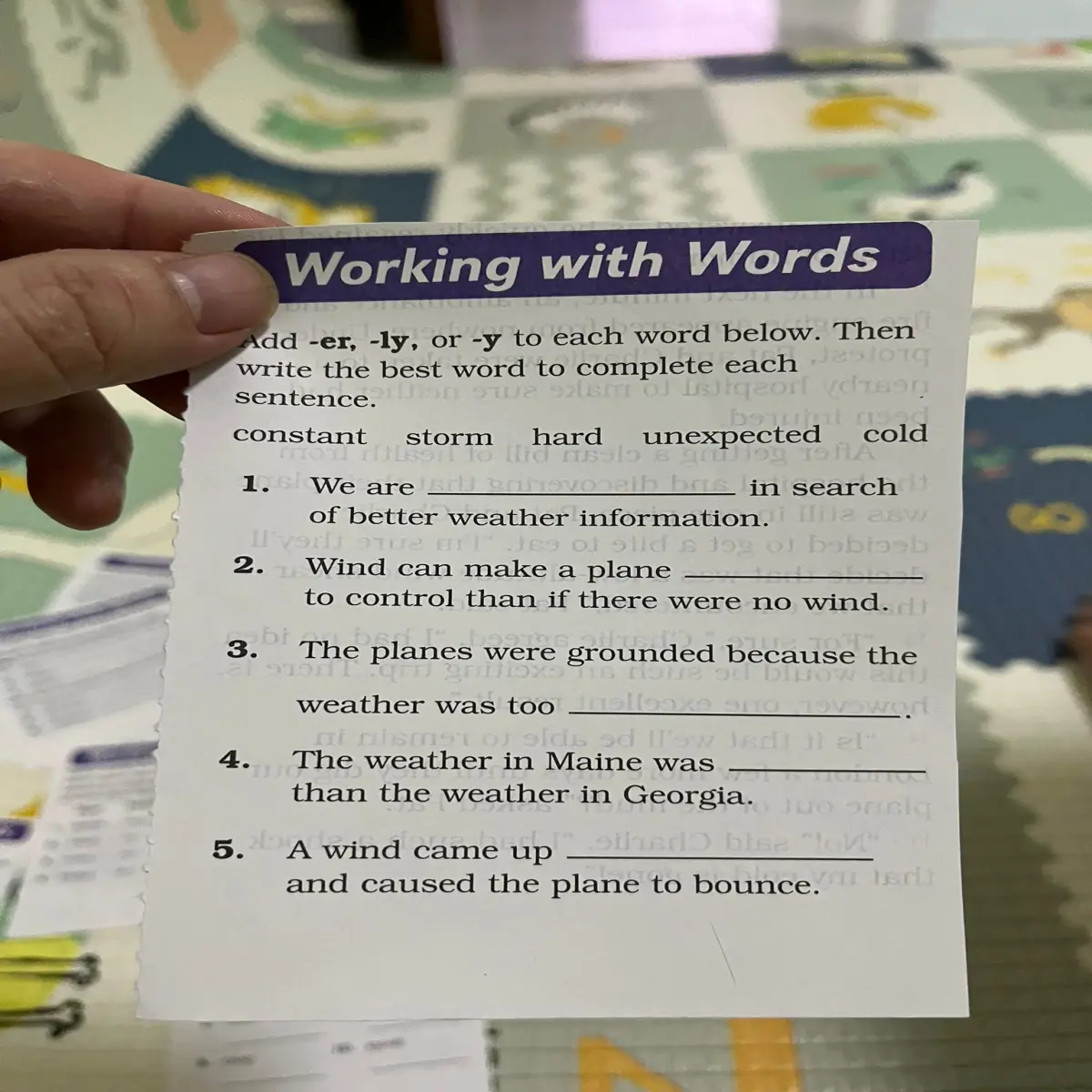
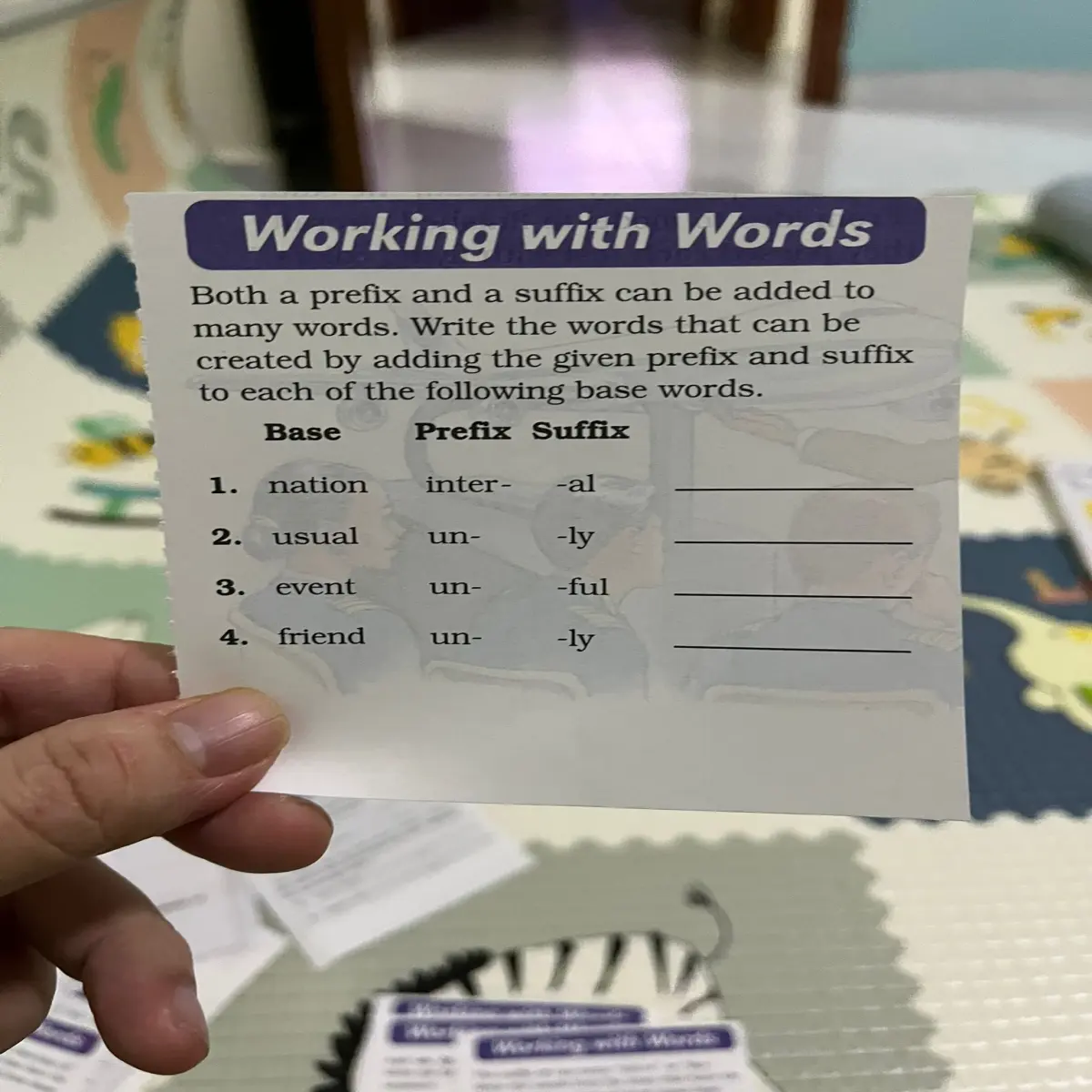
They should also learn how a prefix and a suffix can be added to a root word to create another word.
For High Progress Students
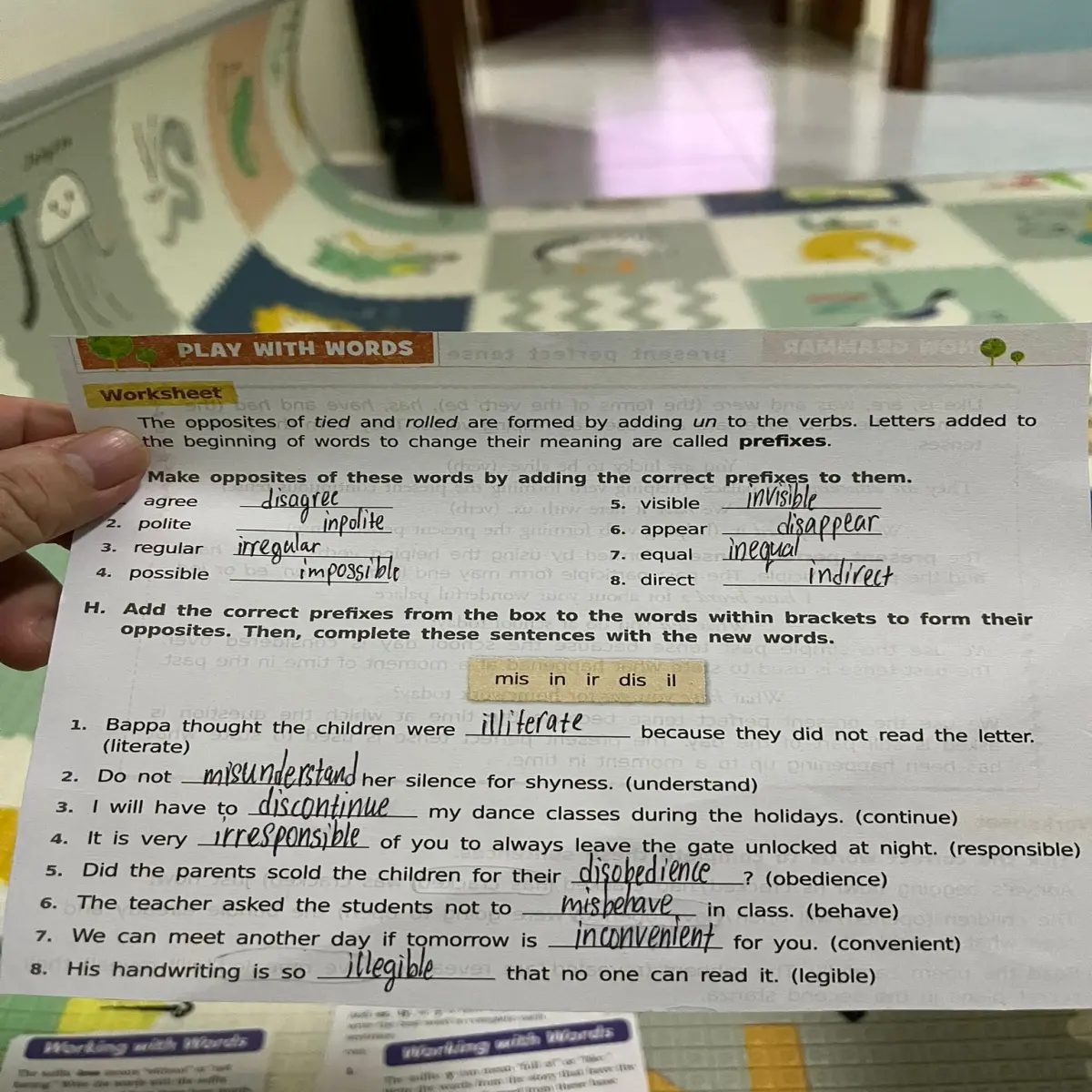
As for our top band students, we ought to group similar prefixes together and challenge them to tackle fill-in-the-blank exercises like this. Do you know that there are many negative prefixes in the English language? There are at least negative prefixes in English: negative prefixes (a(n), dis-, in-, non-, un-), reversative or privative prefixes (de-, dis-, un-), pejorative prefixes (mal-, mis-) and prefixes of opposition (anti-, counter-).
I just wish to highlight why there are so many negative prefixes in English via this detailed Quora post. The author wrote:
The short answer is that English steals a lot from its friends. The long answer is that all the prefixes you have listed there come from the same word.
We begin with the Proto-Indo-European word *ne, meaning “not”. Virtually all Indo-European words for “no” or “not” come from this one word.
English took *ne- and turned it into “no” and “not”; Latin took it and turned it into non, with the same meaning. Latin liked its non so much that it stuck it in front of a bunch of words and shipped them off to English, hence that particular prefix.
The Proto-Indo-Europeans, on the other hand, were fussier than the later Romans when it came to which words you could use as prefixes. If you wanted to put *ne in front of a word, you had to use another of its forms, namely *n̥-.
A few branches of Indo-European ended up having some trouble saying *n̥-, so they stuck vowels in front of it. For example, Latin chose i-, so it ended up with the prefix in-, still meaning “not”.
This turned out to be a very bad idea. There was already a prefix in-, and it acted as an intensifier: Latin inflammabilis meant “very flammable”. (See here for more on this.) But they used negative in- anyway.
Legalis meant (and is the root of the English word) “legal”. If something was not legal, it was in-legalis. However, inlegalis being hard to say, the “n” became an “l” to facilitate pronunciation - hence “illegal” instead of “inlegal”. Likewise, in-possibilis required more funny mouth movements than the Romans thought palatable, so they turned the “n” into an “m”. Hence we have “impossible” and not “inpossible”.
Meanwhile, the Greeks affixed an a- to *n̥-, resulting in an-. Then, unless before a vowel, they dropped the “n”, too. Plenty of a-prefixed words were borrowed into English, either directly or via Latin, such as “atypical” or “apolitical”.
Finally, the native English negative prefix un- comes from *n̥- plus a u-, as filtered through Proto-Germanic.
Regarding the “why” of your question: English’s extensive collection of Latin and Greek loanwords comes with plenty of “loan affixes”, such as Greek anti- or Latin re-; non-, in-, and a- are members of this bunch. It’s been happening as long as English has been borrowing words from Europe’s classical languages.
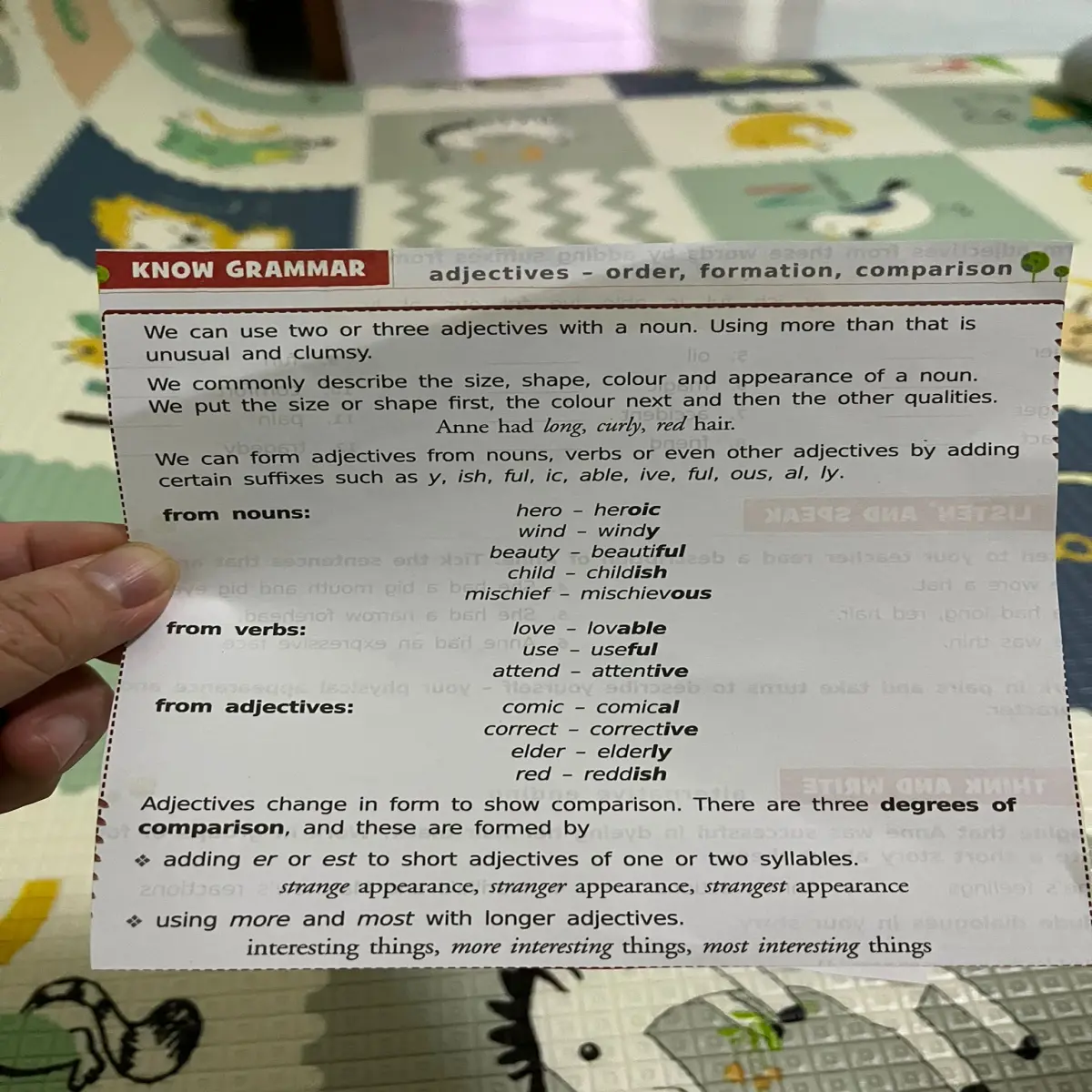
Last but not least, students should also have the concept of how different suffixes (-ic, -y, -ful, -ish, -ous) turn nouns into adjectives, how other suffixes (-able, -ful, -ive) turn verbs into adjectives, and yet other suffixes (-al, -ive, -ly, -ish) form adjectives from existing adjectives.