
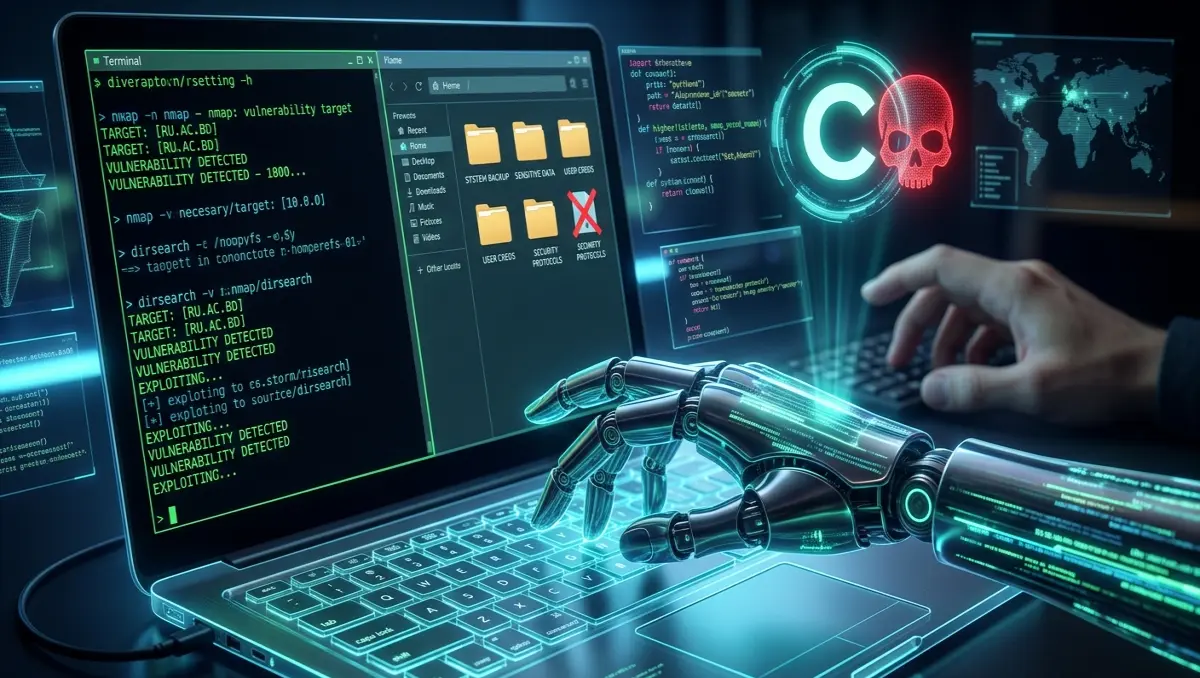
When AI stops chatting and starts controlling your PC—is your system still safe?
The Game-Changer in AI History
For the past few years, we have seen AI as a chatbot. You ask, it answers. But Anthropic has just changed the rules of the game with Claude 3.5 Sonnet's "Computer Use" capability. It’s no longer just a text-generator; it’s an Autonomous Agent that can see your screen, move your cursor, click buttons, and type like a human.
As a Red Teamer and Security Researcher, this caught my attention immediately. If an AI can use a computer like us, can it also hack like us?
How "Computer Use" Works
Anthropic’s new model doesn't just "talk" to a computer via API; it actually interprets the GUI (Graphical User Interface).
-
Visual Perception: It takes screenshots of the desktop.
-
Action Planning: It decides where the cursor needs to go.
-
Execution: It moves the mouse, clicks, and types commands into the terminal.
It can navigate folders, use web browsers, and even operate complex software like VS Code or Wireshark.
The Cybersecurity Perspective: A New Era of Hacking?
The integration of AI into offensive security is nothing new, but autonomy is. Here’s why this is a massive shift:
-
Autonomous Bug Hunting: Imagine an AI agent running
Nmapto scan for open ports, then automatically firing upDirsearchto find hidden directories, and finally testing forSQL Injection—all without human intervention. -
Adaptive Phishing: AI can now navigate social media profiles, gather OSINT, and craft perfectly tailored phishing messages in real-time, even attaching "malicious" files that it created itself.
-
Persistent Threats: An AI agent could potentially live inside a compromised system, navigating the local network to escalate privileges by "learning" the environment visually, just like a human attacker would.
Is it a Threat or a Tool?
While the potential for "AI Hacking" is terrifying, it’s also the ultimate tool for Defenders.
-
Automated Patching: AI can find a vulnerability and write the patch immediately.
-
Red Teaming at Scale: Small security teams can now use AI agents to simulate 24/7 attacks on their infrastructure to find weak spots before the bad guys do.
Conclusion
We are entering a world where the boundary between human action and AI automation is vanishing. Claude's "Computer Use" is a wake-up call for the cybersecurity community. The question is no longer if AI will be used for hacking, but how fast we can adapt our defenses to counter an autonomous attacker.
What do you think? Is this a dangerous path, or is it the future of productivity? Let me know in the comments!
Author’s Note: I am Abdullah Saki, a Red Teamer and Founder of SkyAuctus. I explore the intersection of AI, Python automation, and Cyber Security. If you found this helpful, follow my blog for more deep dives into the world of ethical hacking!






