
When you start investing in cryptocurrencies, the first thing you ask yourself is where you can store them and where they will be more secure.
After searching for information, it is recommended to save the cryptocurrencies in a hardware wallet. But what is a hardware wallet?
Hardware wallet
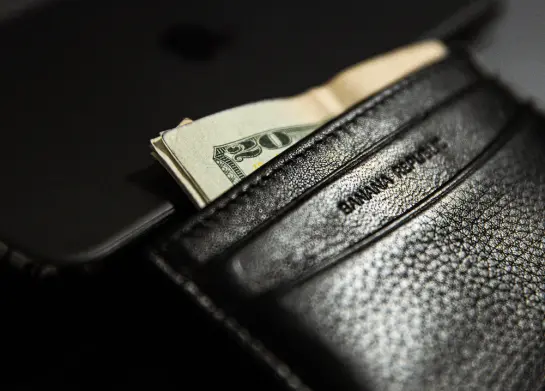
Hardware wallets are physical external storage devices (that is, similar to a USB memory), which are responsible for storing the private keys of the cryptocurrencies we own.
This type of wallet offers a series of advantages over software wallets (Atomic, Trust ...). For example:
- Our cryptocurrencies are practically free from hacking. This is because, being stored on a physical device almost always disconnected from the internet, they are less susceptible to attack than external servers or the software on our own computer.
- The keys we use are secure (we have them and not an external server) and, furthermore, they are not connected to the Internet.
- Each transaction must be confirmed manually.
- From an economic point of view, given the security they offer, their price is usually quite affordable.
What to take into account when choosing a hardware wallet
When we want to buy a hardware wallet, we basically have to take into account:
- The supported currencies. One of the main points is to know which currencies are compatible with the wallet, since a wallet that cannot store our cryptocurrencies is of no use to us.
- Safety. We have to study what security elements the banknote presents, such as, for example, identification factors (such as a PIN code), if security flaws have been indicated in that model ...
- Usability. We have to look for a wallet that is easy for us to use. This can make it easier for us not to get confused when carrying out operations with our cryptocurrencies.
- Make backup copies. It is quite important to be able to make a backup copy (and then restore it) of our cryptocurrencies, in case the wallet is broken or lost.
- The price. There are numerous hardware tickets with prices ranging from $50 to a few hundred dollars.
Some hardware wallets
When it comes to choosing a hardware wallet, I've been learning which ones were the best sellers and the ones with the best reputation. In a first selection, I chose the following:
1. Ledger Nano S (59.00 €)
It is one of the most popular wallets on the market and affordable for its price.
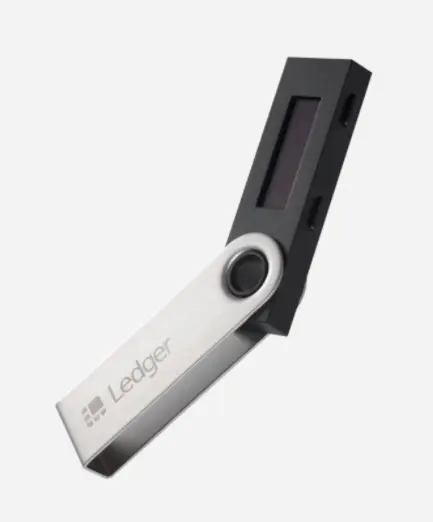
Some of its characteristics are:
- Dimensions and Weight: 56.95mm x 17.4mm x 9.1mm, 16.2g
- Materials: Brushed stainless steel and plastic.
- Cryptocurrencies (27 currencies and more than 1500 tokens): BTC, ETH, XRP, LTC ...
- Keys saved from a security chip.
2. Ledger Nano X (119.00 €)
It's the big sister to the Ledger Nano S, and you can think of it as a next-gen hardware wallet. It has a Bluetooth connection, so there is no need to use a cable to connect it to a computer or mobile device.
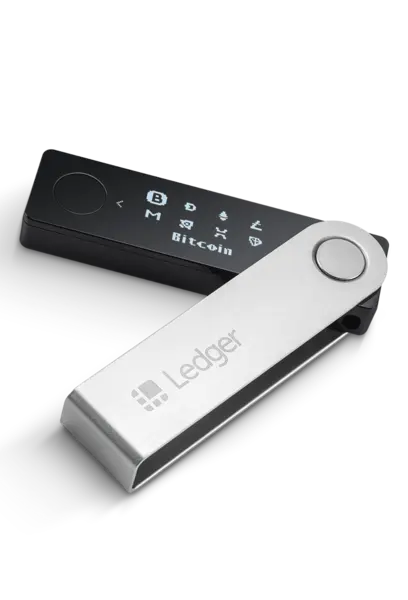
Some of its characteristics are:
- Dimensions and weight: 72mm x 18.6mm x 11.75mm, 34g
- Materials: Brushed stainless steel and plastic.
- Battery: 100 mAh
- Cryptocurrencies (27 currencies and more than 1500 tokens): BTC, ETC, XRP, LTC ...
- Keys saved from a security chip.
3. CoolWallet S ($99)
The CoolWallet S hardware wallet surprises with its design quite different from the rest, as if it were a credit card. But it also has a small screen and a button to confirm transactions. Communication with the card is done via Bluetooth and with mobile devices that include the CoolWallet application (iOS and Android).
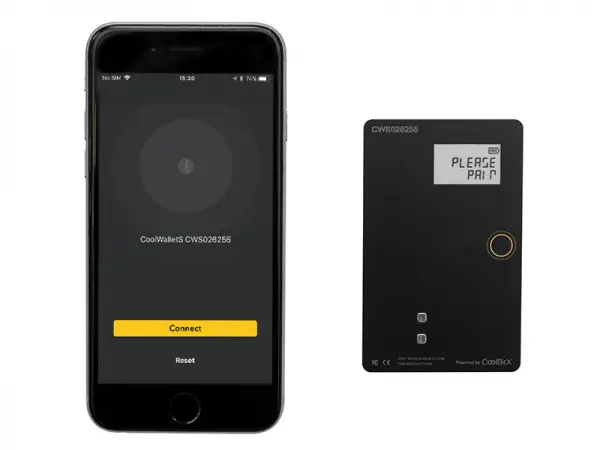
Some of its characteristics are:
- Dimensions and weight: 85.6mm x 53.98mm x 0.8mm, 12g
- Battery: charging contact, up to 2 weeks of battery life for 2 transactions per day.
- Cryptocurrencies: BTC, XRP, ETH, LTC, BNB, stablecoins and ERC20 tokens.
- Security based on two-factor identification (2FA) and biometric authentication as an additional layer of security.
4. BitBox02 (€ 99)
Developed and manufactured in Switzerland, it is quite small compared to other hardware wallets. This wallet allows you to make backup copies on microSD cards, which are managed with a desktop application.
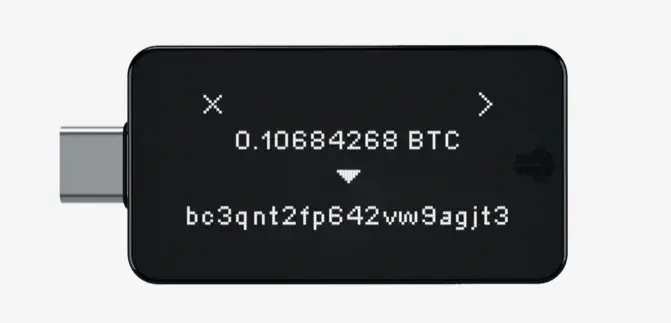
Some of its characteristics are:
- Dimensions and weight: 54.5mm x 25.4mm x 9.6mm, 12g
- Materials: polycarbonate.
- Cryptocurrencies (more than 1,300): BTC, ETH, LTC and ERC-20 tokens.
- USB-C type connector.
- OLED screen.
- It has three touch sensors (contact, pressure and sliding) on its surface, which allow you to enter the password and navigate when making transactions.
5. Trezor Model T (180.29€)
It is the model with the highest price selected. This wallet works according to the Zero Trust principle, that is, verification is required for everything, adding different security systems to prevent third-party access:

- Communication with the computer only via USB.
- PIN protection (every time you log in it makes you wait twice as long as the previous time).
- A 24 word recovery seed.
Some of its characteristics are:
- Dimensions and weight: 64mm x 39mm x 10mm, 22g
- Display: LCD 240x240 pixels.
- Cryptocurrencies (1000+): BTC, ETH, XMR, LTC, Dash
A choice
After studying the characteristics of the selected hardware wallets (both those that I have indicated here, as well as many others that I have studied when accessing each of the web pages of the companies that manufacture them), I decided to acquire the Ledger Nano X , which although officially marks 119€, I took advantage of a discount a few days ago that left it for just over 90€.
With this I do not mean that it is the best, it is simply the choice that I have made based on my needs.
What do you think? Do you have a hardware wallet? Which one?
If you like this world and you want to know how I evolved in it: Stay tuned!
Thanks and see you soon.






