
On last March 24, Reuters said that the head of the Professional Syndicate in Lebanon, "Arif Yassin" received a catastrophic news from France Bank of Lebanon that the bank had closed accounts worth $20 million belonging to the syndicate, and issued a check for one -fifth of the nominal value of these accounts.
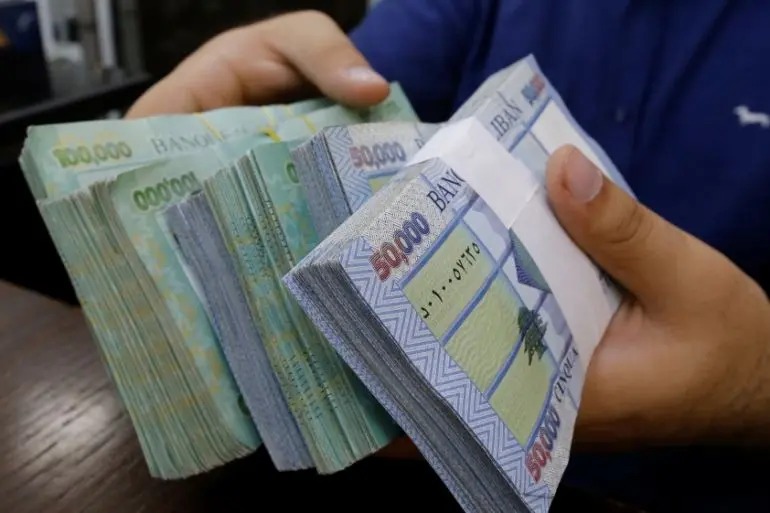
Those $20 million were collected from engineers' subscriptions over the years and were dedicated to health care and pensions covered by the syndicate for about 100,000 engineers in Lebanon.
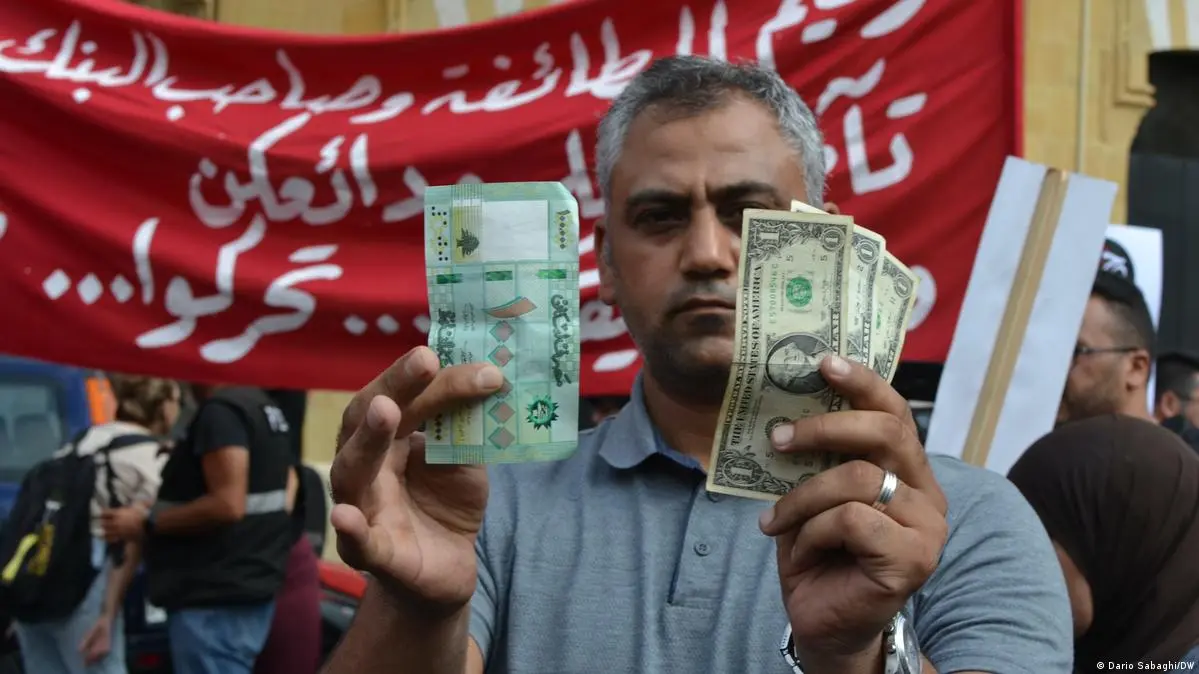
This catastrophic scene is the new normal in Lebanon now and Over the past few weeks Banks close the depositors' accounts. So, the amount of money they have painstakingly and diligently saved over the years is just lost and up the spout in front of their eyes.
Consequently, thousands of depositors have filed cases to courts hoping to get any available amount of money in the banking system Banks , on the other hand, are anticipating events and closing accounts in widespread financial collapse that the country is witnessing foreign courts are now ruling in favor of their own national depositors.
The first ruling in Britain was issued on March 1, when the High Court of Justice in London ruled in favor of a British businessman named Vatche Manoukian to oblige Bank Audi and Societe Generale Bank in Lebanon to pay back $4 million of his seized money in that broken banking system due to the capital restrictions imposed since the beginning of this financial collapse in 2019.
The matter is not the same for Lebanese depositors, so to speak, most of the Lebanese depositors, especially the small ones are not able to get their money back.
Meanwhile, the Depositors Union, which was established to recover people's money, consisting of lawyers and activists, has filed more than 300 lawsuits against Lebanese banks since 2019 on behalf of the depositors.
All of this highlights crucial questions: What will be happening if the bank I am dealing with goes bankrupt? As a depositor, will I be losing my money in whatever country it is deposited in? What happens to the troubled bank itself? Will it be foreclosed or sold, or something else?
Banks are an influential and vital part of the modern-day economy. They provide various banking services to the general public, issue loans and create liquidity in the markets.
Moreover, they provide other financial services such as currency exchange and certificates of safe deposits...etc.
In short, banks are the safest places to keep money in today's world with all its risks and complexities.
But these same banks may be in real trouble if there are problems in the economy of their countries. The extent of its predicament varies according to how profound are the problems and crises that its country's economy is going through.
This situation may result in one or more banks going bankrupt. A serious problem related to the lot of depositors' money rises here. This is the question that concerns everyone, without exception, when a bank goes bankrupt As for savings accounts, certificates, and all other forms of depositing which customer or depositor adopt, what will their status be in this case?
So, before you question the current situation of the bank you are dealing with; let me first highlight when exactly a bank goes bankrupt and how? When you go to a bank to deposit money, or else, when some money is transferred to your account: the bank keeps a very small part of this money and the rest is invested.
Banks in this case are more like a recruitment company On one hand, it takes your money and invests it; On the other hand you get an interest in exchange for it. So, what is the amount of money that the banks must keep, roughly?
The entity that determines this ratio, which is called the “Reserve Requirement”, is the central bank of the state Its authority is to oversee the commercial banking system within its country through supervisory and regulatory powers.
What is meant by 'Reserve Requirement'?
It is a percentage of the total funds of depositors in banks, whether they are in local or foreign currencies, a percentage that every commercial bank must keep in an account with the Central Bank without any interest or fees from the Central Bank in return. One of the main goals of reserve requirements is to prevent a bank from ceasing to function if unexpected large mass withdrawals occur.
Hence, how does the bank deal with the rest of that sum of money?
Of course, banks do not save it in their vaults. They would rather invest it so that you can pay back the deposits interests and make some profits. The simplest form of investment is to provide loans to customers, whether they are individuals, companies, or the government itself. There are other, more complex investment methods, such as buying shares in the stock exchange, buying certain assets such as lands and real estate, or acquiring certain profitable projects, and other different forms of investment.
Banks here, like any investor, are subject to loss when the economic situation is distressed or the economy is experiencing exact difficulties.
Therefore a bank's investments can be lost and a calmness breaks out. When a bank realizes losses, it will be unable to fulfill its obligations towards its depositors and creditors.
It consequently cannot provide cash to depositors, nor commit to its obligations to creditors.
Hence, the value of its assets falls below the market value of its obligations. For example, if the sum of deposits in a bank reaches 10 billion dollars and the bank loses large sums of money in some investments. Its assets will decrease as a result of 5-7 billion dollars.
Here the bank will declare bankruptcy. It is possible for banks to go bankrupt due to financial chaos and economic collapse accompanied by high levels of corruption, as is the situation in Lebanon currently, where banks are looting depositors’ money.
Coming to another more important question: What happens when bankruptcy occurs and the bank liabilities are greater than its assets?
The biggest problem of a bank at such a time is that the depositors get to know that the bank is insolvent and is no longer able to pay them. In this case, the bank probably borrows from other banks which it is in their interest to keep the insolvent bank steadfast. Questioning why? Because as soon as depositors get to know that the bank is insolvent, a bank-run would take place wherein clients would be withdrawing their money. If this happened, it would be a disaster. Bank panic will arise and people will run to banks to withdraw their deposits, including those banks that are in sound condition even. This will reduce the liquidity of the insolvent bank more than it is.

So, the insolvent bank will be forced to stop the withdrawals or set limits by allowing the withdrawal of only small amounts. People's main concern in such a case is to know what is going to happen to their money in that bank. Will they be able to get it back or not? A model of significance in the United States can be taken into consideration before discussing the fate of depositors' money in banks that can go bankrupt in some Arab countries.
Let's go back to the twenties of the last century, to the beginning of the Great Depression, many banks were bankrupting on a daily basis in the US. Depositors lost their money and there was no way to get it back. Can you imagine that a third of American banks declared bankruptcy at that time! From 1929 to 1933, a total of 10,000 American banks had declared bankruptcy. American depositors' money had been gone forever. They lost 140 billion dollars in this short period due to bank failure. This led to depositors running to all banks to withdraw their deposits at the same time, there was not enough money in vaults because banks invest most of the money they get as aforementioned.
In the midst of this financial collapse, US President Franklin Roosevelt signed the Banking Act, known as the Glass-Steagall Act of 1933, to establish the Federal Deposit Insurance Corporation, known for short, FDIC. The mission of this institution at the time was to restore the confidence of panicked Americans in the banking sector in the wake of this financial collapse, thus the institution would serve as a bulwark against bank panic in the future.
So, what is the Federal Deposit Insurance Corporation job?
It protects customers' deposits in the cases of bankruptcy or failure of any of the commercial banks that are insured only by the institution (the insurance is optional for the banks) There are banks that do not want to be insured. By the way, if you are in the United States, you must make sure that the bank in which you are depositing your money is insured by the FDIC, otherwise your savings will be in greater danger than if you put them in an insured bank. Regarding the insurance of the depositors' money; A point of significance pops up here: the Federal Deposit Insurance Corporation does not return all deposits if the bank falters or fails as it covers a maximum of 250 thousand dollars per account in each single bank.
To make it clear; if someone opens a bank account; and deposited 350 thousand dollars; The maximum sum of money that a person would get back if the bank falters or fails is only 250 thousand. As for the remaining 100,000, you will wait for the liquidation of the bank's assets or the sale of the entire bank. Then, they may be / may not be able to get the money back. Some details worth mentioning at this stance; you can process your accounts to be fully insured with more than 250 thousand dollars.
What is the fate of that one that goes bankrupt? What is its eventuality?
The central bank is often the institution specialized with settling troubled banks. Nonetheless, the US Federal Reserve is not responsible for this issue in the US. As I said before, the Federal Deposit Insurance Corporation is the one that takes charge of matters for any bankrupt bank.

So, the first thing the Central Bank or this Deposit Insurance Corporation does is to contract with another bank or rent another sound bank with sound management and let it take over the office of the failed or faltering bank until it is sold or until its assets go into liquidation if there is no buyer the new bank that manages this troubled bank temporarily is called 'bridge bank' It takes over all the assets and liabilities of the troubled one and begins to administer it again.
The goal of the bridge bank is to make a restart to this failed bank with its available capabilities. It calms the creditors and depositors down; Thus avoiding a bank panic that could lead to the collapse of the other banks.
That is why its role at such a time is excessively critical and vital in order to save the economy and prevent a financial collapse. After the bridge bank begins managing the troubled bank, it takes time until any entity appears up to take over this failed bank.
Sometimes the bridge bank is the one who takes it over. Other times this failed bank merged with another bank. But, if none of this happened as no one may be courged to take over that troubled bank a single option is left for the Central Bank to settle the troubled bank: which is liquidating its assets.
Merely a month ago, the Lebanese judiciary froze the assets of 5 major Lebanese banks along with their board member directors due to suspicions of corruption as transactions took place between them and the Central Bank of Lebanon.
A few days later, the Lebanese Public Prosecutor was seeking to freeze the assets of the President of the Central Bank of Lebanon Riad Salameh and his partners in Swiss, French and Belgian German and Luxembourg banks, due to accusations related to Salameh's embezzlement of $330 million of Lebanese public funds with the help of his brother Last but not least, may all the Lebanese be safe, God willing.
Hoping this crisis comes to an end as soon as possible, getting their money back with the Lebanese economy returning stronger than the first.
I hope that you enjoyed reading this post !😏
I know that it is so big, but i should cover all details about this topic😓
Follow me here on publish0x , and stay tuned for another case study 🤐😆😊






