The double-digit increase in the price of bitcoin since mid-March may be short-lived due to macroeconomic uncertainty, as well as low trading activity in the market of the main cryptocurrency. Experts interviewed by Bloomberg believe that there are risks of forming a so-called "bull trap", a situation where quotes falsely indicate a further increase in the price of an asset.
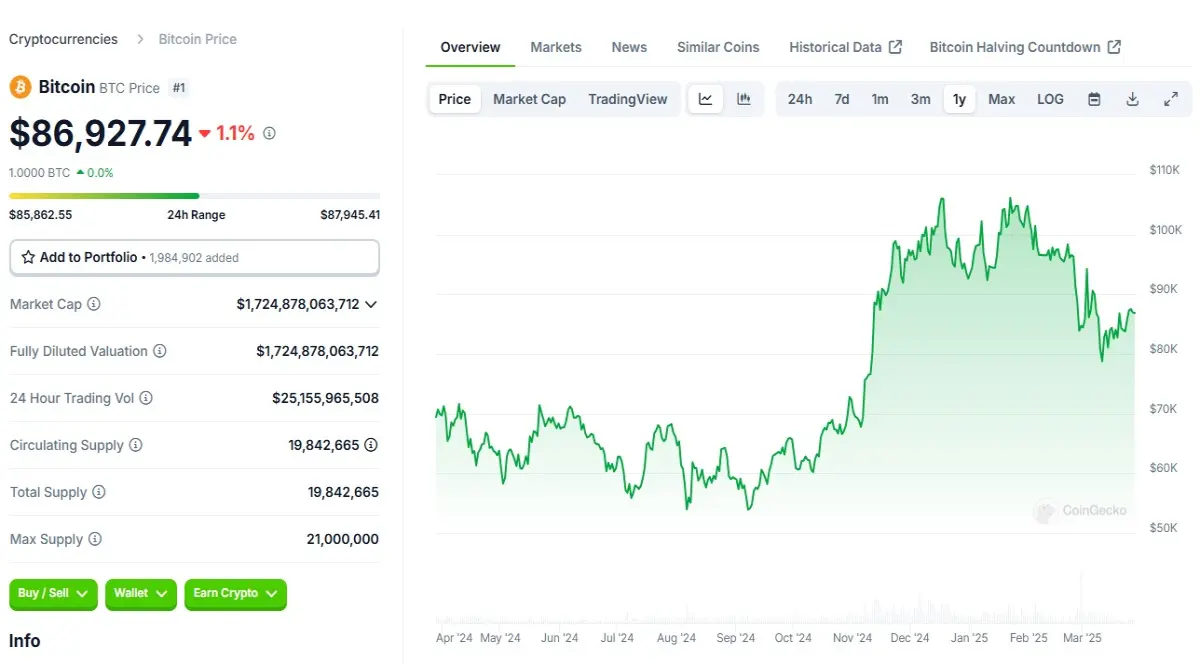
"It's important for investors to be careful — the market remains fragile and easy to manipulate. Retail activity is low, volumes are low, and even the so-called "smart money" remains on the sidelines. Players who have a real opportunity to move the market do not do this, and there are good reasons for this," said Kirill Kretov, an expert on trade automation at CoinPanel.
A «bull trap» is a situation where the chart falsely indicates a further increase in the price of an asset. Investors, hoping to make money on rising prices, buy this asset, but subsequently its value, on the contrary, decreases. A bull trap usually occurs after rising to an important price level.
«Smart Money» is a trading strategy based on an analysis of the actions of large players who manage significant capital flows.
On March 11, the price of bitcoin dropped to a four-month low of about $76.6 thousand, a level previously seen only on November 10. After that, by March 26, the quotes recovered to $ 88.1 thousand. The increase from the low of March 11 was about 15%, with a local price peak of $88.8 thousand on March 24.
One indicator of cautious sentiment is the financing rate in the bitcoin futures market, which reflects the price difference between spot and futures markets.
In bull markets, futures prices are higher than spot prices, so the financing rate is positive. Despite the fact that the price of bitcoin has been rising in recent days, the aggregated financing rate is mostly in the negative zone.
For example, according to Coinalyze, from October 2024 to early February 2025, this indicator did not fall into negative values, and the price of bitcoin rose almost steadily from $ 60 thousand to a maximum of about $110 thousand at the end of January.
The funding rate is periodic payments to traders who have open positions in perpetual futures.
Funding is calculated by the exchange several times a day and helps to prevent a strong deviation of the futures rate from the price of its underlying asset. The funding system on exchanges automatically debits funds from some traders and charges them to others.
If the value of the perpetual futures is higher than the price of the underlying asset, the funding is positive. In this case, the financing rate is charged to traders who have long positions open and credited to traders who have short positions open.
If the value of the perpetual futures is lower than the price of the underlying asset, the funding is negative, and the financing rate is charged to short traders and credited to long traders.
However, due to the fact that such rates change every few hours, depending on the conditions of a particular crypto exchange and the general state of the crypto market, this indicator may change in a matter of minutes.
According to Augustine Fan, a partner at SignalPlus, a provider of software for cryptocurrency derivatives, for clarity on the direction of market movement, it is necessary to wait for the introduction of US trade duties, which are expected on April 2.
"We expect the markets to continue their smooth recovery through the end of the month, and the next important catalyst will be the announcement of tariffs," he said.
Kretov added that the impatience of investors who have now decided to take trading positions for the growth of bitcoin in conditions of low liquidity can create conditions for a "bull trap" when the price turns sharply after a slight increase.
The instability of the price trend is also indicated by data from the CryptoQuant analytical platform, where "all market indicators indicate that bitcoin will experience significant instability in the short and medium term."
Be careful and please take care of yourself!






