
Good day everybody,
Welcome to CryptoGod-1's blog on all things crypto. A recent interview with Sergey Vasylchuk, the Co-founder & CEO of the staking provider Everstake, has revealed his apprehension towards the wider crypto space and their understanding of the fundamentals of crypto staking.
What is Everstake?
Developed in 2018, Everstake works as a provider of Proof of Stake infrastructure for its users, providing them the opportunity to stake their crypto while Everstake works as a validator. It is designed for institutional investors and individual users who want to earn by staking their digital assets and was developed by Attic Lab, the Ukrainian EOS block producer. From their creation in 2018 up until July of 2021 Everstake had staked nearly $3 billion in digital assets, producing 12,861,660 blocks, and paying out $2,201,218 in rewards. Their revenue model relies on incentivizing people to stake their crypto with them, and they take pride in the knowledge that they are responsible for the core requirements of being a Proof of Stake validator to maintain a network transactions and operations.

Sergey Vasylchuk
The founder and CEO of blockchain technological company Attic Lab, Sergey Vasylchuk is a Ukrainian citizen who has a strong focus on decentralized financial solutions. He gained his experience across the financial, investment, banking, crypto, and blockchain sectors, while also ensuring to be a regular speaker and guest on international crypto and blockchain conferences.

The Basics of Staking
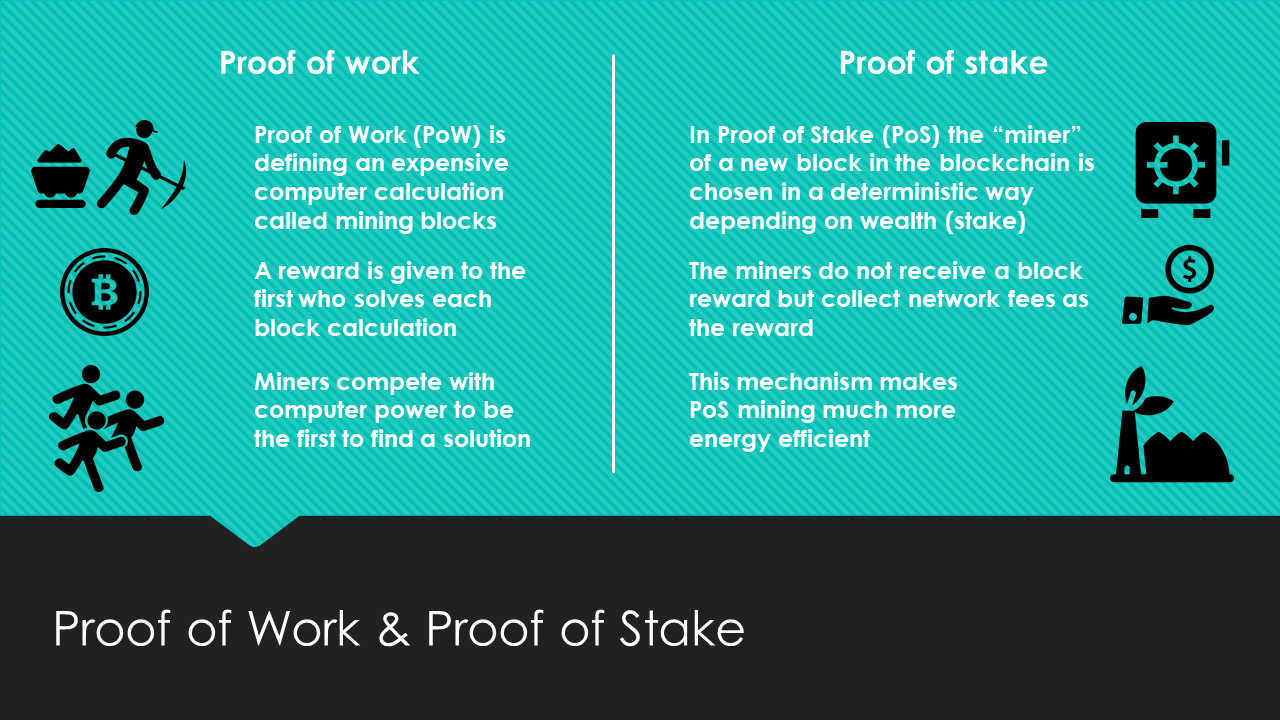
Vasylchuk begins his interview by explaining how a PoS-based economy is vastly different from a PoW one:
PoW - this requires the continued power of miners and their computational power. The stronger the equipment in use the better a chance is for the miner to mine the new block and get the reward, but the competition is fierce between everyone battling to mine the new block.
PoS - this method differs in that it not only allows validation, but also can work as a governance token, allowing a holder of a coin to influence how the network will develop, at least in theory. The node operator earns a transaction fee instead of a block reward.
Vasylchuk notes how often times the individual is not in a position, either via their computational equipment or their number of coins, to run their own node or solo mining operation. This is where he points out the benefit of validators. While he notes how running a node is an expensive operation, due to the costs of the equipment and the need to have it operational 24/7, he also believes that by allowing others to do it for a fee is a beneficial and lower cost rate for others than trying to operate their own nodes. Hence why Everstake was created.
He compares a validator to a representative in a parliament. A citizen delegates their governance rights to their elected representative, and 'someone you trust' (apparently). He explains how PoS works on a similar theory when a user gives their crypto to a validator to stake on their behalf. He also notes how by not choosing a reliable representative creates an incompetent government, the same can be said of staking with an irresponsible validator who could cause harm and risk to a blockchain.
APR Rates are Killing the Industry
While staking with someone you can trust is imperative to maintaining the security of your investment along with the status of the network, Vasylchuk feels that the main thing most people are interested in are the Annual Percentage Rates (APR). On top of that, the fact a lot of people consider a higher APR to mean a 'better' validator to stake with is just inherently wrong. It is a huge problem within the industry.
He points out the similarity between the US Federal Reserve System printing new dollars and staking rewards, claiming in doing so by validating transactions a user gets new coins out of thin air. He states:
"It is the very same inflation model that we see in the fiat economy. For good or for bad, it’s just how things work in our world in this day and age."
The APR rate should be considered as the inflation rate of the blockchain in question, with the valuation of the asset being gradually diluted. Many people disagree on what the real value of APR means, as some consider it the value measured in the exchange rate of the USD, and are therefore only after the returns and making a quick buck. Vasylchuk considers the real value to be in its holder to have an influence on the decisions and direction the blockchain moves, and therefore its success. The more successful the blockchain, the more valuable the tokens.
This logic would therefore insinuate that the most important factor is not the APR, as an APR of around 20% means the inflation is extremely high. If that were USD or Euro, users would be panicked. The model is more than likely flawed and purely seeking to draw in new users rather than become a sustainable ecosystem. The customer growth will often lag behind the APR, and this leads to an acceleration of the value dilution.
On top of this he claims many blockchains do not require the function of staking, and only add it as a feature to attract more users. Therefore he claims the blockchain itself is nothing more than a machine for creating coins without any real value. Even if staking is required, it is still imperative that users check out the operation's fundamentals. According to Vasylchuk a healthy model will often see the yearly customer growth at higher levels than the APR rate, making the system more balanced.
:max_bytes(150000):strip_icc()/inflation_final-8652eb79d80348f49810849af466bb44.png)
The Exchanges are the Enemy
One of the biggest questions is how to know whether or not a validator is trustworthy. Are they looking to collectively overtake the blockchain for example? It is rare that a bunch of strangers could coordinate to achieve such a thing, as they all have a reason to function and make the system operate. The validators are looking to make their rewards, not to harm the ecosystem and therefore, according to Vasylchuk, they would never do things to harm the ecosystem. Unlike validators, he does believe that exchanges have reason to cause problems.
"That’s not the case for exchanges. Unlike validators, they don’t have any skin in the game."
He claims they are more like an institutionalized version of the irresponsible users who wish to get rich quick without consideration of the long term impact it will have. They have their own interests, their own needs, and by providing staking they are only looking to make their own returns off the rewards as an additional revenue stream. They take away a users voting rights and take that power for themselves, or they can just ignore the right to vote overall. They can ignore nodes, destroy a blockchain by voting or not voting on behalf of numerous people, and in many ways are similar to allowing banks vote politically on their customers behalf. Making user of FTX as an example, he explains how exchanges cannot and should not be trusted with holding assets, let alone staking them.
"If an exchange faces problems with regulators, liquidity, or literally anything, the last thing it would care about is user interests. And it’s the users who will pay for the exchange’s screw-ups."
To conclude, he states how summing up his opinions would be simply put as "greed is bad." Whether it is someone looking to make money quickly and not paying attention to the blockchain they are invested in or staking service they choose, or the exchange looking to make their own profits, it all comes down to greed. He believes we must truly understand the true nature of staking, with its pros and cons, if we want Web3 to move forward and create a better world.
"If we don’t, human greed will corrupt our best efforts."
Have a great day.
Peace. CryptoGod-1.
Referral Links and Follow Me:






