
Good day everyone,
I hope you are all well and had an excellent week, welcome to CryptoGod-1’s blog on all things crypto. Today I am going to be talking about the big news which has had an impact on everyone, Silvergate, Signature, and Silicon Valley (SVB) Banks. Coffeezilla released a video going through what exactly happened with these two banks and how it came about, which I will attempt to breakdown.
Ah Jim Cramer
The video begins with a humorous dig towards Jim Cramer, who had been pushing both Signature Bank and SVB Financial as good stock options worth investing in. Once the news broke that two of the three biggest bank collapses in United States history were in fact two he had previously backed, Cramer was quick to note the fear in the market and how their collapse impacted the NASDAQ and DOW. Lets just say Twitter had a bit of a field day on this one....
The Facts
Coffeezilla breaks down the three banks which have collapsed all within a couple of days of each other.
- Silvergate - smallest - $11B
- Signature - Medium - $118B
- SVB - Large - $209B
Both Silvergate and Signature were well known banks with the crypto space, while SVB was a big player within the Tech / Start-up space. All three failed for similar reasons, primarily being a bank run. Too many customers wanted to withdraw their funds at the same time, meaning the banks did not have enough cash on hand to facilitate the requests.
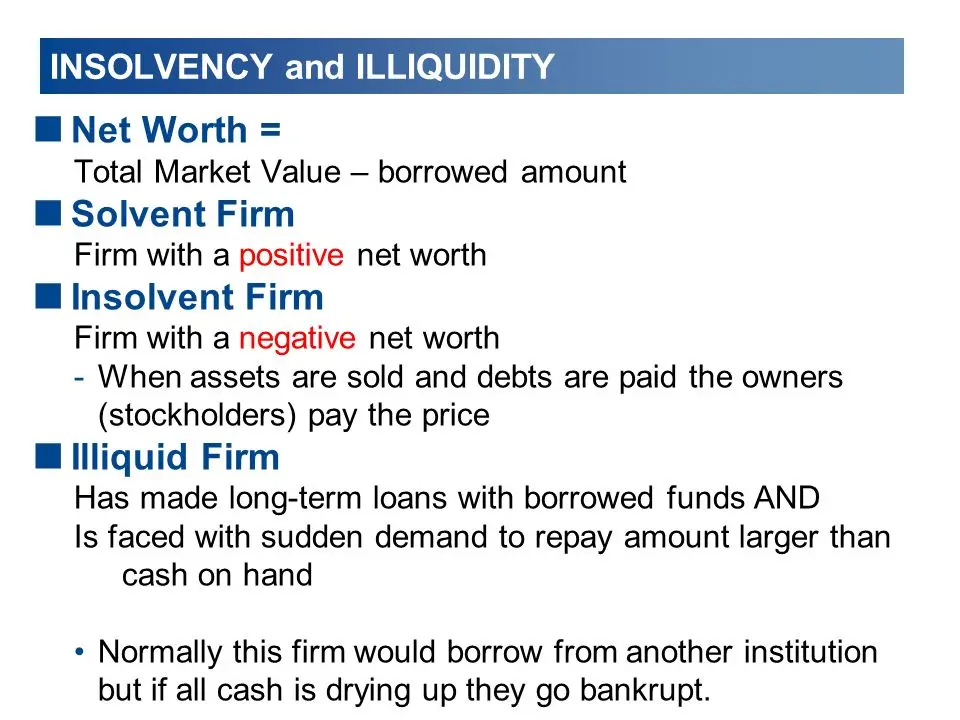
This is where Coffeezilla brings in the comparisons to FTX, noting that the cryptocurrency exchange went under because it was insolvent. This means it did not have the ability to pay its debt's as it did not have the money. The banks on the other hand were illiquid, meaning they had the money they just did not have the cash on hand available when the bank run took place.
https://slideplayer.com/slide/6905439/23/images/9/INSOLVENCY+and+ILLIQUIDITY.jpg
5 Year Bonds & Interest Rates
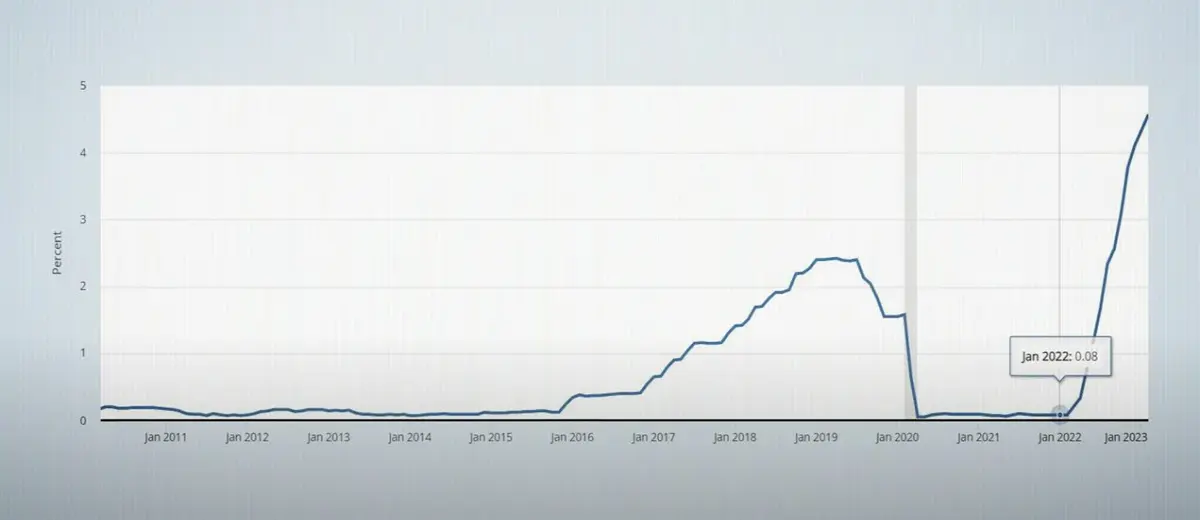
From here Coffeezilla explains how the system of the banks, and the interest rates from the government, helped to propel this bank run into existence. He explains how a Bank such as Signature Bank would handle its Billions of dollars in assets - Treasury Bonds. These are bonds which would be considered stable and give a yearly yield of 1%. All good, all safe, The banks would sign up for 5 years of 1% fixed rate bonds and get a nice return on their investment, while keeping a nominal amount of cash on hand for any required withdrawals of everyday business.
Interest rates spiked in early 2023, leading to the government selling the same 5 year Treasury Bond with an interest rate of 5% instead of 1%. The problem was that the banks were already locked down in their 1% rates, meaning their bonds were worth less on the open market than what they originally paid for them. If the banks held the bonds until maturity they would still get their 1% interest rate, meaning they would have made money, albeit not as much as one who purchased a 5% interest rate.
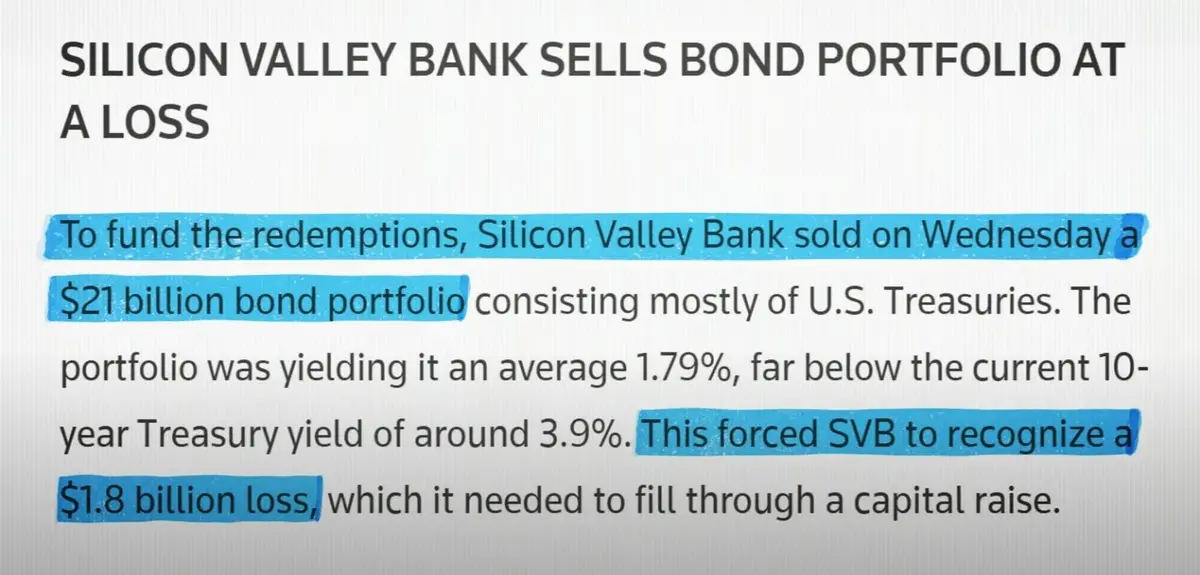
The problems arise then when the bank run on Silvergate, Signature, and SVB began. The banks did not want to sell the bonds, but to try and cover the withdrawal request they were forced into it, and in doing so sold them at a loss. As shown by Coffeezilla, SVB was forced to sell a Bond portfolio with a value of $21 Billion with a loss of $1.8 Billion to cover their withdrawal requests. Therefore SVB went from being in a liquidity crisis to being in an insolvent crisis due to the fact they would be incapable of servicing all the withdrawal requests.
FDIC & Uncle Sam
As per the United States FDIC system, any depositor with a bank in the U.S. will be insured for up to $250,000 of their funds should anything happen with the bank. While this is a good system for the everyday man, the issue with these banks are the sheer level of funds stored in them. As shown in the tweet below by @GRDecter many businesses had well over the FDIC limit within SVB.
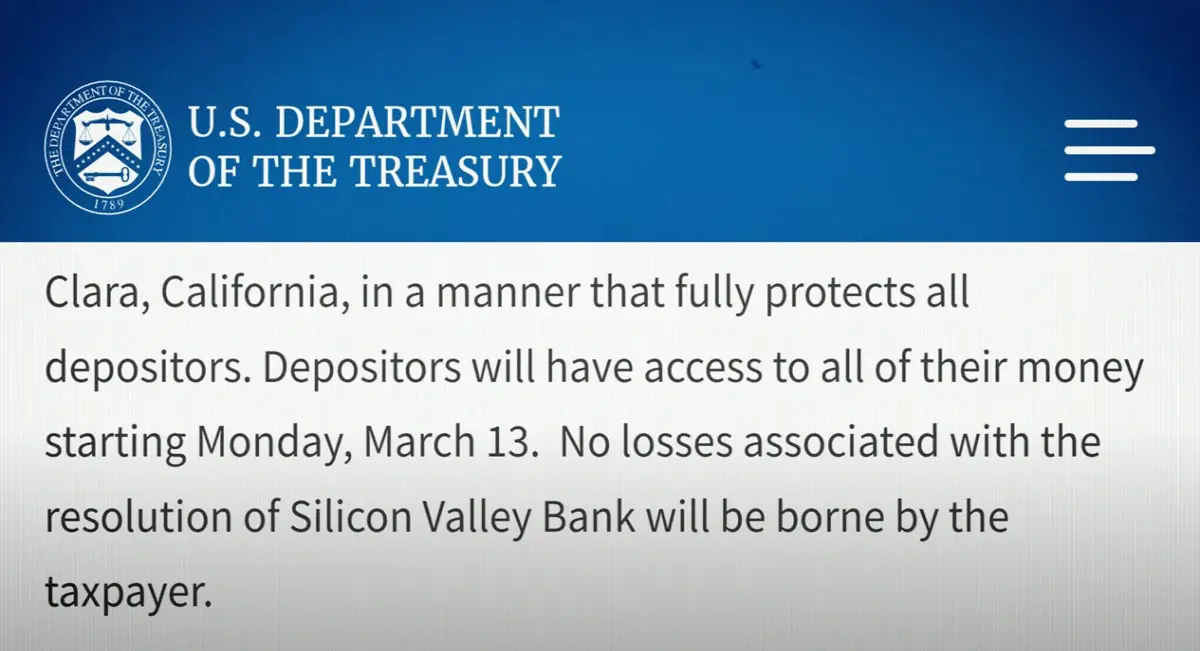
This led to huge fear and worries among these businesses that they would not be able to meet their payment needs, such as bills and pay role, thanks to their banks collapsing. Many in Silicon Valley called for government intervention by stating that the $250,000 was too low. Many prominent names such as Mark Cuban got involved, leading to much debate over what would happen. The U.S. Department of the Treasury announced on Sunday the 12th of March 2023 that all depositors would be covered and have access to all of their money. They will cover both SVB and Signature Bank due to what they called a systemic risk exception.
Reaction
While the news obviously allayed the fears within the market and business involved with these banks, it also led to much criticism of how the government treats individuals compared to big business. Many point out the fact that the average person is left to fend for themselves, whether it be for medical care, housing costs, family costs, or their other needs, but when a big organisation needs a huge sum of money the government is almost always on hand to help, as not in @GunnelsWarren tweet below.
The push back was quick to acknowledge that it was the banks and not the rich individuals who were being helped out here. It was not a traditional bailout. Which in the sense of looking at the pure bank's issues is true. However, as he often does, Coffeezilla pointed out a major sticking point of SVB Financial CEO Greg Becker having sold $3.6 million of the banks stocks nearly two weeks before its collapse.
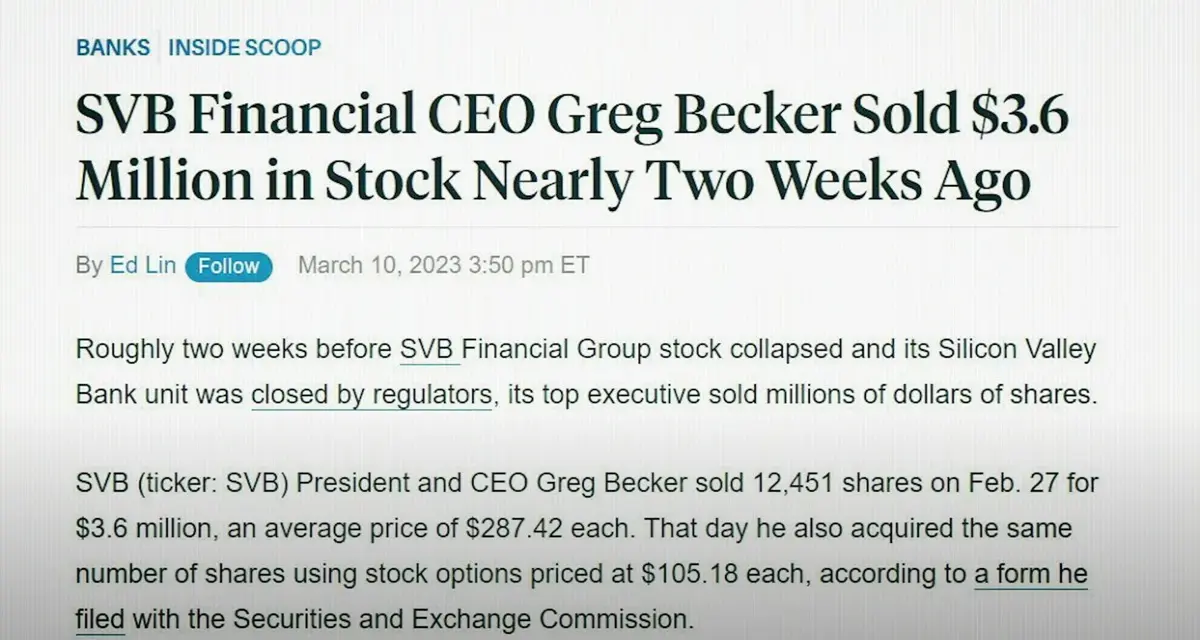
To add to the insults, Becker had lobbied for average banks to have the asset threshold limit raised before they were considered systemically important. In other words, it means they would not have had to deal with the same level of regulatory scrutiny compared to other bigger banks. As Coffeezilla points out:
"They are not systemically important when it comes to regulation, but when everything goes wrong, then they are considered systemically risky."
Whether or not they should have been bailed out will always be a dividing question. The key lesson learnt according to Coffeezilla is that if you are rich, move your money into a bank which is considered too big to fail, otherwise you might be at risk of not being part of the 'having your cake and eating it crew.'
You can find the original Coffeezilla video, released on the 13th of March 2023, below.
I hope you enjoyed my breakdown of his video, have a great day.
Peace. CryptoGod-1.
** I first posted this article on Medium on the 14th of March 2023, which can be found here: https://medium.com/@1r3n9project/coffeezilla-banks-are-collapsing-heres-why-94779a0d52c7?sk=3d919029ff47afd1831aa7eaf3d91a05 **
Referral Links and Follow Me:






