
Good day everyone,
I hope you are all having a good day, welcome to CryptoGod-1's blog on all things crypto. In this post I will be looking at the promises made by Donald Trump as part of his election campaign, and whether he can deliver on them.
Can Trump Deliver on his Crypto Promises?
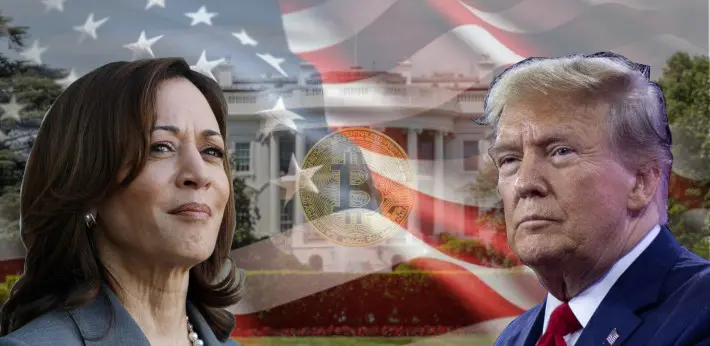
With the United States presidential election upon us, its a crucial time for the coming years in crypto. A Trump or a Harris win could signal a very different landscape for cryptocurrency during the presidential term, and its important to look at some of the bold promises made by Trump during his campaign to capture the attention of the digital asset industry and investors.
The 2024 Republican presidential candidate Donald Trump is known for making promises in the past but not delivering on them. His political career has been filled with broken promises so far, but it has not stopped him making plenty of promises to the crypto sector in an attempt to gain their votes. Back on the 7th of July Trump revealed his dfrat political program, which saw crypto mentioned under its innovation program. It was also mentioned as part of the development programs for artificial intelligence and space expansion. As part of the document it summarised the main objective for crypto as part of the Trump administration:
“Republicans will end Democrats’ unlawful and unAmerican Crypto crackdown and oppose the creation of a Central Bank Digital Currency. We will defend the right to mine Bitcoin, and ensure every American has the right to self-custody of their Digital Assets, and transact free from Government Surveillance and Control.”
It is a far cry from Trumps stance as a vocal critic of the digital asset space. As he pushes for a return to the White House his bullish rhetoric on the industry is exciting for those within the space. Many are hoping he can make the United States a haven of free-market, anti-interventionist digital asset policy. It was not so clear back in July 2019, when Trump posted the following on X (formerly Twitter):
“I am not a fan of Bitcoin and other cryptocurrencies, which are not money, and whose value is highly volatile and based on thin air.”
Back then Trump was the president and at the time he warned about the risks of “unregulated crypto assets,” saying they could facilitate “unlawful behavior, including drug trade and other illegal activity.” Even when Trump lost his seat in the White House he maintained his unfavourable take on digital assets, calling Bitcoin a 'scam' in a July 2021 appearance on Fox Business. He stated:
“Bitcoin, it just seems like a scam […] I don’t like it because it is another currency competing against the dollar. Essentially, it is a currency competing against the dollar. I want the dollar to be the currency of the world, that’s what I’ve always said.”
Fast forward to election day 2024 and that stance has made a complete U-turn. Trump has declared that “Crypto is the future” and calling it an “incredible technology.” During the 2024 Bitcoin Conference in Nashville back in July of this year Trump confirmed his political stance on crypto. He made a number of promises as part of his speech, where he said “I pledge to the Bitcoin community that the day I take the oath of office, Joe Biden and Kamala Harris’ anti-crypto crusade will be over,” stating firmly that “it will end. It will be done.” The question now stands as to whether or not Trump can really deliver on these promises?
The change of heart is possibly down to a fundamental reassessment of the potential value, both economic and societal, of crypto and blockchain technology. There is also the potential it was in the hopes of securing campaign financing and a useful block of single-issue voters hungry for a powerful political ally. Whichever motivation fuelled Trump, his U-turn on digital assets began roughly a year after he called Bitcoin a scam.
In June of this year Trump posted on Truth Social that he wished for “all the remaining Bitcoin to be made in the USA.” He went on to claim it would help make the United States become “energy dominant.” Currently, 90% of the 21-million-capped Bitcoin supply has been mined but the final 10% will be some of the most lucrative of all the Bitcoin to be mined.

Trumps comments regarding boosting the crypto mining industry within the United States and keeping Bitcoin production onshore will of course face plenty of logistical and regulatory challenges. This is due to the decentralised nature of Bitcoin mining, meaning it is literally impossible to ensure the United States mine all of the remaining Bitcoin. It is however possible to make the United States a more desirable location for Bitcoin mining and ensuring the nation is the number one country for Bitcoin mining. Ben Gagnon, CEO of crypto mining firm Bitfarms, noted:
“It’s not possible, nor desirable, that 100% of Bitcoin are mined in the US or in any other country. America will solidify its position as the most competitive place to mine Bitcoin in the world if Trump reduces the red tape and increases support and investment for energy and electricity infrastructure.”
While the notion of mining all the remaining Bitcoin in one location is contrary to Satoshis vision of Bitcoin being a decentralised entity, Trump is hopefully merely trying to show his solid support for the mining industry with his comments.
Another key issue addressed by Trump is the level of national debt within the United States. This is the amount of outstanding borrowing by the US federal government accumulated throughout the nation’s history. Fiscal Data shows that over the past 100 years, the US federal debt has increased from $394 billion in 1924 to over $35 trillion in 2024.

There is a looming risk with the mounting debt level, and this could lead to severe long-term economic challenges. Trump of course released his own non-fungible token (NFT) collection which raised more than $8.9 million. Not only did this show his new found support for digital assets, but he also noted during an event related to his NFT collection that “crypto has got a great future. I think it really does. Maybe we will pay off the $35 trillion in crypto.” While his $8.9 million is a long way short of the outstanding $35 trillion, it does show the potential for the digital assets space to raise finances.
Ric Edelman, founder of the designation program for advisers platform Digital Assets Council of Financial Professionals, noted how he believe crypto could aid the United States when it comes to their levels of debt. He stated:
“I have no doubt that a Bitcoin reserve could sharply reduce and even perhaps eliminate our national debt.”
While it is an optimistic view, he also shared the harsh reality that he does not believe Trump would succeed in his efforts to create such a reserve fund, or if he did, his successor would eliminate it. He also admitted that he believes Trump's claim is nothing more than a “fun sound bite on the campaign trail, but that’s all it is.”
This strategic Bitcoin reserve or stockpile Trump aims to create would entail the United States holding 100% of the Bitcoin currently in its possession. Much of those assets are from seizures by law enforcement in criminal cases. As of July 29, 2024, the U.S. government held 213,297 BTC, worth roughly $14.82 billion.

Of the current Bitcoin held by the United States government, almost half of that is from a significant seizure following the Bitfinex hack. These assets belong to the affected victims and there is already legal pressure to return the funds to Bitfinex or the impacted parties. While this would pose a major issue for Trumps plan, Senator Cynthia Lummis has recently introduced a bill to establish a Bitcoin strategic reserve. This would create a Bitcoin fund to hedge against the national debt if it gets approval, with the goal to acquire 1 million Bitcoin over 5 years and hold it for at least 20 years. If the plan gets backing from Congress then Trump's plan to create a Bitcoin reserve may actually have a chance of coming into fruition. However it will still require a number of lawmakers to back the plan.
Another key issue on Trump's agenda is his comments regarding the United States Securities and Exchange Commission (SEC). Trump stated he would fire current chair Gary Gensler on day one given the commissions “regulating by enforcement” approach to crypto. They have opened many cases against major crypto firms for allegedly selling unregistered securities. During all of this the United States crypto industry have been pushing for regulatory clarity and have claimed the current SEC guidance remains ambiguous. Industry observers claim the lack of clear rules creates uncertainty and hinders market engagement.
Trump has argued that brining in new leadership will bring a more crypto-friendly regulatory environment and help the US crypto industry grow. While in theory that makes sense, there are larger questions regarding whether or not he can actually fire Gensler on his first day in office. While Trump would not require senate approval to fire the chair of the SEC, removing an influential regulator so unceremoniously could set a dangerous precedent and face political backlash. There is a requirement “for cause” if Trump wishes to fire the chair of the SEC, and this means that Trump would need to justify the dismissal on the grounds of neglect, inefficiency or some other form of malfeasance. On top of that the process of establishing cause, legal reviews and administrative transitions could take over a year. While this is bad news for those in the crypto space, there are murmurs that Gensler will step down from the position once a new administration is in place. The term for a SEC chair lasts five years and Gensler still has until June 2026, but typically chairs resign when a new party is elected. It remains unclear whether or not he would remain in place if Harris wins the election, but Gensler did previously state he would 'absolutely' stay for a second term under Biden, when Biden was still the Democratic nominee.
In terms of a central bank digital currency (CBDC) by the US Treasury, Trump has pledged to stop any further development of this. He has given a strong stance on his opposition to increased governmental control over digital assets. While speaking at the 2024 Bitcoin Conference in Nashville, Trump claimed:
“I will immediately order the Treasury Department and other federal agencies to cease and desist all steps necessary because, you know, there’s a thing going on in your industry. They want to move the creation of a central bank digital currency. It’s over. Forget it. There will never be a CBDC while I’m president of the United States. And I will always defend the right to self-custody.”
He described the technology of a CBDC as an imminent threat to financial privacy. It followed on from a speech made by Trump on the 17th of January in Portsmouth, North Hampshire. There Trump stated:
“Tonight, I’m also making another promise to protect Americans from government tyranny. As your president, I will never allow the creation of a central bank digital currency. “Such a currency would give the federal government, our government, the absolute control over your money. They could take your money, and you wouldn’t even know it was gone. This would be a dangerous threat to freedom and I will stop it from coming to America.””
Trump has been extremely consistent in his opposition to a CBDC, and many other Republican politicians have also shared their opposition on this matter. This includes the governor of Florida, Ron DeSantis, who signed a bill to restrict any use of a CBDC in the state.
Another Congressman, Tom Emmer, introduced the CBDC Anti-Surveillance State Act. This prohibits the Federal Reserve from issuing a CBDC without congressional approval. The bill was passed by the House but still needs to be ratified by the Senate, which would likely not happen until early next year due to the election taking place in November. Following that it would require presidential approval, and if that president is Trump then it is likely a guarantee that it will be passed.
As part of the Libertarian National Convention, Trump said that on his first day in office he would commute the sentence of Ross Ulbricht, the man who founded the darknet market Silk Road. This site allowed the illegal trading of drugs, weapons and other unlawful goods in exchange for Bitcoin. The sentence of Ulbricht is a highly controversial one due to its severity, he received a double life sentence plus 40 years without parole for his non-violent crimes.
Many have argued that his punishment is excessive compared to sentences for similar offenses. They have pointed to issues of judicial overreach, precedent for digital-age crimes, and concerns about the criminal justice system’s handling of first-time, nonviolent offenders. If elected Trump would have the power to do this immediately, as a US president has the power to reduce the length of a sentence or grant relief from a conviction for federal offenses. A commute wouldn’t absolve Ulbricht from his conviction but would allow his early release.
Another key promise made by Trump during the Bitcoin Conference was the creation of a digital asset advisory council. This would be called the “Bitcoin and crypto presidential advisory council” and according to Trump it would have rules “written by people who love your industry, not hate your industry.” This would be because crypto is a broad and complex topic, especially for regulators. Trump feels that the creation of a presidential advisory committee would help to ensure a solid regulatory framework for crypto becomes law. He stated:
“We will have regulations, but from now on, the rules will be written by people who love your industry, not hate your industry.”
He went on to state that the task of the crypto council would be to “design transparent regulatory guidance for the benefit of the entire industry, and they will get it done in 100 days.” It is a big promise to make and would have little time to be completed. Pseudonymous crypto market analyst and trader Crypto Rand said he felt this promise may be one of the most significant and he believes Congress and the SEC have repeatedly demonstrated their lack of understanding of the crypto industry and its dynamics.
Trump also made promises around the right to self-custody for crypto users. Effectively what he means here is that he intends to implement “not your keys, not your coins” into US federal law. This commitment to crypto self-custody is helped by legislation proposed by Republican Senator Ted Budd. This legislation, known as the Keep Your Coins Act, was introduced into the Senate on the 7th of November, 2023, and aims to restrict any prohibitions on Americans’ ability to transact through self-hosted crypto wallets. This is the opposite of what Democratic Senator Elizabeth Warren tried to introduce in 2022. Known as the Digital Asset Anti-Money Laundering Act, her bill would require all crypto-market participants to identify and track users with self-custodial wallets, including crypto wallet service providers, miners and validators, among others. Many within the crypto space will be in favour of Trump and Budd's comittment to self custody as Warren has often been seen as anti-crypto and has previously made numerous comments regarding how she believes crypto's only purpose is to finance terrorism and North Korea.
While the promises of Trump will certainly resonate with many within the crypto space, he certainly has a history of bold claims and subsequent reversals. The 34-time convicted felon has certainly demonstrated his newfound love of cryptocurrency and digital assets, but does that mean the sector should stand with him in support during the election on the 5th of November? While I believe he does have a good outlook on crypto and could likely implement some good things for the space, it is important to reference some of the promises the former president broke once he found himself in office the first time around:
- Repealing Obamacare – One of Trump’s key rallying pledges, but Republicans were unable to pass a repeal or reform bill during his term;
- Building a border wall and making Mexico pay for it – By the end of his term, only 194 miles of wall system had been built, and Mexico did not pay;
- Eliminating U.S. debt – By the end of 2019, the federal debt was at $22.7 trillion, more than three trillion more than immediately before Trump took office;
- Reviving U.S. manufacturing – Between January 2017 and the end of 2020, there was a net decrease in manufacturing employment;
- Four-percent Gross Domestic Product (GDP) growth – Average GDP growth never got beyond 2.5% during Trump term;
- Bringing back coal – A November 2020 report from S&P Global Market Intelligence showed a decrease in coal jobs since the start of the Trump administration;
- Ditching North Atlantic Treaty Organization (NATO) – After elected he hosted NATO’s secretary general at the White House, in April 2018, and said the organization was “no longer obsolete.”
- Prosecuting Hillary Clinton – When he took office his “lock her up” rallying cries quickly changed, even saying at one point that the country owes her “a debt of gratitude.”
To be fair to Trump he is not the first, nor the last, politician to break promises made once he took office. It is a prominent characteristic of modern politics, and is one of the reasons public trust in politicians is at an all-time low. However it is important to note that the former president’s apparent enthusiasm for a policy or cause can diminish once the votes are in. So far he has said all the right things, but once sat back in the oval office perhaps his interests will return to playing golf or cutting taxes for the rich. Given his own crypto project, along with his sons, has so far faltered, chances are many of Trump's promises will never see the light of day. To all the crypto supporters greedily drinking up Trump’s wishful waffle of a U.S. “crypto capital” should take caution and remember that Trump is the same man who wrote in his 1987 book The Art of the Deal, “a little hyperbole never hurts.”
Good luck to both Trump and Harris in the election, and whoever emerges victorious may they take positive steps towards ensuring crypto and digital assets can thrive going forward.
Have a great day.
Peace. CryptoGod-1.
Referral Links and Follow Me:





