
As every cryptocurrency enthusiast knows the world of the blockchain industry is in constant evolution and perpetual mutation, there are constantly new trends and new opportunities, which succeed each other without interruption; if last year, just to give an example, it was the year of the stablecoin, this year the CBDC mania exploded. Another trend that has characterized this 2019, in addition to the attraction / repulsion relationship among all the governments of the world is the CBDC, is that related to DeFi, which then simply means "decentralized finance".
Meanwhile it is important to start by saying that even if the craze for DeFi actually started this year the concept itself dates back to a couple of years ago and is therefore nothing particularly new; on many other sites, so to speak, you will find the Ethereum platform very simply associated with the DeFi concept and this is because, basically, the logic is the same. Clearly not all decentralized finance projects must run on blockchain ethereum, however this platform is still one of the most functional of those in circulation, as well as the one that boasts more developers and more educational material available online; in addition to having to run on blockchain, for which to be decentralized, a DeFi project also has two other fundamental characteristics, namely that it uses smart contracting and clearly operates in one of the areas in which traditional finance has operated until now.
A DeFi project, therefore, can act in several different areas, it can be a decentralized exchange, or a custody platform (with or without the payment of interest on deposits), it can act in the field of loans and insurance, in short, it can do everything that a bank did before but in a decentralized manner, at lower costs and above all without having to comply with all the rules and regulations that govern banking activity. To try to better understand what we are talking about, however, it will be necessary to mention one of the most successful examples in the DeFi world, namely MakerDAO; this platform allows users to obtain loans by offering the ETH deposit as collateral. To do all this MakerDAO uses a stablecoin that is completely decentralized and disconnected from any FIAT currency, the DAI; let's take a concrete example, when a user makes a deposit equal to $ 2000 in ETH he can request a loan for a maximum of $ 1000, however, this loan is not paid either in dollars or in ETH but in DAI and it is really on the amount disbursed in DAI that interest is calculated (always expressed in DAI). Until now the system has not only worked but has been very successful, with a marketcap of around 100mn dollars and over 2mn of ETH bound, not to mention the fact that DAI, even today, is the only non-tied stablecoin to a fiat currency that has managed to maintain its value in substantial equality with the US dollar.
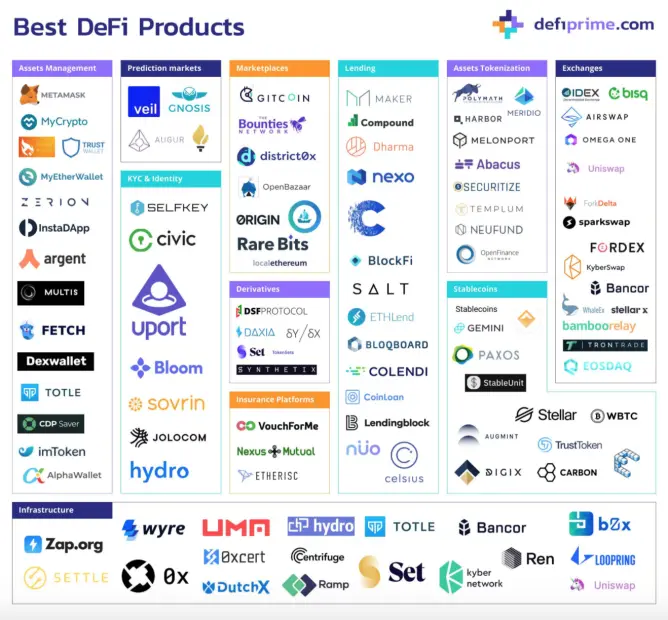
Similar operation for many other platforms that however, in addition to granting loans, also allow you to earn an income from your deposits; in short, it is exactly what a bank does, collects clients' money on its accounts and then sells it at interest by exploiting the fractional reserve; on decentralized platforms this happens without the intervention of any intermediary, there is simply a user who deposits and another who withdraws, always against a collateral deposited, and everything takes place automatically through the use of smart contract. To conclude, DeFi's own concepts can be applied in different different sectors (for example in the health sector with insurance companies) and could potentially revolutionize not only private work but also the provision of public services in the state.
With this article I hope I made it clear what a DeFi platform is, how it works, what it is for and what opportunities it has to offer. I will not fail to deepen the subject if it should interest readers. If you have come this far, thank you very much and see you soon!






