You are reading an excerpt from our free but shortened abridged report! While still packed with incredible research and data, for just $40/month you can upgrade to our FULL library of 60+ reports (including this one) and complete industry-leading analysis on the top crypto assets.

Becoming a Premium member means enjoying all the perks of a Basic membership PLUS:
- Full-length CORE Reports: More technical, in-depth research, actionable insights, and potential market alpha for serious crypto users
- Early access to future CORE ratings: Being early is sometimes just as important as being right!
- Premium Member CORE+ Reports: Coverage on the top issues pertaining to crypto users like bridge security, layer two solutions, DeFi plays, and more
- CORE report Audio playback: Don’t want to read? No problem! Listen on the go.

Introduction
The Tron blockchain has become a crucial player in the world of cryptocurrencies. This layer-1 blockchain network, created in 2017, focuses on the entertainment industry and aims to transform how content is shared through its decentralized platform. Tron's impressive growth can be seen through the incredible increase in Tron Tether's USDT stablecoin supply, which has gone from $0 to $50 billion since May 2019.
Understanding Tron
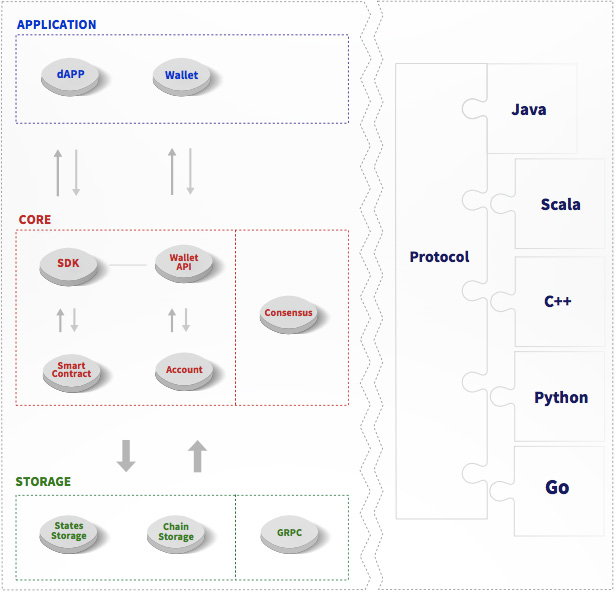
One of Tron's key features is its architecture, which is designed to meet the unique requirements of a broad spectrum of DApps. It adopts a three-layer architecture that includes a storage layer, a core layer, and an application layer. This design offers developers flexibility while ensuring maximum operation and data storage efficiency.
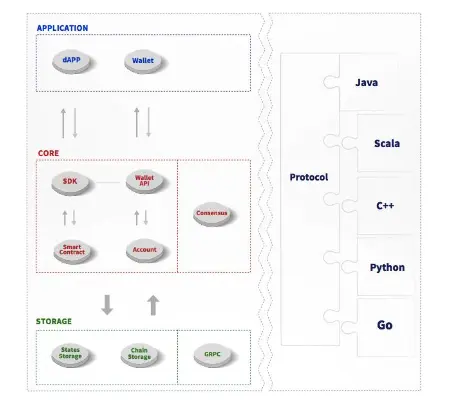
TRON is notably powered by the TRON Virtual Machine (TVM), a Turing-complete virtual machine tailored for TRON's unique requirements. TRON's architecture is designed to facilitate seamless communication across a diverse range of advanced programming languages such as Java, Scala, C++, Python, and Go, in addition to Solidity. This compatibility is achieved through the integration of Google Protobuf (Protocol Buffers), a sophisticated data serialization system that significantly improves communication between different platforms and systems within the TRON environment.
The Tron protocol also uses Google Protobuf, which supports multi-language expansion. With such capabilities, it’s no surprise that the network can handle up to 2,000 transactions per second (TPS). This speed positions it well above many other blockchain networks and makes it an attractive option for DApp developers in the industry.
Tron's Unique Governance Model
Tron’s governance model is based on a Delegated Proof-of-Stake (DPoS) consensus mechanism. In this model, TRX holders vote for "super representatives" (SRs) who validate transactions on the network. This democratic process ensures decentralization while increasing transparency and inclusiveness within the ecosystem.
TRON uses a Delegated Proof-of-Stake (DPoS) system where 27 Super Representatives (SRs) are chosen every six hours to validate transactions and secure the network. These SRs are elected through a voting process where any account can nominate themselves as an SR candidate by committing 9999 TRX and participating in the election. TRX holders have the power to vote for their preferred candidates, with the top 27 vote-getters becoming SRs.
Due to the relatively small number of SRs handling block production, it is crucial for these entities to be diverse and independent to prevent centralization within the network. Geographic diversity among SRs is particularly important to mitigate risks related to regulatory pressures, ensure neutrality, and enhance network security. Concentrating too much network activity in one region can lead to vulnerabilities, including a single point of failure. Although geographic advantages can't be completely eliminated, minimizing these disparities is key to maintaining a fair and decentralized network.
Information about the identity, location, and reputation of SRs is scant on the block explorer, yet a robust number of nodes is essential for decentralization. According to the Tronscan block explorer, TRON’s node count in December 2023 fluctuated significantly, ranging from approximately 4,700 to 8,240 nodes. Despite this volatility, the geographic distribution of these nodes remained fairly consistent, with China and the U.S. being the most prominent locations. This distribution is crucial for the overall health and resilience of the TRON network.
Notably, Tron has pursued continuous innovation in this area. For instance, with the Periander Upgrade in July 2023, Tron advanced its stake 2.0 mechanism, streamlined smart contract interface calling, and revamped its P2P network module.
The Role of TRX Token within the Tron Ecosystem
An integral part of the Tron ecosystem is its native cryptocurrency — TRX. The TRX token serves multiple purposes:
- For content creators, TRX provides a means of earning rewards for their creative efforts.
- Users can tip creators with TRX to show appreciation for their content or use the tokens to access premium features within DApps.
- Developers use TRX to cover the cost of deploying and running smart contracts.
- The token also serves as a governance token, allowing holders to vote for SRs and influence the network's future direction.
Examining Tron's Journey: From Inception to Prominence
The history of Tron is like a captivating story, shaped by its outlandish leader, Justin Sun. He has played a key role in guiding Tron and achieving important milestones.
Tron was created in 2017 as a disruptive force in the world of blockchain. Led by Justin Sun, the project had a clear goal: to make the internet more decentralized, empower content creators, and challenge centralized streaming platforms.
The establishment of the Tron Foundation was a crucial step in turning this vision into reality. The foundation believes in the power of technology to bring about change and is dedicated to creating a truly decentralized internet.
A major milestone came in 2018 with the launch of Tron's mainnet. This involved moving away from using Ethereum's token standard (ERC20) and building their own independent blockchain network. It was a significant achievement that showed Tron's determination to stand out in the world of cryptocurrencies.
Scalability
Scalability is one of the biggest challenges in blockchain technology. A platform's ability to scale can have a huge impact on how user-friendly it is and how widely it's adopted. Here's how Tron measures up:
- Tron has a high transaction speed, capable of handling 2,000 transactions per second (TPS). This puts it ahead of Ethereum but behind blockchains like Solana and BNB Chain.
- Solana claims to support up to 65,000 TPS, far surpassing Tron's capacity.
- BNB Chain also offers higher scalability than Tron.
- However, when compared to Avalanche and Base, Tron stands on equal ground as all three aim for high scalability.
The Future Trajectory of Tron: Opportunities and Challenges
As Tron continues to navigate the ever-changing world of blockchain technology, it's important to understand the opportunities and challenges that lie ahead. The success of the platform depends not only on its current performance but also on its ability to adapt and grow in response to future trends and obstacles.
Potential Opportunities for Growth
New technological developments are paving the way for Tron to become a leader in the market. The Periander Upgrade showcases Tron's commitment to technological excellence by improving smart contract capabilities and optimizing network performance. Key advancements include:
- Advanced Stake 2.0 Mechanism: This update could make the network more secure while also encouraging user participation.
- Compatibility with Ethereum's EIP-3855: By ensuring compatibility with Ethereum's tools, Tron makes it easier for developers to utilize its features.
- Enhanced Smart Contract Interface Calling: Simplifying interactions between smart contracts could lead to more advanced decentralized applications (DApps), which may attract more developers.
Challenges to Overcome
Regulatory Uncertainties
The regulations surrounding cryptocurrencies are still unclear in many countries, creating uncertainty for projects like Tron. Navigating this uncertain environment involves:
- Compliance Strategies: Being adaptable and forward-thinking to comply with different regulations in different regions.
- Dialogue with Policymakers: Actively engaging with regulators to address concerns and create a better operating environment.
- Consumer Protection Measures: Implementing strong security measures to address regulatory concerns about user safety proactively.
Competition from Other Ecosystems
There is intense competition among blockchain platforms to attract developers and users. Despite its accomplishments, Tron faces competition from Ethereum, Binance Smart Chain, and new players like TON. To stay ahead, Tron should focus on:
- Innovating Beyond Competitors: Continuously improving transaction speeds, lowering fees, and increasing scalability to outperform other platforms.
- Developer Engagement: Creating a supportive environment for developers through resources and assistance to attract new talent and retain existing ones.
- Strategic Partnerships: Collaborating with other industry leaders to expand Tron's influence beyond its own ecosystem.
By directly addressing these potential opportunities and challenges, Tron has the chance to maintain its growth—continuing to attract users, developers, and investors. The interaction between increasing popularity, technological advancements, regulatory compliance, and strategic competition will determine Tron's future in a rapidly changing industry full of possibilities.
Conclusion
The Tron blockchain is a powerful layer 1 network focused on the entertainment industry. It offers fast transactions, scalability, and uses a Delegated Proof-of-Stake governance model. These features are beneficial for content creators, users, and developers.
Throughout this report, we have explored Tron's journey from its beginning with Justin Sun to its current success. We have recognized both its achievements and controversies.
Here are the main points we have learned:
- Tron's architecture allows for quick transactions and low fees, making it appealing for DApps.
- Tron has become prominent through strategic partnerships, launching its mainnet, and continuously improving its technology.
- Data shows that many people are using Tron and are actively involved in its community. However, there is room for more development activity.
- Tron's future growth depends on its ability to innovate technologically and navigate regulations in a highly competitive industry.
It is important to keep up with the latest trends and developments in the cryptocurrency world, especially within the Tron ecosystem. Before getting involved with this growing network, it is essential to conduct thorough research and understand the overall market situation.