
You are reading an excerpt from our free but shortened abridged report! While still packed with incredible research and data, for just $20/month you can upgrade to our FULL library of 60+ reports (including this one) and complete industry-leading analysis on the top crypto assets.

Becoming a Premium member means enjoying all the perks of a Basic membership PLUS:
- Full-length CORE Reports: More technical, in-depth research, actionable insights, and potential market alpha for serious crypto users
- Early access to future CORE ratings: Being early is sometimes just as important as being right!
- Premium Member CORE+ Reports: Coverage on the top issues pertaining to crypto users like bridge security, layer two solutions, DeFi plays, and more
- CORE report Audio playback: Don’t want to read? No problem! Listen on the go.
Intro
Now, more than ever, Bitcoin remains a pivotal player, with its ownership and investment dynamics undergoing significant changes. Institutional entities now constitute a substantial portion of the Bitcoin market, holding approximately 40% of all circulating Bitcoin. This broad ownership spectrum includes a diverse range of stakeholders such as exchanges, governmental agencies, and both publicly and privately held corporations, including names like Tesla, Block Inc., and MicroStrategy, as well as platforms aimed at retail investors like Robinhood. Notably, this group also encompasses miners, who are integral to the security and functionality of the Bitcoin network, and various investment funds, including those involved with Bitcoin ETFs and wrapped Bitcoin assets. The presence of such a wide array of institutional participants underscores the growing acceptance of Bitcoin within the traditional financial ecosystem despite potential overlaps among the ownership categories.
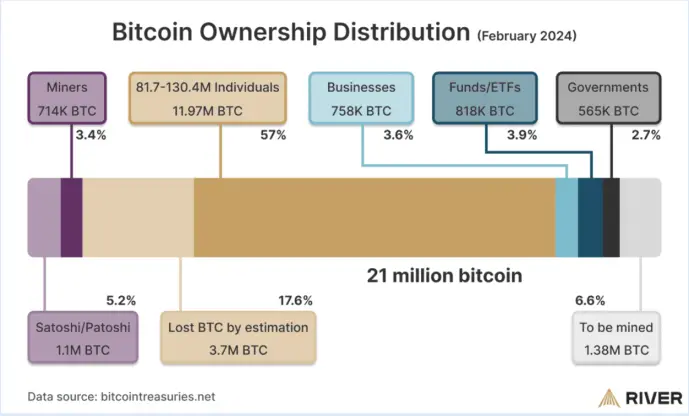
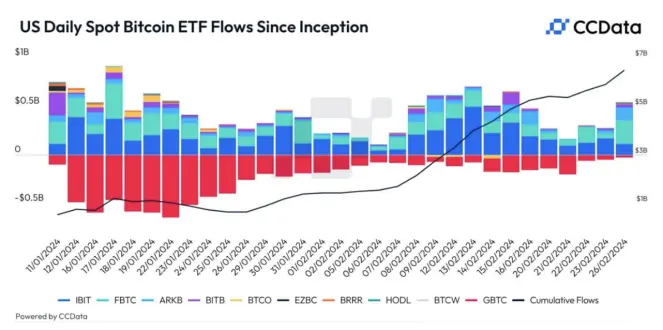
Exchange-traded funds (ETFs) have emerged as a critical vehicle for increasing Bitcoin's accessibility to a broader audience, including individual investors, financial advisors, and capital allocators. The approval of U.S. spot Bitcoin ETFs has been a landmark achievement, drawing approximately $1.5 billion in net investments within just the first 15 trading days and holding more than $44 billion across ten products. According to data from River Financial, around 4% of Bitcoin's circulating supply is now held by ETF providers and funds, surpassing the holdings of publicly traded miners and businesses. This surge in ETF investment is not merely a result of novelty; it reflects a sustained interest and participation in the Bitcoin market, anticipated to mitigate some of the inherent sell pressure by fostering ongoing growth and development within the ecosystem.
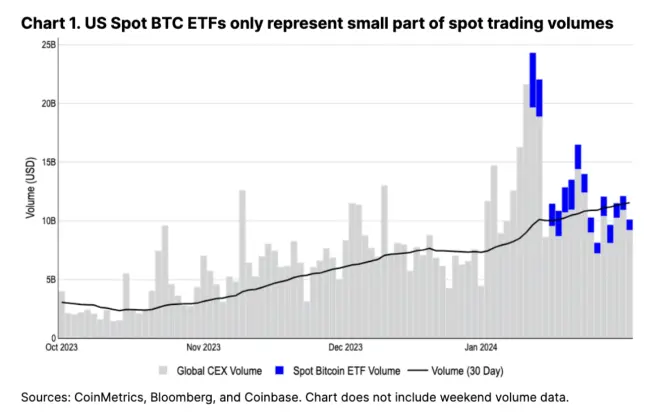
Yet, the role of ETFs in the broader Bitcoin market must be analyzed with consideration to the complex interplay of market dynamics. Despite their significant impact, U.S.-based Bitcoin ETFs represent only a fraction of global BTC spot trading volume and a modest percentage of the total Bitcoin supply. The landscape is further complicated by various factors, including investment shifts from less efficient Bitcoin holding mechanisms to ETFs, the transition to lower-fee products within the U.S., and the liquidation of existing investment vehicles, such as FTX's sale of Grayscale Bitcoin Trust shares.
The demand from ETFs, particularly those managed by industry heavyweights like Blackrock and Fidelity, has had a profound impact on the market. The pace of ETF Bitcoin acquisitions has been extraordinary, far outstripping the daily issuance of new bitcoins. This dynamic is set to become even more pronounced post-halving, with ETFs potentially absorbing more than twenty times the daily Bitcoin issuance. While such high acquisition rates may not be sustainable over the long term, they highlight the significant influence of supply and demand dynamics on Bitcoin's valuation, especially considering the constrained liquid supply of BTC.
Bitcoin's valuation, currently exceeding $65,000, is a testament to the intricate interplay of market dynamics, institutional involvement, and the evolving landscape of cryptocurrency investment mechanisms. The substantial assets under management by the firms operating spot Bitcoin ETFs—despite constituting a small fraction of their total assets—suggest a potential for increased investment in Bitcoin products. With the forthcoming halving event set to further reduce Bitcoin's daily issuance, the primary mechanism for balancing the market dynamics under constrained supply conditions will be the adjustment of Bitcoin's price. This scenario underscores the importance of understanding the broad and nuanced impacts of institutional involvement and investment products on the cryptocurrency market.





