If you want more cryptocurrency analysis including full-length research reports, trading signals, and social media sentiment analysis, use the code "Publish0x" when subscribing to CryptoEQ.io to make your first month of CryptoEQ just $10! Or simply click the button above!
The Federal Reserve vs "Risk" Assets
The Federal Reserve increasing interest rates to fight inflation has been the issue affecting all markets since Q4 2021. Eight times a year, the Federal Open Market Committee (FOMC) meets to review economic conditions and determine the appropriate monetary policy in pursuit of its goals of price stability and sustainable economic growth. After the meeting, the chairman has a press conference to discuss the FOMC’s view on the economy and announce changes to monetary policy – usually by way of a change in interest rates.
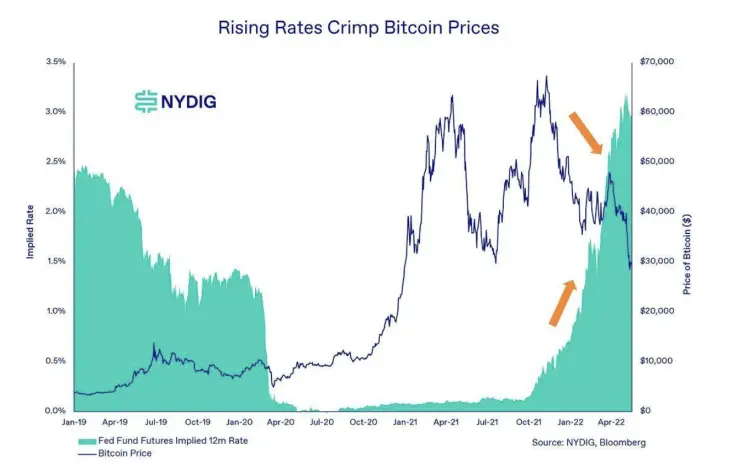
The Fed recently approved a 50 bps rate hike for the first time since May 2000 and signaled that the June and July meetings will most likely do the same. Rising rates increase the cost of capital and are a blunt way to kill consumer demand thereby reducing global liquidity from markets. Rising rates mean everything gets more expensive, hurting businesses’ bottom lines, leading to layoffs and a slowed economy/recession.
Rising rates are a “blunt” approach because they aim to kill all demand rather than some of the root issues. Jerome Powell admitted himself that the Fed cannot solve supply chain disruptions and bottlenecks that contribute to rising prices and seem to be pervasive across all industries post-COVID. So if the Fed wants to combat inflation and they cannot control the supply-side, they have to bring demand down to match supply-side levels.
With the market responding to elevated global inflation and with real bond yields (yield minus inflation) deeply negative, interest rates across the U.S. Treasury curve have skyrocketed since November 2021. The U.S. 10-year rate recently hit 3% for the first time in over three years. It is not just the absolute value that is significant but the speed at which the yields have risen that has spooked markets. This is one of the fastest monetary tightening cycle periods in history and the abrupt rise has crushed risk-assets and has sent overall market volatility higher.