You are reading an excerpt from our free but shortened abridged report! While still packed with incredible research and data, for just $20/month you can upgrade to our FULL library of 60+ reports (including this one) and complete industry-leading analysis on the top crypto assets.

Becoming a Premium member means enjoying all the perks of a Basic membership PLUS:
- Full-length CORE Reports: More technical, in-depth research, actionable insights, and potential market alpha for serious crypto users
- Early access to future CORE ratings: Being early is sometimes just as important as being right!
- Premium Member CORE+ Reports: Coverage on the top issues pertaining to crypto users like bridge security, layer two solutions, DeFi plays, and more
- CORE report Audio playback: Don’t want to read? No problem! Listen on the go.
What Are Options?
The integration of options markets into the decentralized finance (DeFi) ecosystem marks a pivotal development in cryptocurrency trading, blending traditional financial instruments with cutting-edge blockchain technology. Despite its potential, weaving options trading into DeFi is fraught with complexities. This exploration sheds light on these intricacies, unraveling the challenges that investors and developers face and proposing viable solutions.
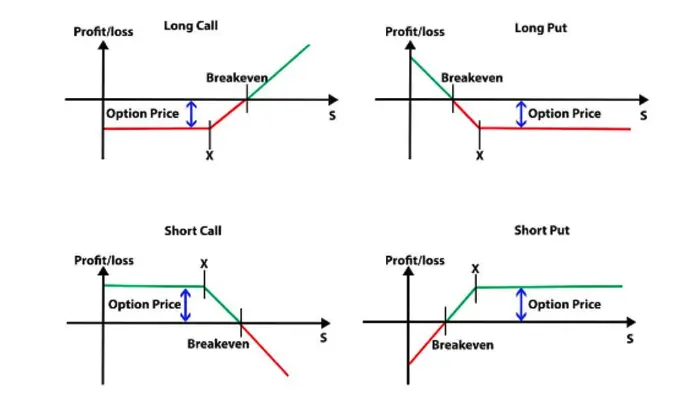
At their core, options are contractual agreements offering the buyer the right—but not the obligation—to buy (via a call option) or sell (via a put option) a specific asset at a predetermined price.
These contracts are characterized by:
- Premium: The cost incurred to acquire the option contract
- Type: Distinguishes between a call (buy) and a put (sell) option
- Asset Specifications: Defines the asset and its quantity covered by the contract, which can vary from cryptocurrencies like Bitcoin to traditional commodities and stocks
- Strike Price: The pre-agreed price for the transaction of the underlying asset, a critical factor in options trading
- Expiration Date: The deadline by which the option must be exercised or forfeited
- Exercise and Settlement Rules: The regulatory guidelines governing the execution and finalization of the options
Finally, central to understanding options trading is the concept of "moneyness," which assesses an option's profitability by comparing the market price of the underlying asset to the option's strike price. This metric is crucial for determining whether an option is "in the money" (profitable), "out of the money" (not profitable), or "at the money" (neutral), guiding traders in their decision-making process.
Call and Put Options
Investors use call options as a strategic bet on the appreciation of an asset’s value. Conversely, put options are employed when anticipating a decline in an asset's value. A crucial aspect of options is their derivative nature, meaning the investor does not own the underlying asset but rather a contract stipulating terms for acquiring or disposing of the asset at a specified price.
The option owner has the right but not an obligation to exercise the option. This protects the option owner by limiting potential losses, as the owner will not execute the option if it would not be profitable.
For instance, consider a scenario where an investor purchases 10 BTC call options with a strike price of $55,000, set to expire on December 31st. This contract grants the investor the right to acquire 10 BTC for $550,000 any time before the year's end, regardless of the actual price of BTC.
If BTC decreases in value from $55,000 to $54,000, someone who owns 10 BTC would incur a loss of $10,000, while someone who owns the example contract would not be directly affected by the change in price. The only loss for the option owner in this instance would be the cost of the premium.
Importantly, this is a characteristic of the American-style option, which allows for exercise at any point until expiration. In contrast, the European-style option restricts the exercise to the expiration date alone. In this example, a European-style option would only be able to be exercised on December 31st.
Selling Options
Selling options can generate revenue through premiums. Depending on the type of option sold, the seller may have to purchase the underlying asset or update their cash balance to cover their position if the option is at risk of expiring ITM.
Hedging Options
At its core, hedging is a risk management strategy employed to offset potential losses in investments. It involves balancing the inherent risks of market volatility with the potential for profit.
It can be thought of as a type of insurance policy where the cost of protection is weighed against the likelihood of an adverse event. This balance is particularly critical with smaller-cap DeFi and crypto assets, where the absence of centralized control combined with much smaller valuations generates additional layers of complexity and risk.
There are many different strategies for hedging options. Some key possibilities include:
- Longer Dated Options: Opting for options with longer expiration periods may seem like a prudent choice for those seeking to hedge against long-term market uncertainties.
However, this increased timeframe introduces a higher level of unpredictability, inflating the cost of hedging. These options are priced higher, reflecting the greater risk borne by the option writer over a longer period.
- ATM Options: At-the-money (ATM) options occupy a critical threshold where the strike price and the market price of the underlying asset are in close proximity.
This delicate position makes ATM options highly sensitive to even minor price movements, necessitating more frequent adjustments to the hedge to maintain its effectiveness. The precision required in managing ATM options underscores their dynamic nature and the meticulous attention needed to leverage them effectively.
- OTM Options: Options that are out of the money (OTM) represent a different strategic posture. Given their lower probability of becoming profitable (expiring in the money), OTM options require less frequent hedging adjustments. This characteristic makes them potentially less costly in terms of hedging, but it also reflects the lower likelihood of a payout.
- Options in Volatile Markets: The challenge of hedging escalates in volatile markets. Price swings can be abrupt and significant, demanding constant vigilance and rapid adjustments to hedge positions.
The increased frequency of these adjustments directly impacts hedging costs, making volatility a key driver of the premium. For traders and investors, understanding and anticipating market volatility is crucial in formulating an effective hedging strategy.
In essence, an options contract compels the writer to engage in buying or selling the underlying asset as a hedge. The costs incurred in maintaining this hedge are directly reflected in the option's premium. Thus, the higher the hedging expenses, the greater the premium an investor pays for the optionality provided by the contract.