You are reading an excerpt from our free but shortened abridged report! While still packed with incredible research and data, for just $20/month you can upgrade to our FULL library of 50+ reports (including this one) and complete industry-leading analysis on the top crypto assets.

Becoming a Premium member means enjoying all the perks of a Basic membership PLUS:
- Full-length CORE Reports: More technical, in-depth research, actionable insights, and potential market alpha for serious crypto users
- Early access to future CORE ratings: Being early is sometimes just as important as being right!
- Premium Member CORE+ Reports: Coverage on the top issues pertaining to crypto users like bridge security, layer two solutions, DeFi plays, and more
- CORE report Audio playback: Don’t want to read? No problem! Listen on the go.
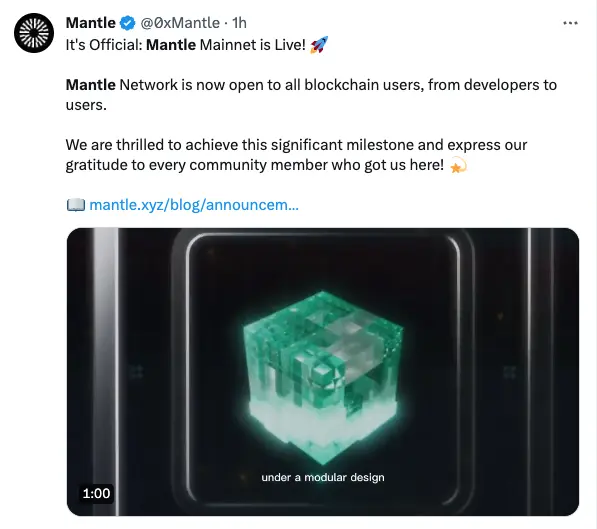
Overview
The Mantle Network, an Ethereum Virtual Machine (EVM)-compatible optimistic rollup, is poised to challenge the L2 landscape. Unlike traditional rollups that utilize Ethereum (ETH) for gas fees, Mantle employs its native MNT token, a strategic move that sets it apart from its competitors.
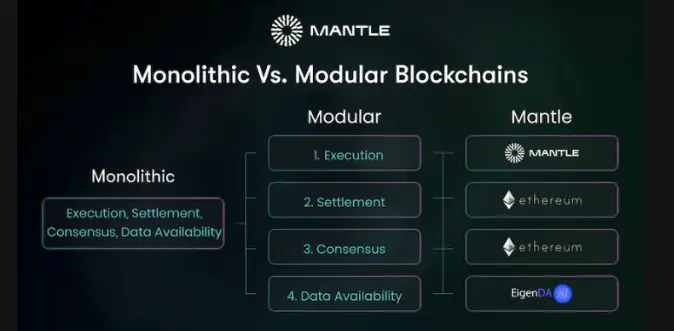
One of the distinguishing features of the Mantle Network is its modular data availability. While the majority of rollup networks process data availability (DA) on the Ethereum network, Mantle breaks the mold by employing EigenDA. This innovative approach enhances the network's efficiency and scalability, two critical factors in the rapidly evolving world of blockchain technology.
Another unique aspect of the Mantle Network is its use of Multi-Party Computation (MPC). This technique verifies the validity of the rollup network's computational results before they are validated on Ethereum. As a result, the challenge period required for withdrawal can be significantly reduced, improving the user experience and increasing transaction speed.
In a move towards decentralization, the Mantle Network plans to allow anyone to become a sequencer. This strategy not only democratizes the network but also enhances its security and resilience. Unlike Optimism or Arbitrum, which use separate virtual machines to generate fraud proofs, the Mantle Network plans to use EVM-native methods.
The Mantle Network is not just a promising venture; it's a formidable player in the blockchain space. Built on the OP stack and backed by BitDAO, Mantle boasts the largest treasury in decentralized finance (DeFi), with approximately $300 million in stablecoins, $500 million in Bitcoin (BTC) and Ethereum (ETH), and a staggering $2+ billion in the DAO's native token, BIT.
The original BIT token is slated to be migrated to a new Mantle token (MNT). This strategic move will create a unified brand and better convey the token's purpose, further solidifying Mantle's position in the blockchain space.
Use Case
The quest for scaling the Ethereum Virtual Machine (EVM) has primarily followed two paths: EVM-compatible sidechains and rollups, either Optimistic or zk (zero-knowledge). Ronin, an EVM-compatible sidechain that hosts the play-to-earn game Axie Infinity, is an example of the sidechain strategy. However, the security limitations of sidechains were exposed when Ronin's validator set was compromised in March 2022, leading to the loss of over $600 million in user funds. This incident underscored the vulnerability of sidechains and the need for more secure scaling solutions.
On the other hand, Optimistic and zero-knowledge rollups, which inherit security from Ethereum, face their own challenges. These rollups must post compressed transaction data to the base layer as calldata, a requirement that limits their scalability and can increase transaction fees during periods of high demand for block space.
Currently, monolithic Layer 1 (L1) blockchains (Solana being the posterchild for monolithic chains) perform four main functions: data availability, settlement, consensus, and execution. The Mantle Network, however, adopts a modular approach to its Layer 2 (L2) solution by outsourcing its data availability to EigenDA, a solution developed by the EigenLayer team.
Bit DAO
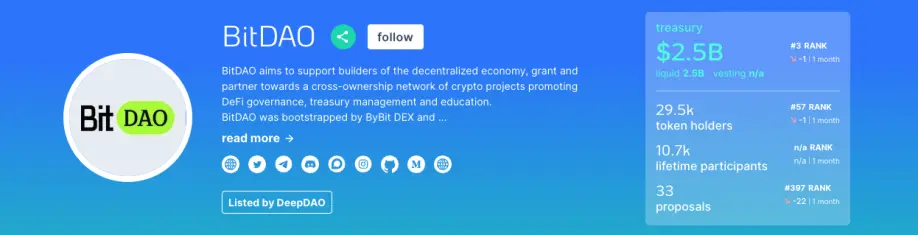
BitDAO, an open platform for ideas and experimentation established in 2021, has been instrumental in the development of the Mantle Network. BitDAO operates on a subDAO model, delegating initiatives to circumvent the bureaucratic and slow nature of traditional DAOs. Its mission is to address issues in decentralized finance (DeFi) and build open economic systems. To this end, it leverages its substantial treasury to fund projects that align with its goals. Among the initiatives and pilot programs it has supported are the initial and ongoing Bybit Contribution, venture investments, broad mandate ecosystem initiatives, core product development led by Mantle, and various ad hoc projects.
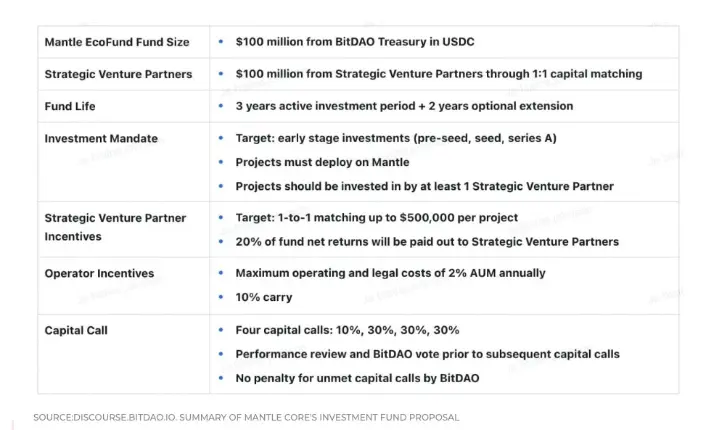
The consensus within the DAO is that building "core products" like the Mantle Network should be the primary strategy for user and developer adoption. The Mantle Network, in fact, is currently the primary focus of BitDAO. This is evidenced by the Mantle EcoFund, a proposal put forward by BitDAO. This $200 million incentive program aims to stimulate app development on the Network, potentially accruing value to the BIT token, which is set to be migrated to the MNT token.
The Mantle Network will be incubated and governed by BitDAO, with the backing of prominent BitDAO investors such as Peter Thiel, Founders Fund, Pantera Capital, Spartan Capital, QCP Capital, Cadenza Ventures, Folius Ventures, Play Ventures, and Dragonfly Capital. Other institutions, including Selini Capital and Lemniscap, have expressed interest in supporting the Mantle EcoFund.
BitDAO boasts the largest treasury in DeFi, with nearly $300 million in stablecoins, approximately $500 million in Bitcoin and Ethereum, and $1.75 billion in its own token. This treasury is more than twice the size of its closest competitor, the India Covid Relief Initiative, and significantly larger than other DAOs such as Olympus DAO, Maker DAO, and Lido.
Ecosystem funds have historically been crucial catalysts for the growth of new protocols and ecosystems. The Mantle Core team has proposed a $200 million fund to promote ecosystem growth, with half of the capital coming from BitDAO's treasury and the other half from strategic investors. The fund, which will have a three-year active investment period, will offer up to $500,000 in investment for each startup.