If you want more cryptocurrency analysis including full-length research reports, trading signals, and social media sentiment analysis, use the code "Publish0x" when subscribing to CryptoEQ.io to make your first month of CryptoEQ just $10!
Starkware
Pros
- Increased TPS compared to ORs (~9,000+ TPS on Ropsten testnet)
- Faster withdrawals (no challenge period), enabling better capital efficiency and liquidity
- Volition (discussed below) unlocks even greater scalability gains for those that choose to make the trade-off on security
Cons
- Developer UX and porting of dApps from L1 to L2 is more cumbersome and less friendly than OR options
- Cairo language less popular among developers, meaning less talent pool to build on Starkware
- With Starkware's Validium option, there's a technical challenge in solving data availability problem. In particular, the trade-offs between transaction latency and transaction cost and the trade-off between making data available on-chain.
Important Links
StarkEx
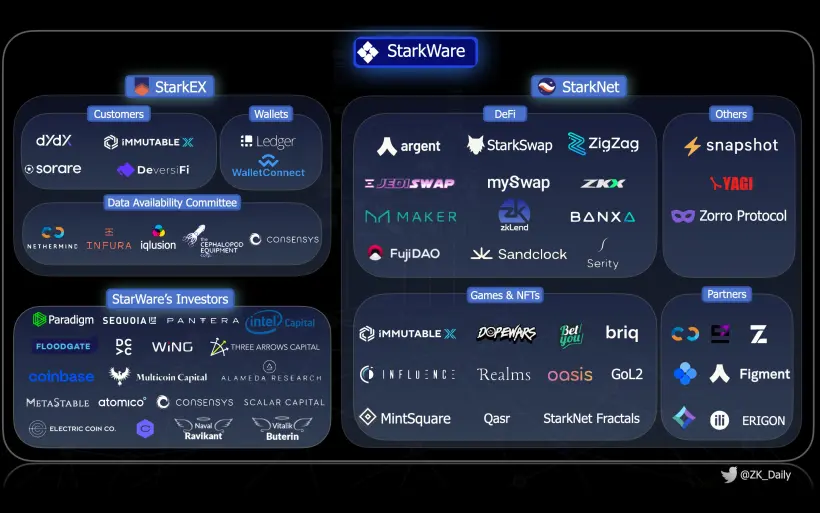
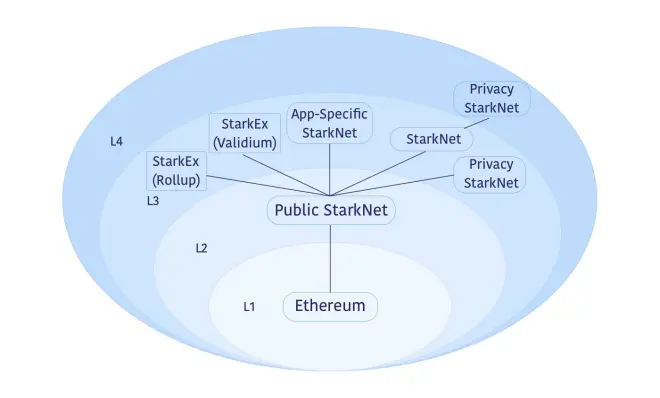
Starkware is a ZK-rollup company that pioneered zero-knowledge-based rollups in 2018, launched StarkEx in 2020, and recently released StarkNet in November 2021. StarkEx is a ZK-rollup with less functionality than its StarkNet successor. StarkEx supports the ability for smart contracts to run any arbitrary logic for specific use cases like trading and NFTs while StarkNet enables more general use cases.
StarkEx is the first iteration “scalability engine” from Starkware that now supports two versions: a zkRollup mode and a validium mode. Validiums (discussed more in later sections) can be custom-tailored to offer superior performance for specific dApps and use cases like DeversiFi, ImmutableX, and Sorare.
StarkNet
StarkNet is Starkware’s next iteration of a ZK-rollup and is the first ZK-rollup to feature general smart contracts on a fully composable network. Composability refers to the ability for applications to coordinate, build on top of one another, and interconnect—something for which StarkEx is not designed.
As another example of an Ethereum L2 ZKRU, StarkNet uses zero-knowledge proofs to achieve fast transaction times and hyper-scaling without compromising security. An alpha version of StarkNet was launched in November 2021 with limited capabilities to allow developers to begin building on top of the protocol. StarkNet is designed so that it benefits from economies of scale, i.e. the greater the number of transactions in a batch, the less gas each participant in the batch must pay.
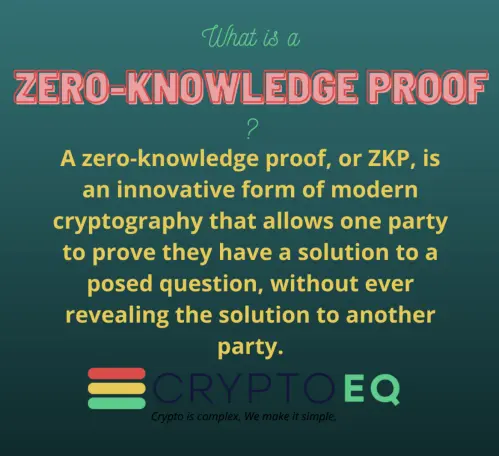
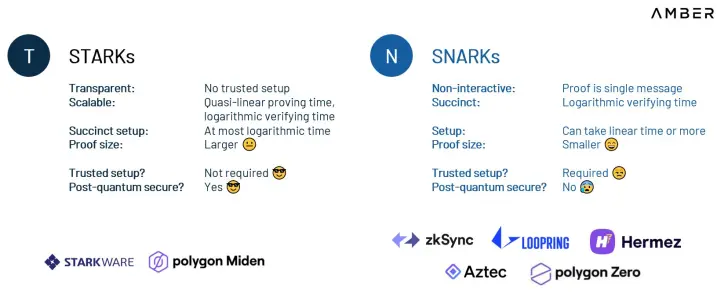
Under the hood, StarkNet compresses thousands of transactions into a single validity proof called ‘STARKs’ (Scalable Transparent Argument of Knowledge), co-invented by Starkware President Eli Ben-Sasson, that is submitted to the Ethereum L1. Starkware’s STARK technology has two primary advantages over SNARKs (used by ZKRU competitor ZkSync): 1) It doesn't require an initial trusted setup (like in zkSync v1), and 2) they are ~10x faster to compute than SNARKs. Because the computational effort necessary to verify STARK proofs is significantly less than actually proving the computation, StarkNet can increase Ethereum scalability by orders of magnitude.
StarkNet’s L2 node (sequencer) will execute every transaction and update the state to the Ethereum mainnet periodically. It's important to note that StarkNet transaction finality is tied to L1, meaning the L2 node must validate StarkNet and Ethereum simultaneously. StarkNet introduces a solution involving checkpoints to the Ethereum mainnet, enabling it to achieve effective finality on the rollup side very quickly. Therefore, all L2 nodes incorporate an L1 full node.
Additionally, since the state transitions are “STARK-approved” by the sequencer, it is mathematically/cryptographically impossible for fraudulent transactions to be accepted on mainnet Ethereum. This removes the need for any “challenge” period that exists in ORs. All the data needed to reconstruct the full StarkNet state is published on-chain.
Application deployment on StarkNet in the future will be permissionless so anybody can write smart contracts and publish them on the testnet using Cairo, the native programming language. However, currently, Starkware is in control of the sequencer and all of the transactions are verified by Starkware cloud servers. Thus, StarkNet is not currently a permissionless system. However, Starkware aims to create a decentralized sequencer set in the future.
SNARK Protocols:
- Loopring
- Polygon Hermez
- ZKSync
- ZKSwap
Pros:
- Smaller proof size
- Smaller verification time
- Bigger developer community and libraries (longer in the game)
Cons:
- Require trusted setup (honest participants needed)
- Longer prover time
- Not quantum-resistant
STARK Protocols:
- Immutable X (StarkEx) - partnership with GameStop
- DYDX (StarkEx)
- Starknet - DEX/AMM StarkSwap Q1 2022 launch
- Polygon Miden
Pros:
- Quantum resistant
- No trusted setup required
- Vocal support from Ethereum foundation
- More scalable in terms of computational speed
Cons:
- Far larger proof size = more gas
- Smaller developer community due to the nascency of STARKS
Roadmap
StarkNet utilizes a new programming language developed by the team at Starkware called Cairo. It’s a language for programming STARKs that achieves Turing-completeness with STARKs. A breakthrough of the Cairo language is that it enables just one verifier to use a single proof to confirm the integrity of many different program executions. This has the effect of amortizing costs across separate dApps, e.g. a single proof that includes both dYdX trades and SoRare transactions.
Starkware has commented, generally, that their plan with the StarkNet rollout will follow a similar path to that of Optimism (OR): Launch the network with a single sequencer and a limited whitelist of dApps early on to control the launch and limit any risks. A list of projects building on StarkNet can be found here. Ultimately, Starkware hopes to grow the ecosystem into a Starknet “Universe” while also decentralizing the network, nodes, and infrastructure.
The Starkware team has also stated that while they do not currently have a token, it’s their aim to decentralize StarkNet in the future. Launching a governance token similar to many other projects is one way in which they could do so.
As of Q1 2022, despite much fanfare, StarkNet remains in its early alpha phase with still much to prove at scale. Early disruptions and issues with its gradual rollout are likely. Despite this, Starware and OKEx announced in December 2021 a partnership designed to enable easy onboarding to StarkNet from OKEx sometime in 2022. Additionally, Argent, an Ethereum smart contract wallet, also announced ‘Agent X’, the first wallet for StarkNet in Q4 2021, and AAVE currently has a governance proposal to launch on StawkNet under consideration.
Since its creation in 2018, Starkware has raised $111 million across three equity rounds and received a $12 million grant from the Ethereum Foundation. Not only is the project backed by heaps of money, but prominent crypto and financial figures including Pantera Capital, Sequoia, Founders Fund, DCVC, Paradigm, ConsenSys, Multicoin, Polychain, Vitalik Buterin, Naval Ravikant, and others have also invested in Starkware.
The team has outlined a few (non-binding) milestones for 2022, including a permissionless sequencer set, ERC-20 support, and an ultimate transition of StarkEx dApps to the StarkNet ecosystem.
Validium and Volitions
Validium’s mechanism is nearly identical to a ZK-rollup with the only difference being that data availability in a ZK-rollup is on-chain, while Validium keeps it off-chain. This means ZK-rollups post data on the layer one blockchain itself while Validiums post validity proofs on-chain, but the data remain on a separate network. This enables Validium to achieve considerably higher throughput than ZKRU or ORs. By sending data off-chain rather than on-chain, it reduces the cost of each transaction and increases the transactions per second (TPS).
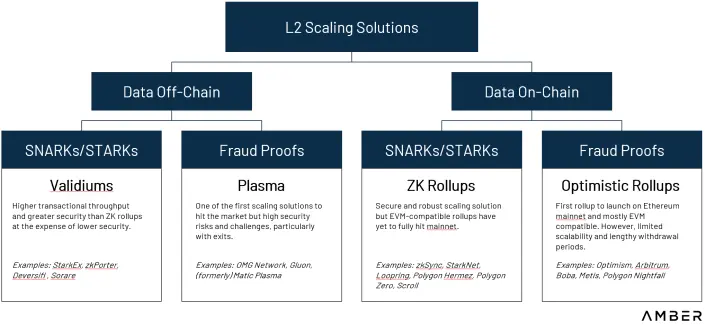
By keeping data off-chain, Validiums also offer privacy benefits as users’ transaction and balance information is stored with the validium operator instead of publicly on the blockchain. However, because transaction data is not published on-chain, users are forced to trust an operator to make the data available when needed. This key difference makes Validiums more akin to a highly performant, custodial PoA system where Validium operators could freeze, but not steal, users' funds.
The trade-off for storing data off-chain is that it requires trust in the third party who could prevent users from accessing their balances. Starkware aims to solve this with a Data Availability Committee (DAC), a committee of 8 independent members that have their own copy of the transactions made. They are also required to maintain this data by making it available at all times. If an operator prevents a user from accessing their funds, a committee member can override them to confirm their request if it is valid. Examples of where Validium is used: Loopring (LRC) and StarkEx.
Multiple projects launched Validiums using Starkware’s StarkEx platform, including:
- DeversiFi DEX - June 2020
- ImmutableX NFT platform - April 2021
- dYdX DEX - April 2021
- Sorare Fantasy Soccer - July 2021
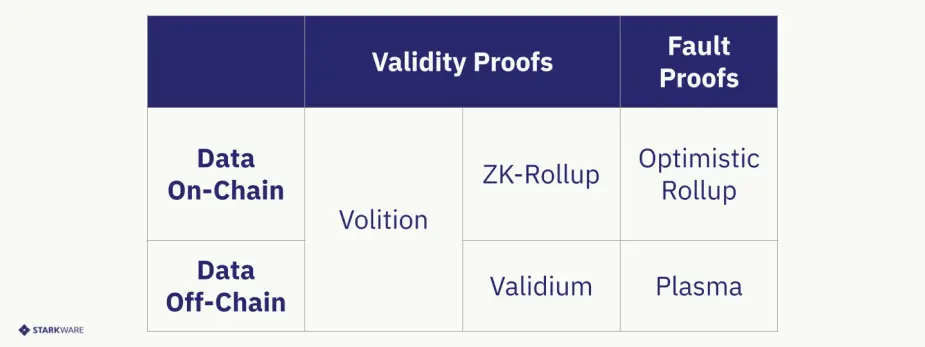
Volitions are a ZK-rollup and Validium hybrid solution that enables users the ability to choose for data availability either on-chain or off-chain, i.e. either via Ethereum or through validiums.
Source: Starkware