
On May 20, SpaceX filed documents for an IPO. The company's valuation is $1.75 trillion. Musk owns 42% of the shares and controls 85% of the votes. If you count Tesla alongside it, his net worth crosses the trillion-dollar mark. The first trillionaire in human history. Not on paper, not in theory — in real time.
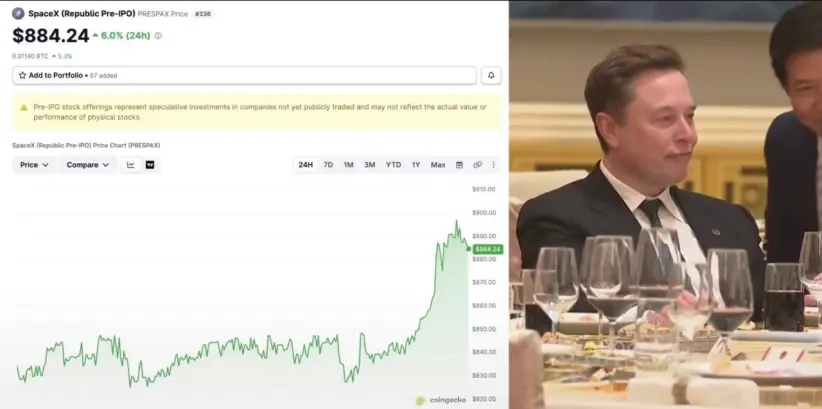
I look at this number and catch myself feeling something interesting. Not envy. More like a sobering awareness of scale.
While you and I are sitting in chats, debating when altseason will arrive and why the bot got stuck in a castle — one man was building rockets, satellite internet, and an AI lab. Simultaneously. And he packaged it all into a single company that's going public on June 12.
You know what got to me? Polymarket gives a 72% probability that Musk will become a trillionaire by the end of the year. And I remember how just three years ago, I was hesitating — whether to buy more bitcoin at $22K. Afraid of a dip. While someone was thinking in categories of trillions, I was thinking in categories of "what if it drops another 10%?"
And here's the thing. Musk didn't become the richest person on the planet because he nailed the entry point. He became it because he built a system and didn't exit his position for years. Even when Tesla dropped 70%. Even when people called him a fraud.
This doesn't mean you should blindly hold everything. 90% of alts die, and that's a fact. But the principle remains the same: money isn't made on hustle and noise — it's made on systems and discipline. The person who turned 1Kinto1Kinto60K and then blew it all back down knows this better than anyone.
A trillion dollars in the hands of one person — that's 3% of U.S. GDP. The gap is growing. And the only way not to end up on the other side of that gap is to stop trading on emotions and start building capital.






