
It is extremely important to securely store your cryptocurrency. With the rising value of these coins, more and more hackers and viruses are out to steal your crypto. So make sure you store everything safely so that no one can access your coins. How? These are the most important rules:
1. Use 2-factor authentication (2FA)
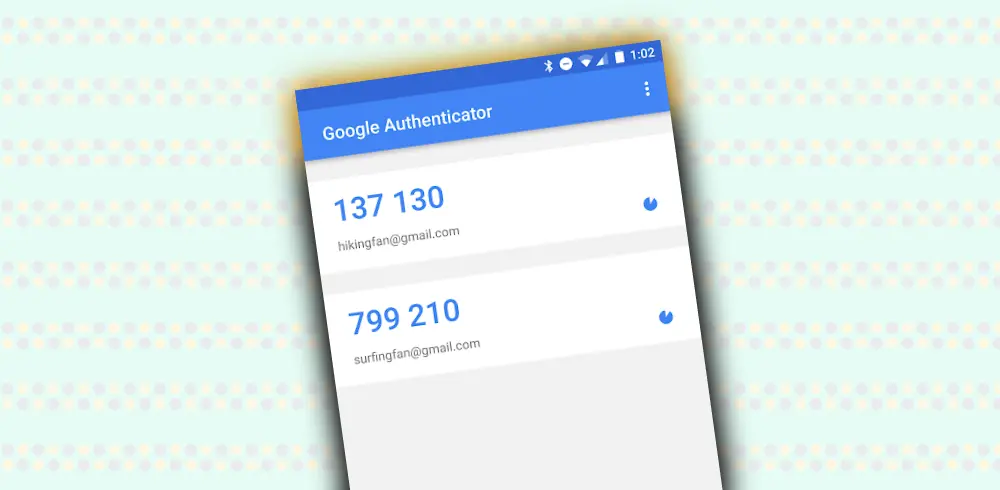
With 2 factor authentication (2FA) you make it much more difficult for hackers and mallware to access your cryptocoins. When you activate 2FA you have to log in with an extra code in addition to your password. This code is usually automatically generated on your smartphone and changes every 60 seconds. Without this code you cannot log in, and therefore others cannot. Your phone becomes an extra layer of security, and no one can log in without it. A widely used app for this is Google Authenticator. Even if someone can find out your password, it is an extra step to find out this code. Put 2FA on all your online wallets and exchanges; but also make sure that your email is secured with 2FA. Preferably work with a generator instead of receiving text messages.
2. Use strong and unique passwords
This goes without saying, yet only a small percentage of people do this. The most common cause of online theft is a weak password. Make sure you use at least 12 characters, preferably random and with numbers and other characters in it. It is best to use a password generator that generates a different difficult password per site. You can use Google's free password manager (built into Chrome), but make sure your gmail is well secured as well. Use a different password for every online exchange. If the exchange is ever hacked, the damage for you will be limited.
3. Install a good anti-virus program
Every computer is sensitive to viruses and mallware. There are all kinds of ways to steal your cryptocoins. Think of a keylogger that records your password, but also smart tricks in which a bitcoin address is changed when you copy and paste it. An example of this was the man in the middle attack. This way you transfer your crypto coins to the wrong address without realizing it. So make sure that your computer remains free from viruses and mallware. Install the latest versions of your anti-virus software and pay for it! Free anti-virus is fine for the average computer, but when you are working with crypto it is wise to invest those few tens in a good anti-virus.
4. Use a unique e-mail address
Logging in usually happens with an e-mail address and password. When your e-mail address is known, half of the puzzle has already been solved. When you use the same e-mail address everywhere, a hacker can already guess half. E-mail addresses can often be found online, on an old forum, social media, an old website or elsewhere on the internet. When you create a unique e-mail address for all your cryptorelated matters, it is much more difficult to find out this e-mail address. Then make sure that all e-mails that arrive in this mailbox are forwarded to your fixed e-mail address. Of course it is important to secure this extra mailbox with 2FA and a strong password.
5. Use a separate computer for crypto
When you are serious about cryptocurrencies it can be worth investing in a separate computer. Use it only for crypto-related things such as exchanges, online wallets and platforms where you buy bitcoin. You can also do banking with it, for example. What you should not do on it is the use of torrents, installation of cracked software, visiting dubious websites, and so on. Basically, you only use this computer to log in, buy crypto, sell and trade. Also visiting crypto related forums and discussion groups should not be done on this computer, but on a computer for general matters.
6. Don't leave crypto on exchanges
Exchanges are places to trade cryptocurrencies. In particular to buy, sell and possibly (day)trading. However, it is not a place to use as long-term storage. There are many examples of exchanges that suddenly disappear, get hacked or have other problems. This is especially true for some more dubious exchanges. Now that there are more than 100 different exchanges, there are also a few that you may wonder how reliable they are. Get your crypto out of there as soon as possible. If such an exchange suddenly goes bankrupt or disappears, you have completely lost your crypto. Unfortunately I experienced this with the exchange BCNEX.
7. Use a Hardware Wallet
Last but not least, the safest way to store your cryptocurrencies is with a hardware Wallet. This is a handy USB device on which you can safely store your crypto private keys. A kind of separate box specially developed to keep coins safe. Your private keys are stored encrypted and the keys will never be visible to your computer. This means that even if your computer has a virus, your coins will be safely protected. A hardware wallet is strongly recommended for anyone who is serious about crypto. For less than 70 euros you already have 1, for example the Ledger Nano S or the Trezor wallet. With a hardware wallet you really own your coins, where you are still dependent on another party for an online wallet or exchange.






