
Why ERC-4337 is the most important upgrade to Ethereum wallets since MetaMask launched in 2016, and what it actually means for your everyday crypto security.

If you've ever screencapped your 12-word seed phrase "just in case," congrats: you've already broken rule one of crypto self-custody. I did it too. We all did. Then we read about the iCloud photo breach that drained $650K from a friend of a friend, and we stopped sleeping well.
Here's the thing though, that anxiety? It's a design flaw, not a user flaw. And after years of workarounds, Ethereum finally shipped a real fix. It's called ERC-4337 Account Abstraction, it went live on mainnet in March 2023, and if you're still treating seed phrases like they're an unavoidable tax on being your own bank, you're working with outdated information.
This article breaks down what account abstraction actually is (no fluff), why it matters for security specifically, which wallets are already shipping it, and the one catch that nobody at Devcon wants to talk about.
The Problem: Ethereum's Wallet Architecture Was Designed in 2015
To really get why ERC-4337 matters, you gotta look at what it’s actually replacing. And honestly, here’s the awkward bit: the classic Ethereum externally-owned account, or EOA, is kinda... basic. Like, embarrassingly basic. It’s literally a private key with a balance. EOAs can basically do two things: sign transactions, or call one contract per transaction. That’s pretty much the whole story. There’s no real logic. You can’t recover a lost key. No programmability. Forget about setting up anything fancy like, “Hey, if I lose my key, my brother can help me out after a month.” You can’t pay gas with whatever token you’ve got lying around. And don’t even dream about approving, swapping, and depositing with one click. All those “advanced” wallet tricks social recovery, multi-sig, daily spending controls are basically workarounds. Developers make wrappers that put the EOA inside a smart contract shell (think Gnosis Safe, Argent, etc.). It works, mostly. But it’s a patch job. Every wallet ends up rolling its own flavor, dApps gotta juggle support for each different setup, the old EOA is still lurking underneath, demanding ETH for gas and ready to drain your funds if it ever gets hacked. Vitalik’s been talking about this mess since way back in 2016. The original account abstraction plan, EIP-86, tried to fix things at the consensus level. But nope, too risky, too disruptive it never happened. Fast-forward to 2021, and a team called Infinitism pitched a fresh idea: skip the consensus headaches, just build the abstraction as a smart contract (EntryPoint) on top, letting the magic happen via a special mempool. That’s ERC-4337. Mainnet launch? March 8, 2023. And now, almost two years in, it’s actually turning up in wallets you can go download and play with right now.
How It Actually Works (Without Making Your Eyes Glaze Over)
I'm going to explain this in plain English first, then show you the code. If you only read one section of this article, read this one.
The Plain English Version
In the old world, when you click "send" in MetaMask, here's what happens:
- Your wallet signs the transaction with your private key
- The transaction goes to the Ethereum mempool
- A validator includes it in a block
- The block gets finalized
The constraint is that step 1 requires your specific private key, period. There's no flexibility.
In the ERC-4337 world, it works like this instead:
- Your wallet constructs a "UserOperation", a data structure describing what you want to do
- This UserOperation goes to a separate mempool (not the regular one) watched by entities called "bundlers"
- A bundler packages multiple UserOperations together into a single transaction and submits it to the EntryPoint contract
- The EntryPoint calls your Account contract (which is just a smart contract you control), which verifies the signature using whatever logic you programmed into it
- If valid, the EntryPoint executes the actual transaction on the target contract
The key insight: your account is now a smart contract. Which means the "signature check" can be anything you want. It can be a standard ECDSA signature. It can be a passkey from your phone's Face ID. It can be a multi-sig with rotating signers. It can be a session key valid for 24 hours. It can be "anyone in this allowlist."
The Code Version
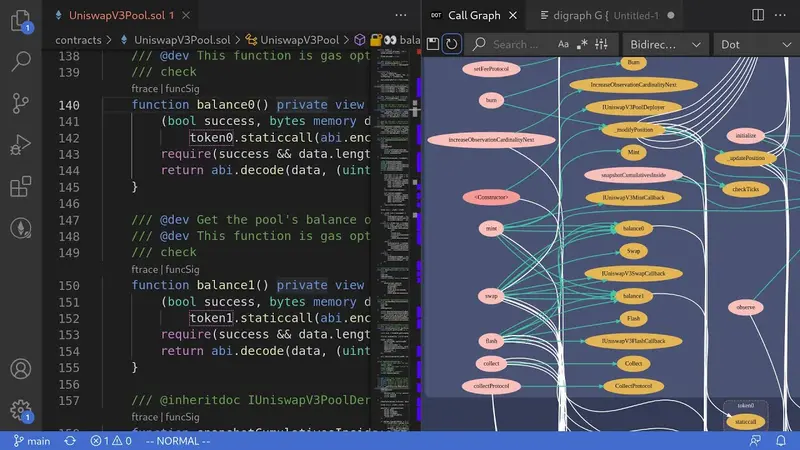
If you want to see what an Account contract actually looks like, the canonical reference implementation is in the eth-infinitism/account-abstraction repo on GitHub. Here's a stripped-down version of a SimpleAccount contract, based on their reference code:
// SPDX-License-Identifier: GPL-3.0
pragma solidity ^0.8.0;

import "@account-abstraction/contracts/core/BaseAccount.sol";
import "@account-abstraction/contracts/samples/TokenCallbackHandler.sol";
import "@openzeppelin/contracts/utils/cryptography/ECDSA.sol";

contract SimpleAccount is BaseAccount, TokenCallbackHandler {
    using ECDSA for bytes32;

    address public owner;
    uint256 private constant _DELAY = 7 days;

    event OwnerChanged(address newOwner);

    constructor(IEntryPoint anEntryPoint, address anOwner) {
        _entryPoint = anEntryPoint;
        owner = anOwner;
    }

    /// @notice The signature validation logic - override this to customize
    function _validateSignature(
        UserOperation calldata userOp,
        bytes32 userOpHash
    ) internal virtual override returns (uint256 validationData) {
        bytes32 hash = userOpHash.toEthSignedMessageHash();
        if (owner != hash.recover(userOp.signature)) {
            return SIG_VALIDATION_FAILED;
        }
        return 0;
    }

    /// @notice Execute a transaction (called by EntryPoint after validation)
    function execute(address dest, uint256 value, bytes calldata func) external {
        _requireFromEntryPoint();
        _call(dest, value, func);
    }

    /// @notice Change the owner - this is where social recovery would hook in
    function changeOwner(address newOwner) external onlyOwner {
        owner = newOwner;
        emit OwnerChanged(newOwner);
    }

    function _call(address target, uint256 value, bytes memory data) internal {
        (bool success, bytes memory result) = target.call{value: value}(data);
        if (!success) {
            assembly {
                revert(add(result, 32), mload(result))
            }
        }
    }

    modifier onlyOwner() {
        require(msg.sender == owner, "only owner");
        _;
    }
}
The interesting bit is _validateSignature. That's the function the EntryPoint calls to check "is this UserOperation actually authorized by the account owner?" In the default implementation, it's just an ECDSA recover, same as a normal wallet. But you could replace that function with literally anything: a passkey verifier, a multi-sig threshold check, a zk-proof verifier.
That's the whole magic. Everything else is plumbing.
Why This Matters for Security (The Real Reason You Should Care)
Most articles about account abstraction focus on UX. "No more seed phrases! Pay gas in USDC! Session keys!" That's all true and great. But for a blog called NewsDecoder that focuses on security, the real story is different.
Here's what ERC-4337 changes for security specifically:
1. Social Recovery Becomes a First-Class Citizen
Right now, if you lose your seed phrase, you lose everything. There is no "forgot password" button. The standard advice ("write it on metal, store it in a safe") is correct but brutal. Humans are bad at this. According to Chainalysis's 2024 Crypto Crime Report, approximately $1.7 billion in Bitcoin alone has been permanently lost due to lost private keys. That's not stolen, just gone.
With account abstraction, you can program your account to allow recovery through a quorum of trusted contacts (your brother, your lawyer, your accountant) after a time delay. The most well-known implementation is Argent, but Safe (formerly Gnosis Safe) has shipped a similar module system.
Concretely: instead of trusting a piece of metal in a drawer, you trust a smart contract that requires 2-of-3 pre-approved wallets to sign a recovery transaction after a 7-day delay. During those 7 days, you (the original owner) can cancel the recovery if you spot it being attempted by a malicious party. That's a massive security upgrade over a single seed phrase.
2. Session Keys Limit Blast Radius
Here's a scenario: you want to play a Web3 game for an afternoon. The game needs to move items in your inventory, transfer small amounts of ETH for in-game transactions, and interact with the game's contract. In the old world, every action requires you to click "approve" in MetaMask, and every approval potentially exposes your entire wallet.
With account abstraction, you can issue a session key, a temporary signing key with limited permissions. You grant it:
- A maximum spend of 0.05 ETH per transaction
- A daily cap of 0.2 ETH
- Permission to call only the game's contract
- An expiration in 24 hours
If that key gets compromised, the attacker can drain at most 0.2 ETH, and only by interacting with the game's contract. Your main balance, your NFTs, your other positions, all safe.
This isn't theoretical. Biconomy and ZeroDev both ship session key SDKs that dApps are integrating right now.
3. Atomic Batch Transactions Eliminate Half-Executed Failures
One of the most under-discussed security wins of account abstraction is atomic batching. In the old EOA world, if you wanted to:
- Approve USDC for a DEX
- Swap USDC to ETH
- Deposit ETH into Aave
...you had to do these as three separate transactions. If transaction 2 failed (slippage, front-run, gas spike), you were left with an open approval on the DEX, which is itself a security liability.
With ERC-4337, you can batch all three into a single UserOperation. The EntryPoint either executes all of them, or none of them. No more orphaned approvals.
4. Paymaster Architecture Enables "Free" Transactions Without Compromising Custody
The Paymaster is a smart contract that can sponsor gas for users. This is huge for onboarding, a dApp can pay the gas for first-time users so they don't need ETH to do their first transaction.
The security angle: in the old world, the only way to "sponsor gas" was for the dApp to custody the user's private key and submit transactions on their behalf. That's why so many custodial wallet hacks happened. With Paymasters, the user keeps full self-custody, the Paymaster just pays the gas bill, and the user's signature is still required for the actual transaction content.
The Wallets Actually Shipping This Today
I'm deliberately avoiding hype coins and promises here. These are wallets that are live, audited, and have meaningful user bases as of mid-2024:
Coinbase Smart Wallet (Launched June 2024)
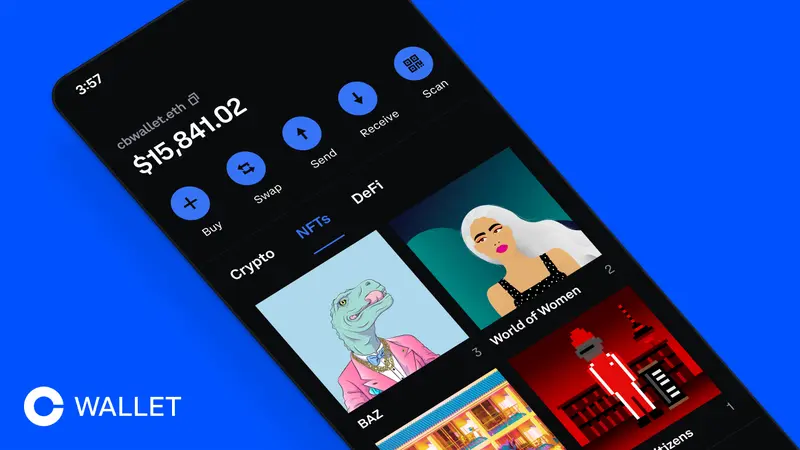
The most mainstream option out there. Coinbase's Smart Wallet ditches those old school seed phrases and just runs with passkeys think Face ID, Touch ID, or Windows Hello. Takes maybe 60 seconds tops to set up. Underneath, you're dealing with an ERC-4337 smart account plus a Paymaster footing the gas bill for your first couple transactions. Security-wise, your device's secure enclave does all the transaction signing, and Coinbase's Paymaster pays the gas fee. And if you're worried about losing access, you can add backup signers for recovery.
But here's the catch: it’s super tied in with Coinbase’s own system. So hardcore decentralization fans, look elsewhere. For folks leaving basic exchange wallets and finally giving self-custody a shot? This is honestly a solid stepping stone.
Safe (yeah, the one that used to be Gnosis Safe)
It’s been the go-to for multi-sig wallets forever, but now they've jumped on the ERC-4337 train too. You can set up a Safe with just your EOA (single signer) and add cool stuff using modules:
Social recovery with trusted contacts
Spending caps depending on roles
Session keys for dApps
Most DAOs and crypto funds still swear by Safe main issue is, it’s not exactly newbie central. The app just assumes you know your way around wallets.
Argent
Argent basically started the "social recovery" trend before ERC-4337 was even a thing. Now they’re updated for the new standard. Their whole guardian recovery lets you set friends, family, or even a hardware wallet to help you recover stuff, and big transactions need guardian sign-off if you hit your daily limit.
But, heads up: Argent has switched focus a bunch, and right now they're all about Layer 2 chains (Starknet, zkSync, those sorts of places). Want to use Ethereum mainnet? Might want to keep shopping.
ZeroDev-Powered Wallets
ZeroDev isn’t an actual wallet it’s an SDK any dApp can slap in to spin up an ERC-4337 wallet for users. Loads of Web3 games and social apps use it. If you ever clicked into a dApp and suddenly had a wallet with no seed phrase drama? Yeah, that’s almost definitely ZeroDev behind the curtain.
The Catch Nobody Talks About
I won’t pretend ERC-4337 is all sunshine and rainbows let’s be real, it’s got some gnarly downsides:
1. Smart contract risk becomes wallet risk. Your wallet? It’s a contract now. If there’s a bug, kiss your funds goodbye. This isn’t just some hypothetical scare tactic; look at the VinnyLingham hack from early 2024 a phishing attack on a wallet using ERC-4337. The attack surface? Definitely bigger. You’ve gotta trust:
Your specific account contract
The EntryPoint contract everyone shares
Which Bundler you’re using
Any Paymaster involved
And the wallet frontend itself
So, you end up with 4 or 5 things to trust instead of just the old-school seed phrase.
2. Bundler centralization is a thing. By late 2024, basically most transactions are passing through Alchemy or Stackup. Just two main providers. If both go down? Account abstraction grinds to a halt. Mempool is supposed to be decentralized, but truth is, the bundlers aren’t spread out much at all.
3. Recovery isn’t a walk in the park. Social recovery sounds clever until you realize your guardians need to be around when things go sideways. What if you picked three buddies and one’s out hiking with zero cell signal when you lose your keys? Now you’re stuck waiting. And yeah if your guardians team up, they could drain your wallet. Pick wisely, seriously.
4. Gas costs more. UserOperation chews up extra gas compared to regular transfers since it runs via EntryPoint. Usually you’re eating an extra 20k–50k gas per operation. Not a biggie on Layer 2, but on Ethereum mainnet it’s an extra $1–$3 per transaction. Kind of annoying.
So, what should you actually do?
Should you switch to ERC-4337 wallet right now? Here’s my no-BS advice:
Holding less than a grand? Stick with the basics MetaMask or Rabby. Account abstraction’s headaches aren’t worth it yet because the tech’s still finding its feet.
Got $1k–$10k? Check out Coinbase Smart Wallet or Argent. Social recovery is actually pretty nice in this bracket, so it’s worth the hassle.
Over $10k? Why aren’t you already using a multi-sig? Safe + hardware wallet + mobile signer + trusted contact guardian that’s legit what I do myself.
Building a dApp? Start integrating ERC-4337 now. Alchemy’s Account Kit and ZeroDev have SDKs ready for production. Your users will thank you for the slick UX, I swear.
A Practical Recommendation
If you're asking "should I switch to an ERC-4337 wallet right now?", here's my honest take:
- If you hold less than $1,000 in crypto: stay with a standard hot wallet (MetaMask, Rabby). The complexity of account abstraction isn't worth it yet, and the ecosystem is still maturing.
- If you hold $1,000–$10,000: consider Coinbase Smart Wallet or Argent. The social recovery alone is worth the migration.
- If you hold more than $10,000: you should already be on a multi-sig. Safe with a hardware wallet signer + a mobile signer + a trusted contact guardian is the configuration I personally use.
- If you're a dApp developer: start integrating ERC-4337 today. Alchemy's Account Kit and ZeroDev both have production-ready SDKs. The UX win for your users is enormous.
What's Next: RIP-7560 and Native Account Abstraction
ERC-4337 is a Layer 2 solution that works on any EVM chain without protocol changes. But several rollups are now implementing native account abstraction at the L2 protocol level, most notably RIP-7560, which is being implemented by Arbitrum, Optimism, and zkSync.
Native AA eliminates the EntryPoint overhead, makes UserOperations first-class citizens in the mempool, and removes the need for separate bundler infrastructure. It's the long-term direction. ERC-4337 is the bridge.
Final Thoughts
I've been writing about crypto security for a while, and I genuinely believe account abstraction is the most important UX and security improvement Ethereum has shipped since the merge. It doesn't solve everything, smart contract risk is real, bundler centralization is real, and the ecosystem is still messy. But it solves the single biggest cause of lost funds in crypto history: the seed phrase.
If you've ever lost sleep over your seed phrase backup, or hesitated to recommend crypto to a non-technical friend because "the UX is too scary," ERC-4337 is the answer you've been waiting for. The technology is here. The wallets are shipping. The migration is happening, slowly but surely.
Don't be the last person holding a 12-word phrase you screencapped to your camera roll in 2019.
What's your take on account abstraction? Have you migrated to a smart wallet yet, or are you sticking with the old EOA setup? Drop your setup in the comments. I read every one and reply to the interesting ones. If this saved you from a future headache, a tip is always appreciated.
Tags: #crypto #ethereum #erc4337 #accountabstraction #wallet #security #web3 #defi
Watch & Learn: Selected Videos
If you want to go deeper after reading this article, here are two YouTube videos I personally recommend. The first one is from Patrick Alpha C, a solid 15-minute explainer suitable for beginners. The second is from Cyfrin Updraft's course, more technical and code-focused, perfect if you want to actually start building. The next video goes deeper into the architecture, walking through the actual code of an Account contract. If you're a developer, watch this one. If you're not, the first video above is enough.
References & Further Reading
- Official ERC-4337 spec: EIP-4337 on ethereum.org
- Reference implementation: eth-infinitism/account-abstraction on GitHub
- Vitalik's original tweet on the value proposition: twitter.com/VitalikButerin/status/1576199517434949634
- Best technical deep dive (video): Patrick Alpha C's full ERC-4337 course on YouTube: youtube.com/watch?v=PZ8svp68NXM
- Cyfrin Updraft's ultimate account abstraction tutorial: youtube.com/watch?v=mmzkPz71QJs
- Coinbase Smart Wallet launch announcement: coinbase.com/blog/a-new-era-in-crypto-wallets-smart-wallet-is-here
- Safe (multi-sig) wallet: safe.global
- Argent wallet: argent.xyz
- ZeroDev SDK for developers: zerodev.app
- Alchemy Account Kit: alchemy.com/account-kit
- RIP-7560 (Native AA proposal): github.com/ethereum/RIPs/blob/master/RIPS/rip-7560.md
- Chainalysis 2024 Crypto Crime Report (lost keys statistics): chainalysis.com/blog/2024-crypto-crime-report
- BundleBear dashboard (live ERC-4337 metrics): bundlebear.com






