
In this article we will explore the Venom ecosystem and all the capital he is able to offer.
The Venom Foundation
The venom foundation is the first crypto foundation to have obtained a license of art aggregation from a government, that of the United Arab Emirates (UAE). This is an absolutely extraordinary thing that allowed the foundation to gain visibility quickly. This has made it possible to create partnerships with Maker DAO (a launchpad) for example, but also an astronomical fundraising of 1 billion dollars with the help of Iceberg Capital.
Consensus Protocol and Algorithm
The Venom network is a layer 0 blockchain like Cosmos network. A layer 0 is defined as a Layer that is the first layer among all blockchain protocols, connecting seamlessly with all other protocols to build interconnected value chains, offering a more robust and evolved alternative to smart contracts.
Venom Blockchain uses a hybrid consensus protocol that combines proof-of-stake (PoS) and Byzantine fault tolerance (BFT) algorithms. The PoS consensus is used to select validators who can participate in the consensus process and produce new blocks while the BFT algorithm is used to ensure that the selected validators agree on the state of the blockchain. This consensus protocol is highly efficient and provides fast finality, which means that transactions are confirmed quickly and are irreversible.
This duo is very interesting because often the POS sacrifices speed in favor of a less energy-consuming blockchain but thanks to the BMT and also the Dynamic sharding, the speed is preserved.
Dynamic sharding is a process of partitioning a blockchain network into smaller segments called shards, which can process transactions in parallel. Venom uses this feature to adjust the number of shards based on network demand. This ensures that the platform can handle large transaction volumes without compromising on security or decentralization.
The Venom Ecosystem
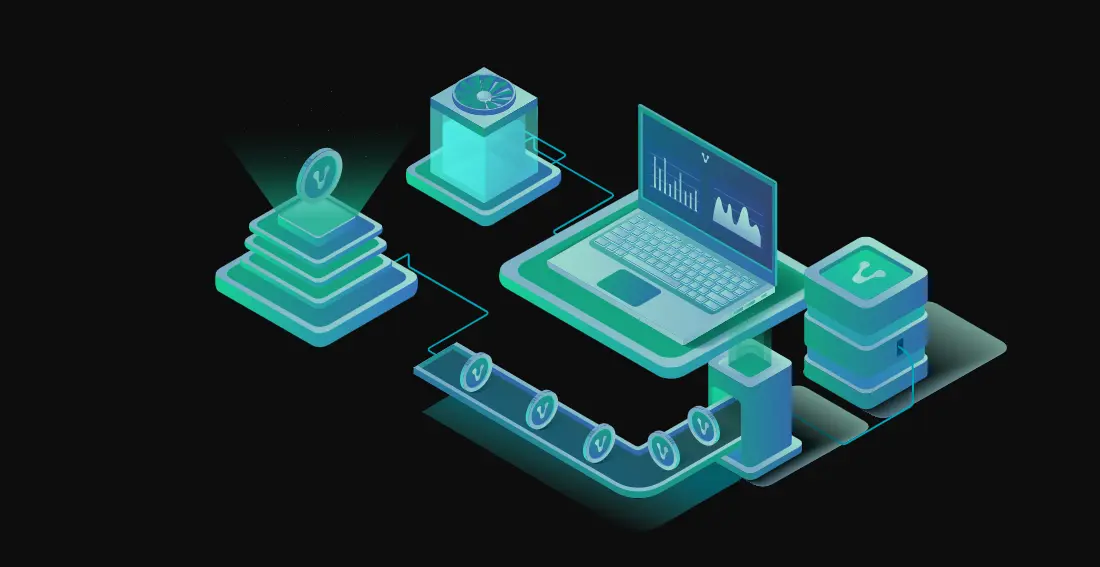
The Venom ecosystem is a hub of various tools and services to provide users with a seamless user experience and promote the adoption of the technology. Here are some of the base components of the Venom ecosystem:
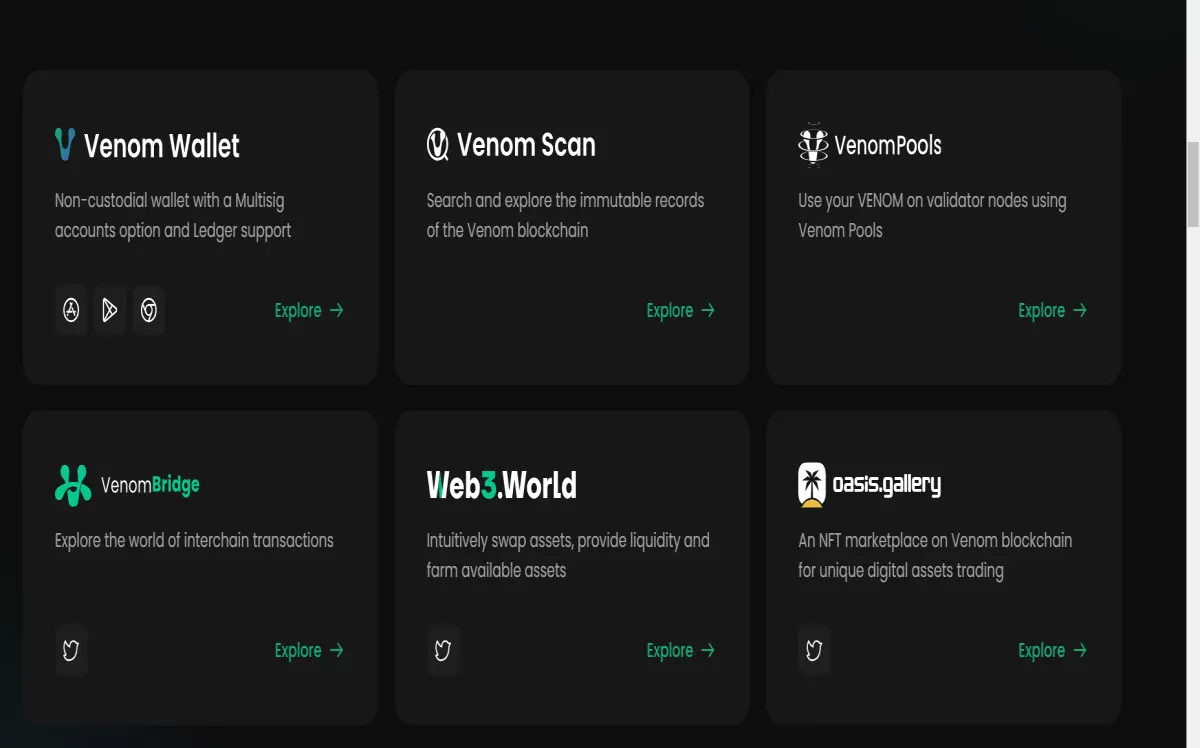
- Venom Wallet — the native non-custodial multi-asset wallet of the Venom platform allows users to securely store, send, and receive $Venom and other digital assets. It features an intuitive user interface and enables users to manage their assets easily.
- Venom Scanner — Similar to Etherscan, it is an explorer that allows users to track transactions and monitor the status of their transfers on the network. It provides real-time data on block production, transaction confirmation times, and other key metrics
- Venom Pools — This is the staking interface of the Venom protocol. This allows users to stake their $Venom tokens and earn rewards for helping to secure the network.
- Venom Bridge — The cross-chain platform enabling seamless asset transfer between blockchain networks.
- Web3World — This is a decentralized exchange that allows users to trade digital assets without the need for intermediaries.
- NFT Marketplace — This is the platform for buying, selling, and trading non-fungible tokens (NFTs) on the Venom blockchain.
Source : Venom Foundation
Each of these products was created by independent teams participating in the Developer Program, showcasing the potential for developing solutions on the Venom blockchain.
The programming language
The smart contract development language of the Venom blockchain is Threaded Solidity (T-Sol). This language is similar to Solidity, the language used by developers to build smart contracts on Ethereum. T-Sol is tailor-made to facilitate the Venom Actor Model and provides built-in functionalities for building dApps and managing smart contracts. One of the distinctive features of T-sol is that it natively supports concurrency, a feature not available in the classic Solidity used in EVM-like blockchains. This, in turn, allows developers to create smart contracts that can perform additional tasks while waiting for input or output operations to complete. This makes it an excellent programming language for building highly scalable dApps on the Venom blockchain.
Tokenomics
The venom token have 7,2 billion max supply with 15,5 % immediately unlock and the rest remaining lock, They will be vested over time . The token distribution breaks down like this :
-Community : 22%
- Ecosystem : 28%
- Foundation : 15%
- Early Backer : 7.5%
-Team : 7%
-Public : 0.5%
-Liquidity : 10%
-Validators : 10%
The smallest transferable unit of Venom is Nano Venom. The use cases of the token include:
- Incentivizing validators
- Network security
- Delegated staking
- Governance
It is also important to note that the Venom token is inflationisten nevertheless the Venom Foundation to discuss several possible solutions to solve this problem notably by a burn mechanism similar to that used by Ethereum.
Threaded Virtual Machine (TVM)
Like Ethereum’s EVM, Venom uses the Threaded Virtual Machine (TVM). A Turing complete machine on the basis of its ability to execution of machine- level instructions. The TVM is used to execute smart-contract code in the masterchain and base workchain (basechain) of the protocol. However other workchains on the Venom blockchain may use other virtual machines instead of the TVM (e.g. EVM). By design, TVM has an asynchronous model of communication between accounts. Each account can only affect the state of another account only by sending a message or transaction. The TVM has several features, including smart contract upgradeability, initialization, and utilizing the Actor model for concurrent computation.
Conclusion :
The Venom blockchain is very promoting with a very solid base whose evolution is to be followed with great attention
Disclaimer : This is not a financial advice, always do your own research !

As always, thank you for reading !






