Is Pi Network Another Fad or the Future of Mobile Crypto Mining?
Picture it: You get to mine cryptocurrencies without paying an expensive electricity bill or hearing a room full of whirring equipment. That is what the promise of Pi Network allegedly delivers, a project that has captured the cryptocurrency community since it went live in 2019. Pi Network, founded by a team of Stanford graduates, enables you to "mine" coins using nothing more than your phone and without needing to shell out for special gear. Pi is generating more buzz than a handful of projects preceding it, boasting over 60 million users and a landmark event—the Open Mainnet launch—earmarked for February 20, 2025. Yet is this another overblown experiment, or is this the future of the crypto space? Let us investigate.
What Is Pi Network?
Fundamentally, Pi Network is about access. Old-school crypto mining, such as Bitcoin's, requires powerful machines and uses as much energy as a small nation. Pi turns that on its head. You just need the Pi app, and every day, you press a button to mine Pi coins (PI). It's fueled by the Stellar Consensus Protocol (SCP), a low-energy platform that preserves your phone battery and the earth a bit greener. The mission? To democratize crypto—imagine it as the people's currency.
For years, Pi has existed in a pre-launch state, establishing a huge following while leaving its blockchain (mainnet) idle. That changes shortly, as the Open Mainnet launches, allowing users to exchange Pi coins and apply them to everyday purchases. It's a grandiose plan—but the future is far from set.
The Mainnet Launch: The Big Deal and Bigger Questions
The Open Mainnet launch on Feb 20, 2025, is Pi's reckoning day. It's when it transitions from being a closed to a fully decentralized cryptocurrency, and trading and potential listings on exchanges such as Binance or OKX open up. For users numbering in the millions who have been mining Pi, it's the opportunity to finally cash in—or trade up.
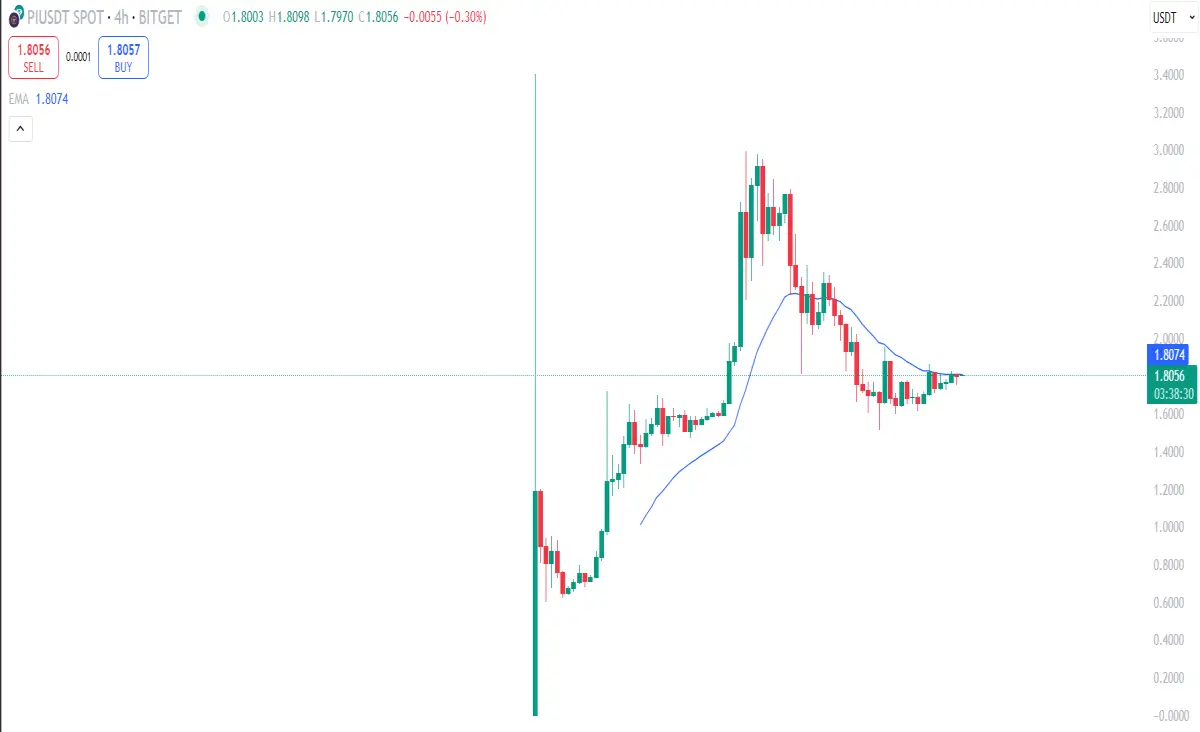
But here's the thing: no one has the remotest idea how much Pi is going to be worth. Currently, some exchanges are pricing Pi as an IOU (placeholder) around $62, but that's just speculation. With a total supply of 100 billion coins—80% reserved for the community—its true value will be determined by supply and demand on mainnet. Too many sellers, not enough buyers? Price crashes through the floor. Suddenly there's a snowball of interest? It goes ballistic. Either way, it's a risk bet.
Why Pi May Take Flight
Pi Network has some serious cards in its favor:
1. Huge Community: With over 60 million users, Pi’s got a built-in army of supporters ready to buy, sell, and build.2.Ease of Access: Phone mining is revolutionary. It's like handing out crypto starter packs to everyone who has a smartphone.
3. Green Vibes: Using SCP instead of power-hungry systems like Bitcoin's proof-of-work makes Pi eco-friendly—a big deal in today's green-conscious world.
4. Big Backers: Rumor of interest by the likes of BlackRock and Coinbase Ventures carries weight. If Pi can live up to its peer-to-peer marketplace promise—think decentralized apps and businesses accepting Pi as payment—it might be a winner. Some of the more optimistic estimates have Pi at $3.93 in March 2025, and more fanciful estimates of $250.79 in 2032. Is this the next Bitcoin?
Why Pi Can Fail
Wait a minute—Pi has some obstacles to overcome:
1. Too Many Coins: 100 billion Pi coins is too many. If users flood the market at launch, oversupply has the ability to cause the price to collapse.
2. KYC Bottlenecks: Several users are being held up for Know Your Customer (KYC) authentication to withdraw or exchange Pi. Delays of this kind can serve as a de-motivator.
What's It For? Other than mining, the practical use of Pi in the real world is not known. The promised marketplace is still in its infancy—useless, why keep it?
3. The Law Looms: Regulation of crypto is a shifting target. If governments bring mobile mining down, Pi might come up against a wall. Detractors warn that Pi may dip to $11.46 in the near future—or worse, just disappear into thin air if it cannot deliver as advertised.
What comes next?
The next few months will be important. Look out for these:
Exchange Listings: Listing on major exchanges like Binance or Coinbase would do a world of good to the price and boost it, but it is reassuring to know that this is not a done deal and will be at the mercy of a multitude of factors.
Ecosystem Growth: Its success and future depend primarily on how mainstream it can possibly get and be utilized in the real world, and the deployment of decentralized applications. If Pi can succeed in these areas, it can create more demand for its coin.
User Retention: Pi's true strength lies in its active users. The most difficult part will be to maintain the interest and participation of the community, with potential price volatility. The Open Mainnet release is only the beginning of this process. What is really challenging is the ongoing effort to hold on and maintain the momentum.
So Is Pi Worth It?
Pi Network is a wild card. It could potentially revolutionize crypto with its ease of use and strength in community, or it could collapse under the pressure of its own hubris. If you just can't wait to join, be careful—crypto's a rollercoaster, and Pi's still in beta.
The good news is out there: a green, mobile-first coin with millions of fans. But the bad news—supply issues, regulatory uncertainty, and untested functionality—hangs in the balance. Don't bet the farm on it, but don't count it out, either. Pi's fate is not yet determined, and that is what is so interesting. What's your take—will Pi rewrite the crypto playbook, or be yesterday's news? Do your own research, and make your own decision.