
You have likely seen a lot of it on Crypto Twitter:
- “BTC is disappearing from exchanges!”
- “Supply shock incoming!”
- “Price will EXPLODE!”
Seems interesting, right? But let’s take a moment and dig a little deeper.
The Claim
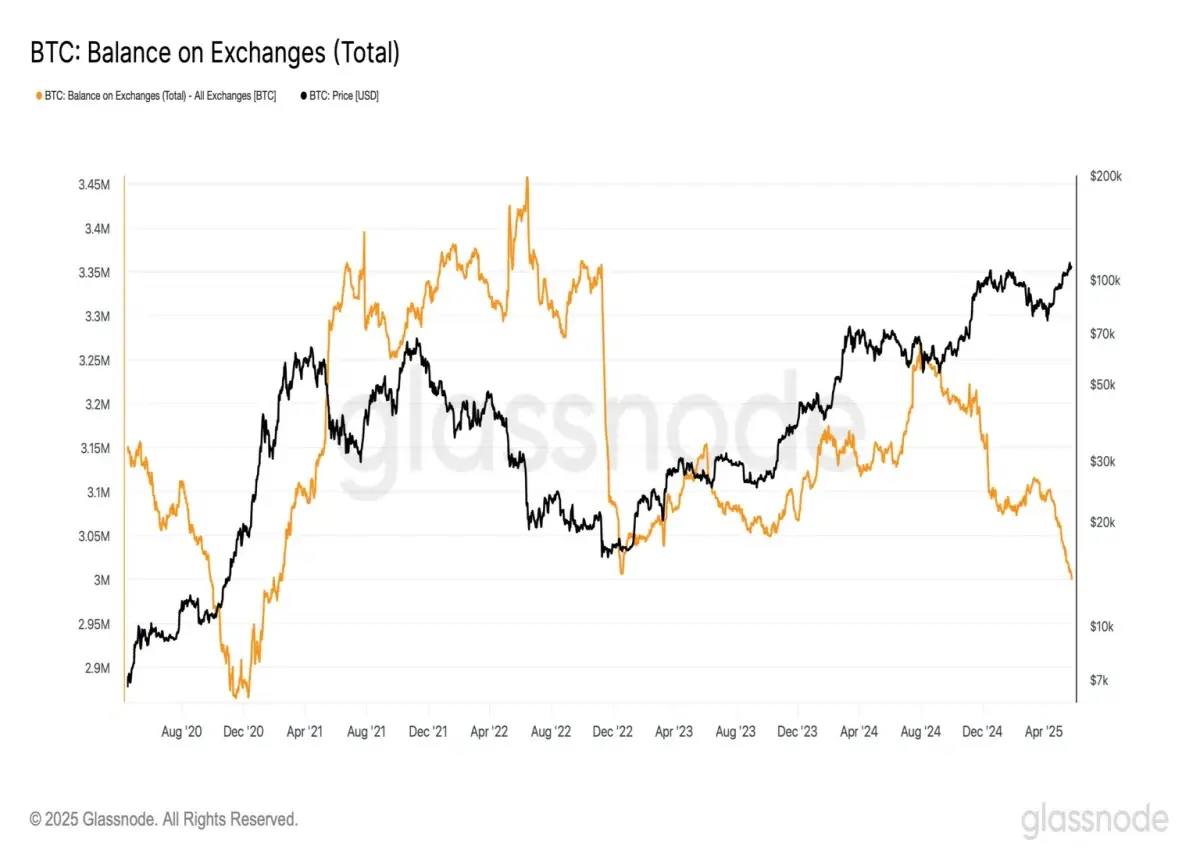
Various analysts and influencers are pointing to a steady decrease in the amount of BTC held on centralized exchanges. The logic is simple enough; if less BTC is available to sell = more pressure to increase price! Sounds bullish in theory, but is the story supported by reliable data?
The Reality
The decline of exchange-held BTC since early 2024 is approximately -3%. Not trivial — but the crazy collapse of BTC on exchanges in some of those graphs is grossly overstated. Many of those graphs are designed to look alarming with compressed scales and selective presentation.
To make matters worse, the actual data is not exactly perfect either. The majority of metrics (Glassnode, etc..) are based on:
- Public wallet clustering
- Learning off of inference and estimations
- The lack of transparency from exchanges
Glassnode even admits there can be variation in the data, especially for the most recent data points. Some of the larger exchanges do not offer Proof of Reserves and now there are ETFs holding at least a growing portion of BTC, which complicates the situation even further.
So… No Supply Shock?
Not exactly. The concept of a supply shock is not ludicrous — just overhyped. It is just one indicator, amongst many, and is not a crystal ball. The relationship between BTC on exchanges and price has a weak correlation, and inconsistently over time.
If you are building a larger thesis? Absolutely, include it!
But if you are treating it like an absolute signal to moon? Risky.
Bottom line..
The “supply shock” narrative is great for engagement. It boosts morale. It makes clicks. But it may not make you any money.
Don't let charts without context make your investment decisions for you.
Zoom out. Stay skeptical. Think.
👉 Read the full breakdown here:
https://cryptosnackable.com/bitcoin-supply-shock-explained






