
The idea of writing about crypto-currencies in my own words, for newbies, really caught the eyes of the public. Your eyes guys, for which I thank you and I hope you will continue engaging in a constructive dialogue with me.
Up until now, I wrote about two interesting things that caught my attention when I first heard about them: ETH 2.0 and stablecoins. If you want to go back to my previous posts, you can do this here: ETH 2.0 through the eyes of a newbie & Stablecoins through the eyes of a newbie.
Today's post will be educative and I will talk about Bitcoin and most specifically about something extremely important: how Bitcoin works and its entire history, but I will be short. I will also talk about Bitcoin halving. I will explain what this process is, when it happens, what it means for the crypto-world, how it influences the BTC price and the crypto-market and what are its consequences over Bitcoin itself.
Even if we live in a digital era, where information spread fast and can be found everywhere, it seems that information about the developers of Bitcoin and its founders are very few. Bitcoin is shrouded in mystery.
It's unbelievable or at least in July last year, it seemed unbelievable to me that the BTC price will go so up. Thus, I didn't buy any BTC :).
One of the most famous names, aliases, nicknames etc. related to Bitcoin is Satoshi Nakamoto. It is said that he is the creator, founder, leader of the team that created Bitcoin.

Bitcoin is created thorough a process that is called mining. People that mine Bitcoin are called miners. All miners contribute to the computing power to maintain the network, confirm its transactions and keep them secure.
All mining starts with the blockchain. This is an online decentralized ledger that records transactions throughout a network. A group of approved transactions is called a “block.” These blocks are tied together to create a “chain,” hence, the term “blockchain.”
In the Bitcoin network, a miner’s goal is to add individual blocks to the blockchain by solving sophisticated mathematical problems. This requires enormous computational and electrical power. While many miners compete to add each block, the miner who solves the problem will actually add the block—along with its approved transactions—to the blockchain.
Miners use mining hardware. Basically, these are graphic cards, but not just that. A complex mining equipment, besides graphic cards, has many other performing hardware included. This is a very complex topic, but I will keep it short, because both for myself and for other unexperienced people, it's hard to understand all the technical details.
This mining procedure is also very costly, because the mining equipment are very expensive. A professional miner can pay a minimum amount of $4000 and the period when he can recover his investment can fluctuate from 1 year to 2 years or even more nowadays.
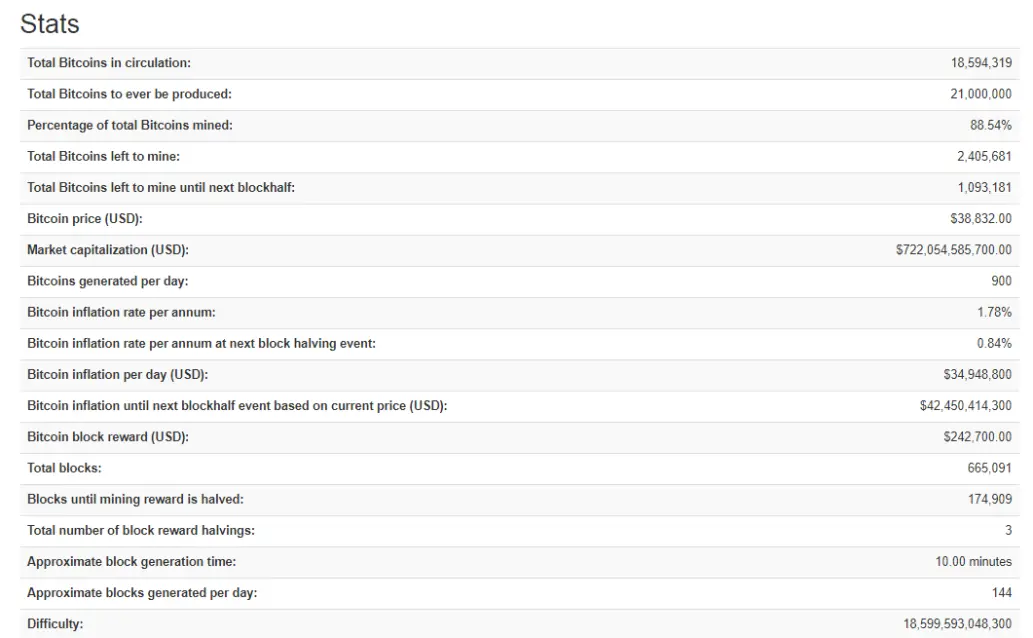
Now, I will talk a bit about digits and numbers. According to the plan initiated by Satoshi Nakamoto, there will be only 21 million BTC available. Currently, there are approximately 19 million BTC already mined and available on the market. For a better visualization, see the below picture.
What is Bitcoin halving?
Worldwide, there are tens of thousands, or better said, hundreds of thousands of computers and miners who mine BTC, confirm transactions, secure the network etc. In exchange, they receive a reward. Actually the entire network receives a rewards every 10 minutes when a block has finished mining. Then, the reward is split among the members of the network.
A Bitcoin halving is when the reward for mining new blocks is halved, meaning miners receive 50% fewer BTC for verifying transactions. Bitcoin halvings will occur once every 210,000 blocks – roughly every four years – until the maximum supply of 21 million BTC has been released.
Bitcoin halvings are important events for crypto-currency traders because they reduce the number of new BTC being generated by the network. This limits the supply of new coins, so prices could rise if demand remains strong. While this has happened in the months before and after previous halvings – causing BTC’s price to appreciate rapidly – the circumstances surrounding each halving are different and demand for Bitcoin can fluctuate wildly.
At the beginning of the Bitcoin project, every 10 minutes the whole network received 50 BTC. After that, followed the first halving that took place on the 28th of November 2012. From 50 BTC this reward dropped by half, to 25 BTC. So, the whole network no longer received 50 BTC every 10 minutes, but only 25.

On the 9th of July 2016, the second halving followed when the network reward fell from 25 to 12.5. Last year, on the 11th of May 2020, a third halving followed and the reward dropped from 12.5 to 6.25. These halving will continue every 4 years.
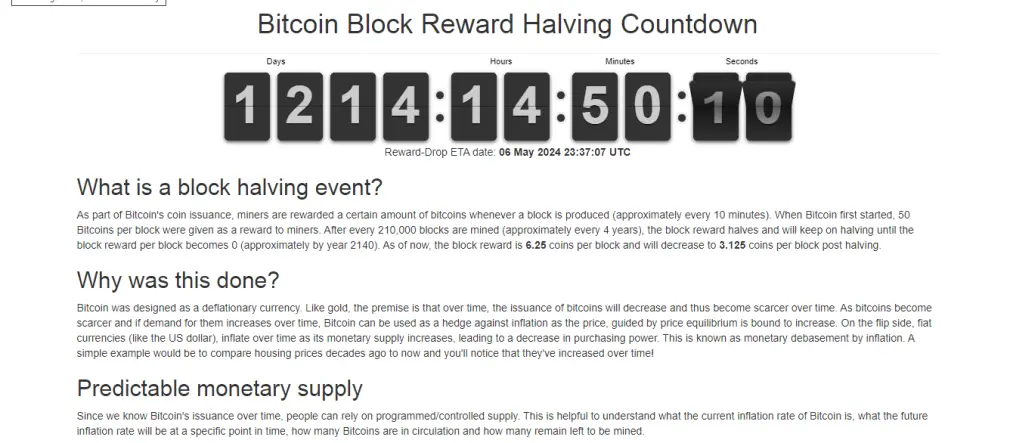
It is assumed that the total BTC will be mined in the year of 2140. We must take into account that approximately 4 million BTC are lost for various reasons and only then we will be able to realize the number of BTC in circulation, but also the number of BTC that remained to be further mines is extremely small. As a consequence, the price of a BTC will increase exponentially, as well as the desire of people to own at least a fraction of this currency.
For a better understating of what Bitcoin halving, I recommend you to watch the video from the following website: https://www.ig.com/uk/bitcoin-btc/bitcoin-halving#information-banner-dismiss
**A big part of this post is already published by myself on another platform. For confirmation, just check the following link: https://read.cash/@Crypto_Politics/a-newbie-asks-what-is-bitcoin-halving-561b246b
My successful faucets!
PipeFlare & Hive ZCash - ZEC with tier 4 referral program
FreeCryptos: (DASH), (TRX), (ETH), (Cardano), (BNB), (LINK), (NEO), (LTC) & (BTC)
Stakecube (over 20 single click faucets per day)
Get Maiar for free! The future of money: powered by Elrond!
Join DeFi and get $30 of DFI. Join CakeDeFi now!!





