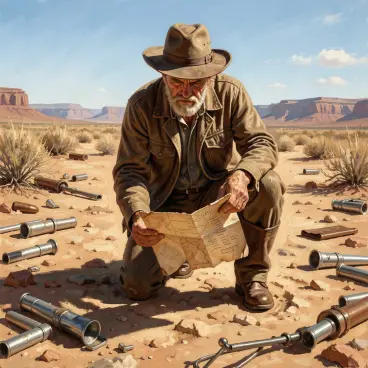
I've been metal detecting for about two months now, and I've learned an incredible amount of experiential information about how things get buried. Much of that hasn't come from books or videos, but instead it's been from hands on contact with soil and dirt where metal targets hide. The variation between wet and dry ground, soil and dirt, sand and clay is tremendous. It also dictates how much success you're going to have metal detecting.
Differences in Soil
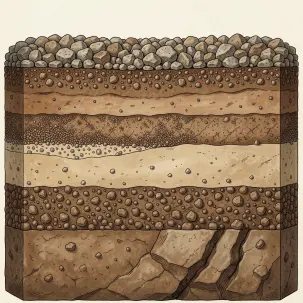
Probably three-fourths of the battle in detecting is not finding the target with the sensor but actually digging it up. Easy soil or sand takes the least amount of time but it has the most risk at losing the target as well. Without a good eye, a sifter or careful work, you can quickly lose the target and find yourself with it "moving," depending on where you put the excess you dug up. With sand, obviously, filters and sifter become the advantage, ideally catching targets as the sand pours out of the holes in the sifter. With clay, dirt and soil, however, those tools becomes useless. Then it becomes a matter of technique.
The Shrinking Zone
I start off first with reducing the range of variability. This involves the detector itself and trying to pinpoint as accurately as possible where the target actually is. With my equipment, I could go as deep as 6 inches, but I already know from practice 4 inches is more likely. So, to avoid digging a hole the size of a small chair in diameter, I use a method of detecting that narrows the area to exactly where the sensor picks up the target. Some people use an X method; I tend to use that as well as a box mode. With each pass, I'm trying to narrow the space where the target is not present, getting to a tighter and tighter zone, a bit like a shrinking bubble.
Once I think I'm pretty much on the target, I then dig a four-inch diameter plug and pull up a two-inch layer of soil. If I don't see the target at that time, I use the detector again to confirm the target is still in the hole or if it has now moved with the plug I just removed. This is usually a 50/50 situation. If it is in the plug, I then break it by hand to see if anything falls out immediately. If not, then I work the plug methodically from side-to-side like a chef chopping an onion. This almost always finds small items like dimes and coins.

If the target is still in the hole, I then go another two-inches deeper. Again, breaking up the dirt and carefully putting the free soil in my secondary pile keeps the zone clean and usually I find target in two or three digs. Probably once a day out I may have a really troublesome target that I can't find after about 15 minutes, and then I just put all the dirt back and move on. I'd rather keep finding than spend two hours on a stubborn target that turns out to be something annoying like spiraled wire.
The thickness and pliability of the dirt makes a big different. Wet clay is the worst because it just sticks. Dry dirt is better, but the clods have to be broken up usually and often hide targets in clumps. Loose dirt is probably the best, but you have to sift it carefully to find smaller targets.
Thinks Don't Look Like Home Here
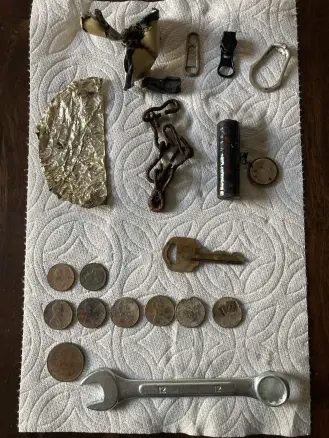
Another factor is that minerals and chemicals in the soil are going to do a number on targets, especially coins. If you're brain is geared to look for coins as they appear in your pocket, you're going to miss them in the dirt. Dimes, quarters and nickels all turn copper brown due to chemical reactions in soil over time. Pennies literally corrode and fall apart or turn black, making their detail hard to see if at all. Coins found in parks also have the added risk of industrial lawnmowers, which can do brutal damage to a coin just catching the edge of it. Over time you learn what to really look for and forget how change should look based on everyday transactions at the grocery store, for example.
Read the Ground and Drainage
The shape of the dirt in question can also possibly signal where targets might be. I tend to find more coins near the edge of walkways or sidewalks because they fall and roll off into the soil. The dirt near drainage grates and similar tends to be lower than surrounding soil, so that draw debris over time to collect close to the drainage point. Obviously, locations where people sit and congregate the most produce more targets than areas of parks where people rarely go. This is pattern observance, a skill I learned years earlier with archaeology since most finds in that arena are literally people's trash or throw-aways from centuries earlier.
Research is the Next Phase
Once I move beyond parks, I'm looking forward to the metal detecting seach via historical records. Depending on the site, property records from the past could dictate locations where possible targets are still present. A lot depends on access, of course, especially where historical activity is now protected and off-limits. However, with private property and some networking, old property records from the 1900s and 1800s could be worth investigating. Given GIS data access today, this can be potentially fruitfall as I compare layers or create them from historical records with modern data as well, identifying new locations to check out.