
When I was a young teenager, I told my dad I was thinking about what I wanted growing up, and I was pretty sure I didn't want to be just another paycheck chaser. I wanted to be financially independent. My father laughed in response; he then told me a truth I didn't really understand until decades later - financial independence is one of the hardest things to get and very few actually have it.
My father was right. The fact is modern life is designed to keep people in debt and obligation, one way or another. Whether its by education, a car and transportation, a living place or similar, all the key factors that we need to make life valuable and stable enough to want to grow via a family involves debt. And debt produces financial slavery. No, there's not some plantation master screaming at us; it's far more sophisticated. The masses of us willingly sign up for this constraint because debt gives us what we want in life right away, and we're willing to give two-thirds of our working hours every day in payment for years afterwards.
So we put up with things we otherwise would never agree to, we work for companies or organizations we disagree with, and we dupe ourselves into thinking a good career is our purpose in life. It's not. At best, work is a tool, no more.
Of course, financial independence is immediately associated with having lots of money. Yet, in reality, there are plenty of people with very little money but very independent. Why? Because they achieved a balance that makes them happy with no debt. So why can't the rest of us? Simple, we're programmed to want more than we need.
Don't get me wrong; this is not an article preaching minimalism or being a hermit. However, it is a fact we are, from a young age, encultured to want luxuries, goods that have no functional purpose, and pleasure that has no productive value. Just like our modern diets drive us to want sugar and refined foods, we also want creature comforts that do nothing for providing fundamental shelter, sustenance or protection. Instead, they drive the need for large sums of money to afford luxury. It's the fundamental consumer trap.
Many seniors are, in practice, forced to give up their chase for luxuries because the shift from the ability to keep adding to their portfolio to living on a fixed income. Even the attraction of debt loses its luster when one realizes he or she has no way to pay it back before reaching the end of life. And, once the addiction wanes, they realize it's quite doable and affordable. Frugality is not that bad.
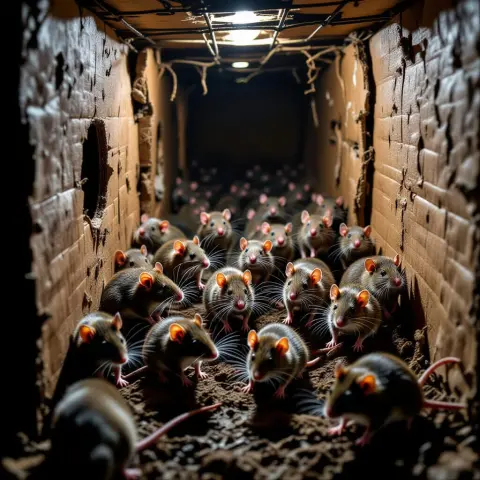
If society continues the path we're on, without a realistic approach to the cost of living versus what is needed to achieve it, we will mathematically end up with a dystopian society in which a few run everything, and everyone else is just a cog in the machine. This eventual result has been proven over and over with rats. At first, in contained experiments they have plenty to grow with; they then procreate en masse. Their numbers increase exponentially. The population hits critical mass. The laws of nature kick in, and the strongest rise to the top. However, survival doesn't cull the weak as fast as the numbers increase. Instead, the rats do something worse past critical mass - they turn on each other.
Don't take my word for it. Read the research yourself and think about the implications. We're well on our way.






