
Staking Secrets: Unlocking Crypto Rewards Beyond Trading
Hi, Crypto Explorers!
We've all heard of the news-making crypto trading, surfing those pumps and surviving the dips. But what if I told you there's a less busy method of earning rewards in the crypto world? I'm talking about staking!
For most, the crypto world is a horror story, but staking is simple and something you can do.
What is Staking, Exactly?
Think of staking as putting your crypto to work. Instead of just having your digital currency in a wallet, you're actually locking it up to facilitate the operation of a blockchain network. For your hard work, you earn rewards, often in the form of more of the same cryptocurrency that you are staking.
This is an alternative to "mining," requiring abundant computing power and hardware. Staking is much more energy-efficient and easy.
Why Stake? The Perks Unveiled
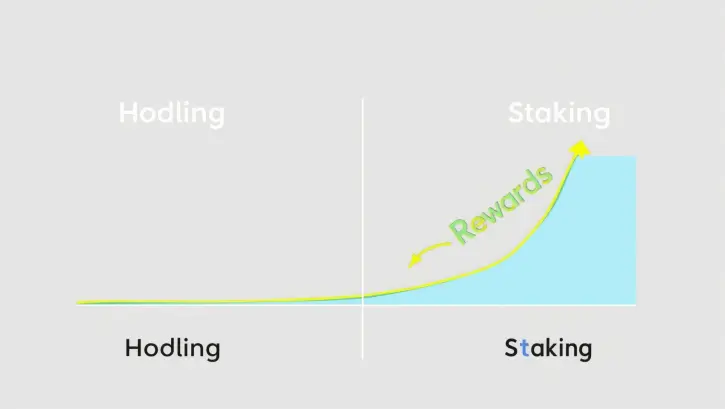
Following are reasons why staking is growing in popularity:
Earn Passive Income: This is the holy grail. Staking means making regular income without trading actively. It is like getting deposit interest, but with the potential to be much higher.
In doing so, you help secure the network: You are directly contributing to the security of the blockchain. Your stake is utilized to verify transactions and maintain the network's stability.
Relatively Low Risk: While there is risk associated with all crypto investments, staking is less of a risky endeavor than regular trading. You're not continuously trying to feel the market's mood.
Easy to Get Started: Integrated staking is supported by most wallets and exchanges, so getting started is absurdly simple.
Popular Coins for Staking
Staking different types of cryptocurrencies are made available by all platforms as the name suggests. Some of the coins that are being staked right now are:
(ETH) Proof-of-Stake (PoS) is a vital part of the Ethereum operation as Ethereum has recently transitioned to a PoS consensus mechanism.
(SOL) The success of Solana's staking community is illustrated by the interoperable data exchange facilitated by the provision of high staking rewards.
(ADA) The staking system of Cardano can be used and adheres to all demands of such kinds of the system so it is based on the user's simplicity and decentralization.
(DOT) The Nominated Proof-of-Stake (NPoS) system is the one that powers Polkadot and through this system, validators can be nominated to stake for the owners.
This part before you get started is important to read:

Before staking, keep in mind the following:
Lock-up Periods: Your coins being staked are typically locked up for certain period, thus you cannot instantly withdraw them. Take note of the lock-up period and relevant penalties for withdrawing prematurely.
Validator Selection (in case of staking delegation): If you are delegating your stake to a validator, check their reputation and history. Malicious validators can lose your rewards or even your staked coins.
Slashing: Certain networks have "slashing" penalties on validators that act maliciously or fail to validate transactions correctly. This can result in losing staked coins.
Staking of Cryptocurrency: Keep an eye on the inflation rate of the coin on which you bet. If you have a higher inflation rate than the rewards for your staking, you could in fact witness your money losing value over time.
Final Thoughts
Staking is a very trendy crypto trade choice that you can get passive income and, at the same time, to secure the important networks to you. Do the research, look at the available offers and the risks, and then find the staking options on the exchange or wallet. Happy staking!
What are some of your favorite cryptocurrencies do you stake? Share your opinions about the issues in the comments!
Thank you for your time. I appreciate it.





