I used to think that a Web3 game choosing the right blockchain was a prerequisite for success.
@Pixelschose Ronin. And I understand why. Ronin had Axie Infinity, one of the most successful Web3 games of all time. Ronin had millions of users familiar with wallets, tokens, and play to earn mechanisms. Ronin had speed, low fees, and a proven community capable of spending money on games.
Theoretically, it was a perfect combination.
But then I remembered what happened in March 2022.
The $600 Million Scar
Ronin was hacked for $600 million, one of the biggest attacks in crypto history. The attackers, identified by the FBI as the North Korean-backed Lazarus group, seized control of 5 of the 9 validator nodes and siphoned funds from the Ronin bridge.
The consequences: trust collapsed. Thousands of users lost money. And Ronin took months to restore, compensate, and rebuild its security system.
Pixels switched to Ronin in October 2023, just a year and a half after the hack.
And I wonder: was it a bold decision or a reckless one?
The Advantages of a Proven Ecosystem
It's undeniable that Ronin offered Pixels clear advantages.
First, the users. Ronin has 31 million wallet downloads and over $4 billion in NFT transaction volume. When Pixels joined Ronin, they didn't have to build a community from scratch. They immediately gained access to a large player base already familiar with using blockchain in games.
Secondly, there's performance. Ronin is optimized for gaming: high TPS, extremely low transaction fees, and a smooth experience. This is crucial for a game like Pixels, where players make hundreds of small transactions daily, farming, harvesting, crafting, trading.
Thirdly, there's cost-effectiveness. According to Conduit's analysis, in one month (February 27th - March 26th, 2025), Pixels and its users paid $7,512 in gas fees for all gameplay-related transactions. That number may seem high, but if Pixels ran on the Ethereum mainnet, it could be hundreds of times higher.
Risks never disappear.
But I can't forget the hack.
Ronin has implemented security improvements: increasing the number of validator nodes from 9 to 11, planning to reach 21 nodes within 3 months, and aiming for over 100 nodes in the long term. They also launched a $1 million bug bounty program to attract white hat hackers.
And in early 2026, Ronin will migrate from its sidechain to Ethereum Layer 2, leveraging Ethereum's security instead of shouldering it itself. That's a smart move.
But the question remains: will history repeat itself?
Again, I don't have the answer. But I do know that anyone investing time or money in Pixels should understand this risk. Ronin is not Ethereum. It doesn't have the same level of security and decentralization. And while Sky Mavis learned a costly lesson, no one can guarantee that a new vulnerability won't emerge.
The biggest question: Should Pixels stay on Ronin?
With Ronin about to migrate to Layer 2 on Ethereum, the answer could be "yes." Security will be significantly improved. Costs could decrease further. And users will retain a familiar experience.
But if I were the Pixels team, I would always keep a backup plan. You shouldn't put all your eggs in one basket—especially a basket that's already broken.
The question for you, the reader: do you trust Ronin enough to entrust your assets to them? And if the answer is no, then why would you trust Pixels?
Crypto & Global Insights, geopolitics update
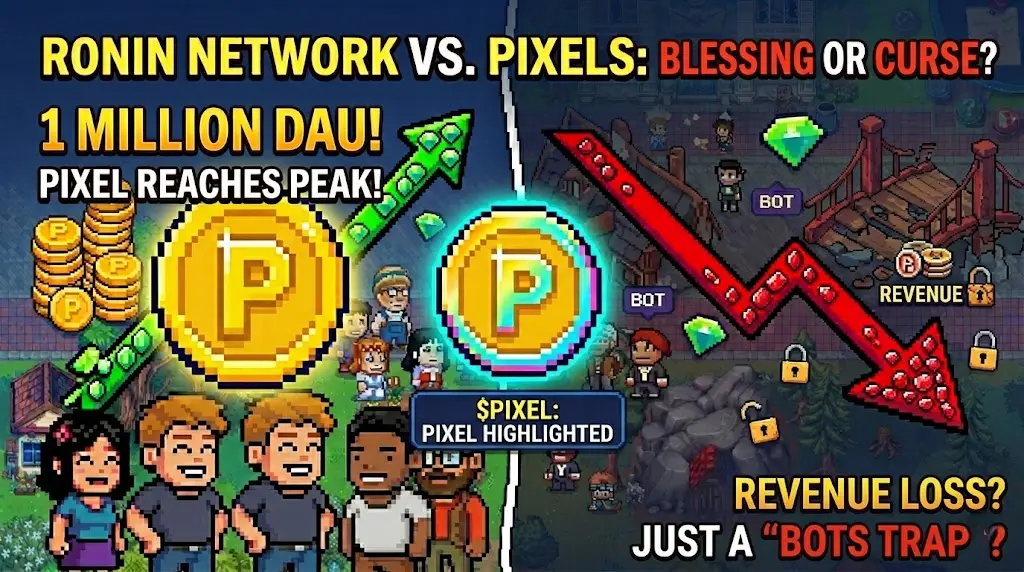
Ronin Network vs Pixels, Blessing or Curse?

How do you rate this article?
4

AmadTheTrader
Posting crypto content

Crypto & Global Insights, geopolitics update
Latest updates on crypto, geopolitics, and global markets.


Reward the author with $0.01 in crypto, and earn yourself as you read!
% to author / 80% to me.Rewards are FREE. Publish0x pays them, not you.


2 hours ago
3 minute read


11 hours ago
1 minute read


16 hours ago
2 minute read
Page not displaying correctly?
