
Cryptocurrencies are very complex to understand no matter your expertise of the topic. It's a novel industry that rapidly keeps evolving. So fast that it makes it harder for investors to keep up with.
One of the popular things every investor pay the most attention to is token economics, also called tokenomic. A token with a good tokenomic is more likely to attract more investors and appreciate in value. In contrast, a bad tokenomic is a good recipe for a token to fail and lose its value.
So, how can you tell a token has a good tokenomic? You can deep dive into any token and spend hours understanding its economy, but this could be time-consuming. With the rate of new tokens popping up into existence every day, you might not have enough time to study all the projects you are interested in. So, here are important areas you can look into that can give you a quick idea about the tokenomic of a token in less time.
The supply of a token can tell you more about its price in the future
It is very important for any investor to know the supply of a token. Tokens with good tokenomic tend to have a limited token supply. For example, Bitcoin has a total supply of 21 million. No more Bitcoin can be created when the supply reaches 21 million. This limited supply has pushed the price of 1 Bitcoin to perform even better than Gold in a short period of time.
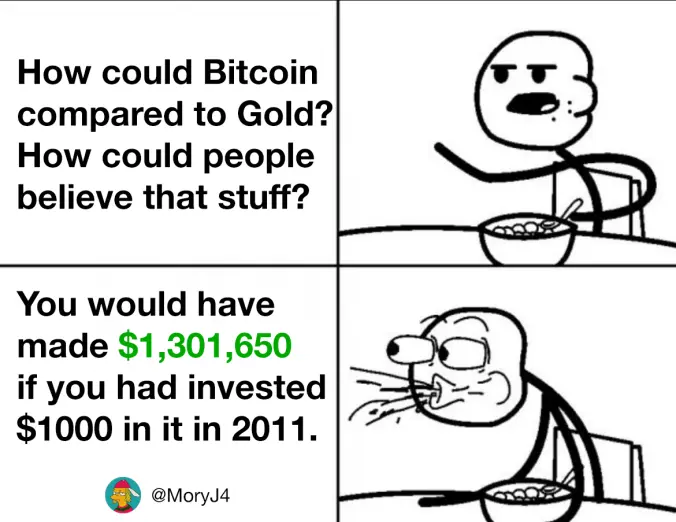
A limited supply makes a token more scarce, which adds value to the token over time as more and more investors are interested in it. When you research the total supply, also make sure to know how many tokens from that supply are in circulation.
Remember that I said Bitcoin has a total of 21 million? None of these coins were created at launch. Coins are created during the mining process. Bitcoin miners are powerful computers that validate transactions on the Bitcoin Blockchain. The first coins from the 21 million supply have been created in this process by Satoshi Nakamoto in 2009. When new coins are created, they become part of the circulating supply. Today, the circulating supply of Bitcoin is 19.2 million.
It's best practice to stay away from cryptocurrency projects where developers have already created all or the majority of their tokens at launch. If you are interested in such tokens, dive deeper into your research and find out their distribution model and vesting schedule.
There are also tokens with no limited supply. No limited supply means tokens are being created indefinitely. this flood of tokens entering the market can impact its price. Unless there is a good mechanism to control the flow of new token creation, the value of the token will likely decrease over time.
Websites like CoinmarketCap make it easier to see at a glance the supply of any token. But it is always accurate. One way to tell if the information is accurate is to search for a checkmark next to the supply like you in the picture below.
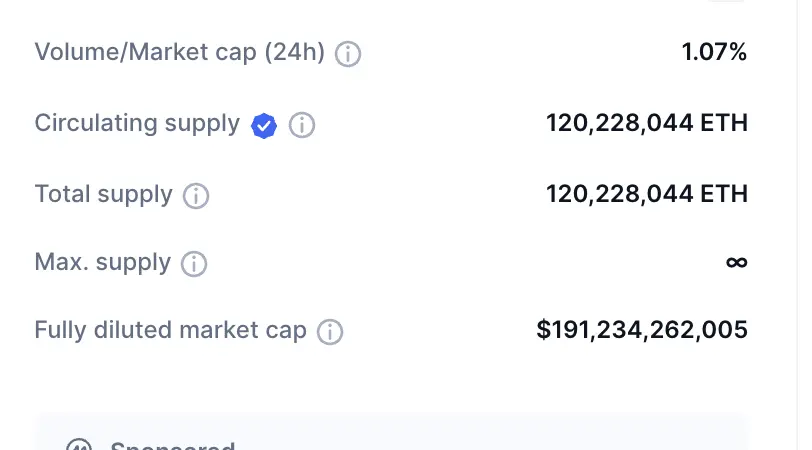
You can further the accuracy check by finding information about any token supply by checking its smart contract address in its blockchain explorer like Etherscan.
A Fair decentralized token distribution is a good signal
Now that we determined the total supply, let's talk about distribution. A good tokenomic is one where tokens are well distributed among holders.
Tokens should be fairly distributed to all participants. Most good projects distribute their tokens to people who participate in their ecosystem. The more you participate, the more tokens you get.
In the case of Bitcoin, new coins are only distributed to miners for their participation in helping validate transactions. To become a Bitcoin miner, you have to buy costly computers. The more computer power you have, the more new coins you get as rewards. Anyone can become a Bitcoin miner as long they can afford to buy these computers and equipment. This makes Bitcoin a fairly distributed coin!
For some other cryptocurrency projects, the distribution of new tokens is done through staking. Staking means locking your tokens in a smart contract for a period of time. When your tokens are locked, you can't sell them or move them until the staking period is completed. At the end of your staking period, you can withdraw your initial tokens, plus the new tokens you were rewarded for. However, some smart contracts let you access your rewards but not your initial tokens.
Projects with a staking mechanism usually mint an initial supply. It's good to find out how that initial supply has been distributed. It should be fairly distributed to help the success of the project. If a small group of holders holds the majority of the initial supply, they will be also getting the majority of newly created tokens if they stake. This is unhealthy for the project and everyone else because the small group of holders will likely keep selling large amounts of their rewards. This will hurt the value of the token on the market.
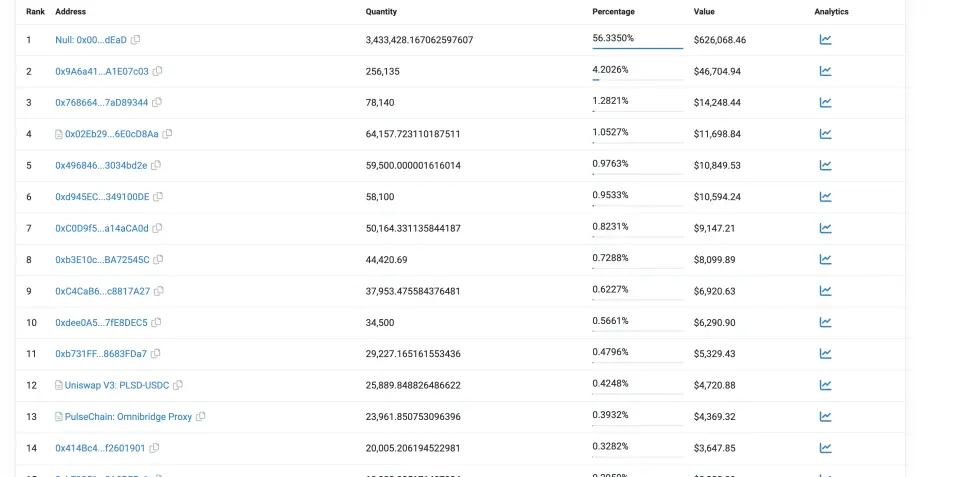
A good way to see token distribution among holders is to check it on its blockchain explorer. Below you can see how PulseDodge tokens are distributed among holders. Notice that the largest tokens (<56%) are being held in a dead wallet. A dead wallet is where burnt tokens are being sent. Burnt tokens are no longer useful but are still part of the circulating supply. Since they can be sold on the open market, they make the other tokens in the supply more scarce.
The second largest holder has only less than 4% of the circulating supply. We can say that PulseDodge has a well-distributed token among its 6 thousand holders.
How good a token be without a utility?
Think of utility as the reason why anyone would want to buy a token. A token with good utility has a constant demand for it.
For example, ETH is used as a gas fee on the Ethereum blockchain. As more and more decentralized applications (dAPP) are being built on the Ethereum blockchain, there is a constant demand for ETH to pay gas fees during transactions.
A token should have a well-defined utility in its tokenomic. If the token you are interested in has a utility, you should also ask yourself if that utility makes sense to drive demand for it. As a matter of fact, almost all coins that are mostly used to pay gas fees on their native blockchains tend to perform well. This is because of their valuable utility. See the image below for some examples
 .
.
A crypto project is like any other business. To be successful, it should solve some problems that people are having issues with. One of the reasons why Ethereum is successful, it's because it decentralized and made finance accessible to anyone with an internet.
To find the utility of a token, you can read the white paper of its project. Keep in mind that not every project has a white paper or a defined utility for their token. This should be a red flag and you shouldn't waste your time investing in such projects in my opinion. They usually end up as failed projects. Scammers know there are plenty of investors who are not really knowledgeable about crypto, so they take advantage of it by selling with no regard for creating an understandable White Paper. If they don't care, why should you?






