
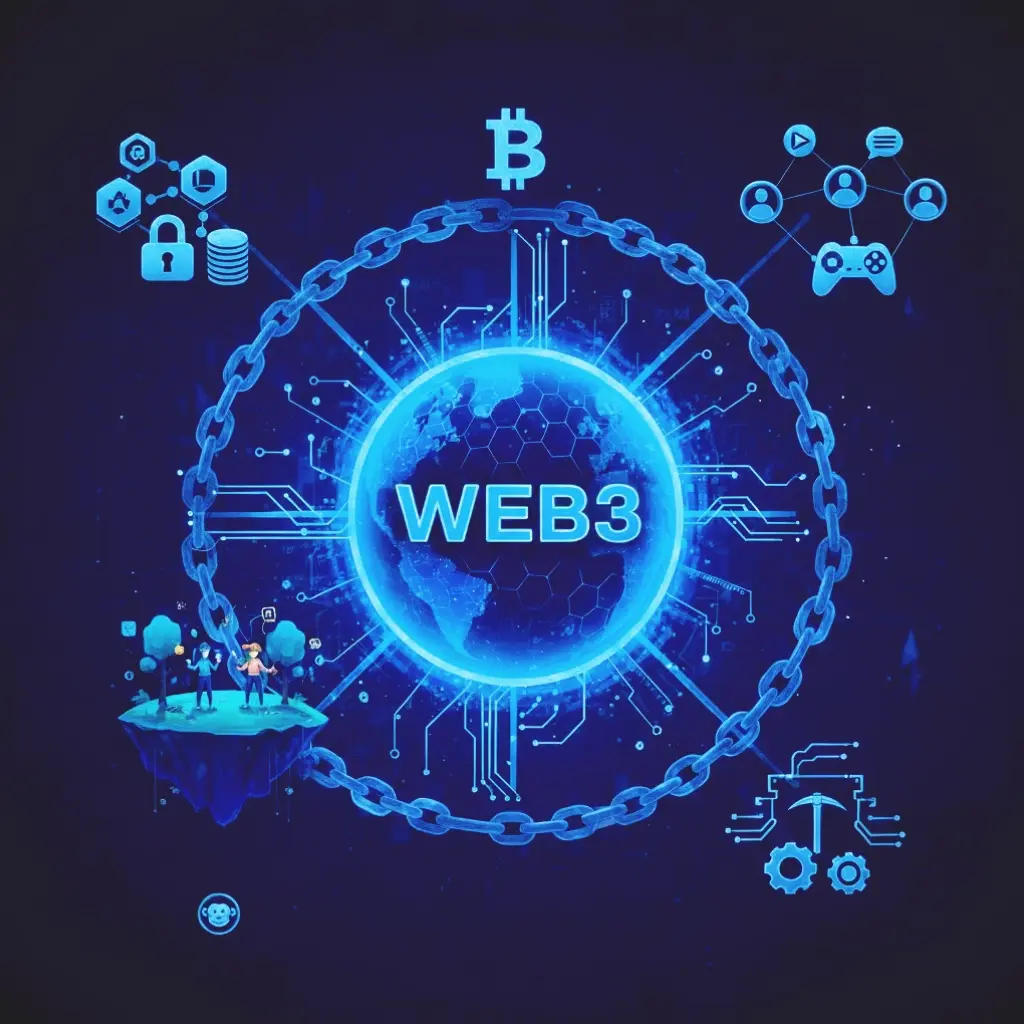
What exactly is Web3? Often, when we see the term Web3 while consuming technology content, we don't really know its true meaning. At first glance, it might seem like a simple web update, but it actually goes much further: it's a complete conceptual shift in how we interact with the internet.
Web3 signifies a technological evolution toward decentralization.
The evolution of the web, broadly speaking, has been as follows:
- Web 1.0 (the 1990s): It was like a giant library. You could only read static pages without interacting.
- Web 2.0 (the 2000s to the present): Social networks arrived. We went from just reading to creating content, but a handful of large companies retained control and the profits.
- Web 3.0 (the present and future): Now you can read, create, and to be owner. A new empowerment of users is emerging.
Empowering users through Web3 rests on several key pillars:
1. Blockchain: As a public and immutable digital ledger, it records all transactions and operations transparently and securely.
2. Smart Contracts: These eliminate intermediaries and enable the automation of actions, agreements, and transactions.
3. Cryptocurrencies and Tokens: A new economy with crypto-assets that represent value and ownership.
These concepts are already shaping concrete experiences:
- Decentralized Finance (DeFi): Enables peer-to-peer borrowing, saving, and investment, without the need for traditional banks.
- NFTs and Digital Ownership: It is now possible to be owner of digital art, collectible items in video games, or even special access. A significant advancement has been the tokenization of real-world assets (RWA).
- DAOs: Decentralized organizations where each member has voting power and effective decision-making authority.
There is a shift in digital power dynamics with the arrival of Web3, and this is reflected in its objectives:
- To regain control over personal information and digital identity.
- To participate directly in the economic benefits generated by the platforms.
- To build a more democratic, free, transparent, and censorship-resistant internet.
The full implementation of Web3 still faces technical, regulatory, and people's knowledge challenges to achieve widespread adoption. However, it is a process that is steadily progressing, as it is not just a new technology, but a new philosophy that empowers users.
Disclaimer: The content of this article cannot be considered as investment advice or financial advice. This post is for informational purposes only.






