
Most cryptocurrency losses don't happen because people choose the wrong wallet. They happen because the right wallet is used in the wrong way.
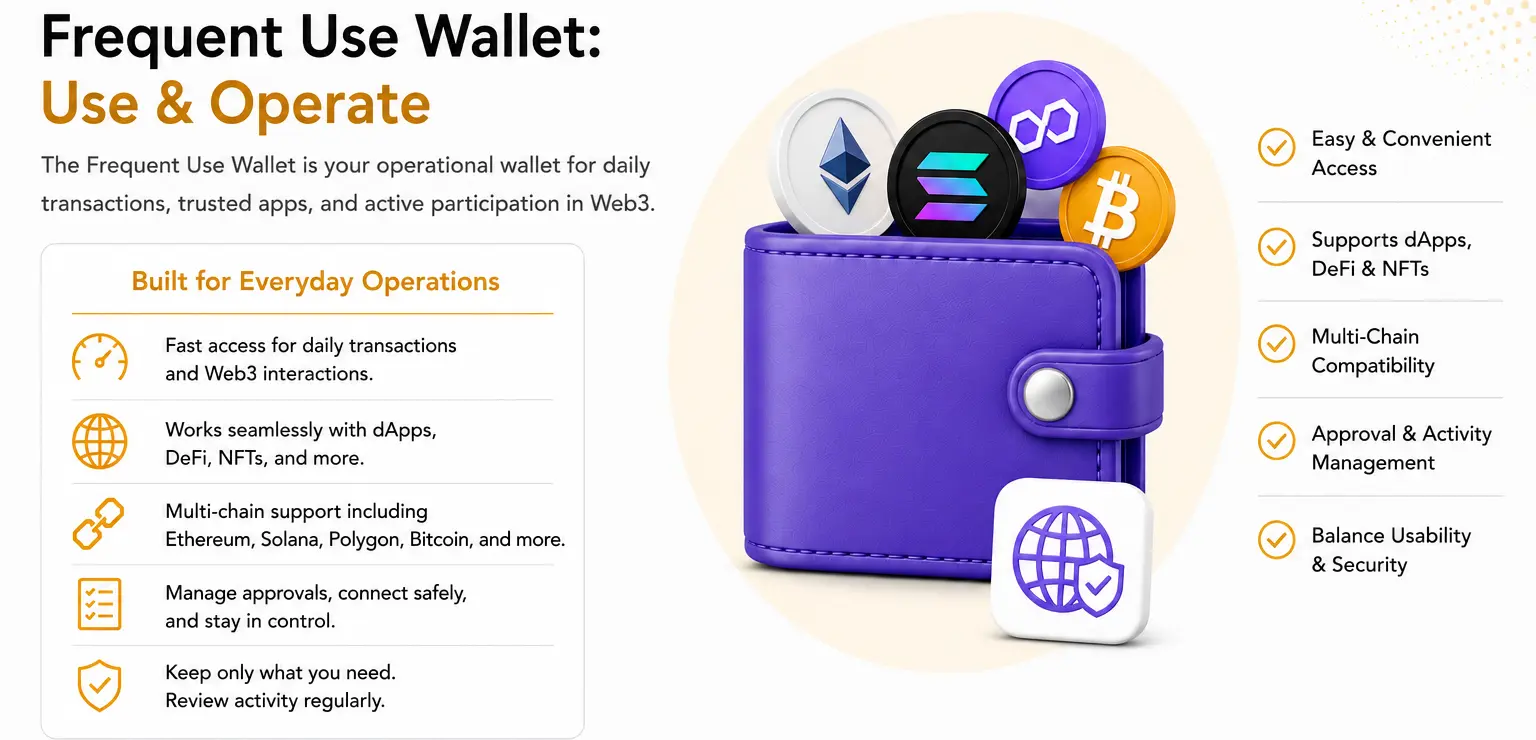
An everyday crypto wallet is designed for regular activity. It connects to decentralized applications, signs transactions, swaps tokens, interacts with NFT marketplaces, and manages digital assets on a daily basis.
Because it is constantly exposed to the Web3 ecosystem, it also faces different risks than a wallet dedicated to long-term storage.
What Is an Everyday Crypto Wallet?
An everyday crypto wallet—or Frequent Use Wallet—is intended for normal crypto activity.
It should contain only the funds needed for routine transactions, investments, staking, and trusted decentralized applications.
Unlike a long-term storage wallet, convenience plays an important role. However, convenience should never come at the cost of storing your entire portfolio in a wallet that is regularly exposed to online threats.
The 5 Most Common Mistakes
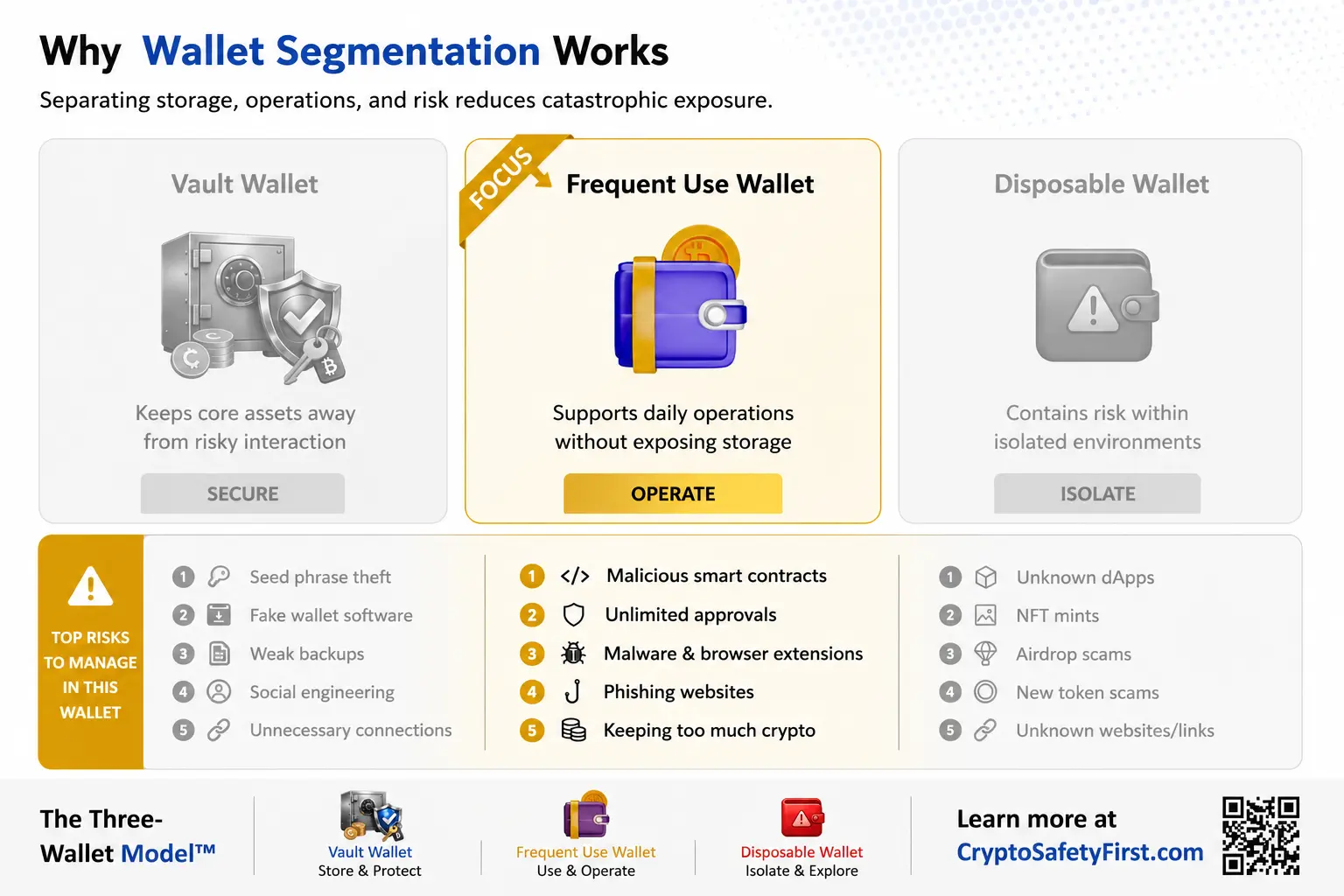
1. Approving malicious smart contracts without understanding them
One incorrect approval can give a malicious smart contract permission to transfer tokens from your wallet.
Many attacks occur because users approve transactions without understanding what permissions they are granting.
Always review what a transaction is asking you to approve before signing it.
2. Leaving unlimited token approvals active
Some decentralized applications request unlimited spending permissions for convenience.
While this reduces the need for repeated approvals, it also increases the potential impact if the application is later compromised or behaves maliciously.
Regularly review and revoke permissions you no longer need.
Several reputable tools and some wallet applications allow you to review and revoke token approvals.
3. Connecting to phishing websites
Fake versions of popular exchanges, wallets, and DeFi platforms continue to steal crypto from unsuspecting users.
Attackers often purchase advertisements, send fake emails, or post convincing links on social media that closely resemble legitimate websites.
Always verify website addresses before connecting your wallet.
Consider using reputable wallet security tools that can help identify known phishing websites and suspicious transactions, but never rely on them as your only line of defense.
4. Using an insecure browser or device
Many users access Web3 through browser wallet extensions.
If the computer becomes infected with malware or a malicious browser extension is installed, attackers may manipulate transactions, redirect websites, or attempt to steal sensitive information.
Keeping your operating system and browser updated and installing software only from trusted sources helps reduce these risks. If your wallet behaves unexpectedly—for example, if transaction details change, pop-ups appear asking for your recovery phrase, or websites look different than usual—stop using the device until you understand what happened.
5. Keeping Too Much Crypto in Your Daily-Use Wallet
Perhaps the most common mistake is treating an everyday wallet as both a spending wallet and a savings account.
If an attacker gains access to the wallet or a malicious transaction is approved, every asset stored in that wallet may be at risk.
Only keep the amount of cryptocurrency needed for your regular activities.
How to Reduce Your Risk
Good security habits can significantly reduce the likelihood of becoming a victim:
- Use your everyday wallet only for trusted and well-researched platforms.
- Carefully review every transaction before approving it.
- Avoid clicking wallet connection links received through emails or direct messages.
- Regularly revoke token approvals that are no longer required.
- Keep your browser, wallet software, and operating system updated.
- Store larger long-term holdings separately from your everyday wallet.
Convenience Requires Discipline
An everyday wallet is meant to be used—not hidden away.
That convenience makes it one of the most exposed parts of your crypto setup. Every website you connect to, every smart contract you approve, and every transaction you sign creates another opportunity for mistakes or attacks.
The goal is not to avoid using your wallet. The goal is to limit the consequences if something goes wrong by keeping only the funds you need for everyday activity.
Separating long-term savings from daily transactions is one of the simplest and most effective ways to reduce risk in self-custody.
Want to build a safer self-custody setup?
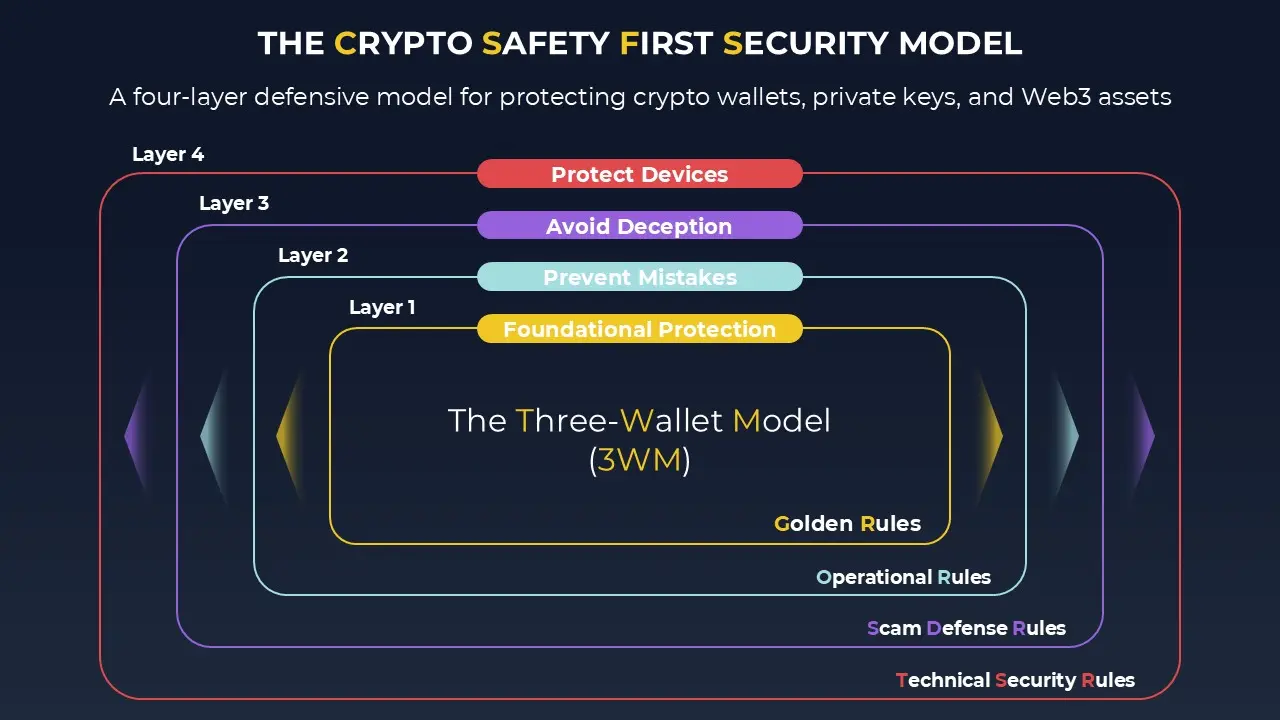
This article focuses on one wallet type. Learn how the Vault Wallet, Frequent Use Wallet, and Disposable Wallet work together as part of The Three-Wallet Model™ at CryptoSafetyFirst.com.




