![Bitcoin Review as a Malaysian [2023]](https://www.publish0x.com/img/926641.webp?action=resize&ar=1&enc=webp&inv=0&ori=1&st=1&up=1&w=1140&signature=0ee5e82e06a37d08e4e48ebe4a97e5d20e0dfc31fed4af34895c7579108f53f9)
Introduction
We Malaysians do love to use physical cash. Whether if we go to the morning markets, or sipping some kopi beng [ice coffee] in a kopitiam [coffee shop], we tend to pay them with cash. Of course nowadays, most of these kopitiams accept Touch N Go (TnG) as digital payment. Still, paying with cash is a straightforward process without the hassle of logging into your phones, type in the amount, pass biometrics to pay for a simple RM2 coffee.
In the era of digital payments, we send or receive money around either by:
-
Scanning QR Codes to merchants or your peers using third-party apps such as Touch N Go, Grab, Fave, etc.
-
Instant bank transfer using the DuitNow feature.
-
International Wire Transfer directly from banks.
-
Using debit/credit cards.
However, all these payment methods have one thing in common, that they are controlled by centralized, third-party companies. What is the problem about this you may ask? Platforms controlled by centralized, third-party companies shows risks of a single point of failure, meaning if any catastrophic event happens to these companies, such as a bankruptcy or a bank run, your money may be stuck with the platforms and you won’t be able to withdraw your money.
Think about it, when you deposit your money to these platforms, your money is basically managed by the platform itself. Technically, you don’t actually own the RM 5,000 that you put into the your TnG wallet. Yes, you are able to control how you want to move your money around, but if TnG platform thinks that you’re a suspect of criminal activity, they have the ability to freeze your funds so you won’t be able to access them.
In fact, banks are also susceptible to these events too, even though banks in Malaysia have a lower probability for these events to occur, it’s not impossible. If banks issue loans way more than money deposits, banks may not have enough liquidity to cover any unforeseen losses thus resulting in insolvency. A metric to measure this is the Loan-to-Deposit (LDR) Ratio.
With that said, is there a better system out there where a natural transformation of an alternative digital economy that is more transparent, verifiable, more distributed & more decentralized to protect the financial freedom of the people? Enter Bitcoin.
Bitcoin - Football Match Definition & Features
Bitcoin is a peer-to-peer, digital cash system that is verifiable, auditable & transparent. Peer-to-peer is basically like trading physical, paper Ringgits around between you & your family members, relatives, friends, customers, vendors and other people in a digital world without going through a third-party. Furthermore, any transactions that you make can be seen & verified by everyone in the blockchain. This also enhances transparency of how & where all the money goes.
Now I have covered how blockchain works in the most beginner-friendly way that you can understand. To explore it further, I’ll expand that idea by giving you a very weird example of soccer balls & a stadium.

Imagine that you are at a football match, watching Barcelona vs Real Madrid with a large group of spectators. Each spectator has a notebook and pen, and they keep track of the plays, scores, and other events that occur during the game.
At the end of the match, each spectator compares their notes with their neighbors, to ensure that everyone has the same record of the events that occurred during the game. In this way, everyone can be confident that the final score and other details are accurate and agreed upon.
This is similar to how a blockchain works. A blockchain is a decentralized, distributed ledger that records all transactions and events that occur on the network. Each participant on the network has a copy of the ledger, and each transaction is recorded on multiple copies of the ledger.
For example, each spectator at the football match could represent a node on the blockchain network. When a new transaction occurs, such as a goal being scored, it is broadcast to all nodes on the network. Each node independently verifies the transaction and records it on their copy of the ledger. Once a certain number of nodes have confirmed the transaction, it is added to the blockchain as a new block.
In this way, a blockchain provides a tamper-resistant and transparent record of all transactions on the network, as no single entity controls the ledger, and all participants have a copy of it. Just like the spectators at the football match, the nodes on the blockchain network work together to ensure that the ledger is accurate and up-to-date, and that everyone has the same record of events.
Besides Bitcoin being just a normal cryptocurrency, Bitcoin has a few special features building on top of the Bitcoin network like:
-
Lightning Network: A network layer build on top of the Bitcoin network that enables faster & cheaper transactions that can be used by average users to perform daily micro-transactions such as buying groceries in the morning market & order food in restaurants. In a real world example, El Salvador is the first country to adopt Bitcoin as a legal tender for day-to-day transactions. However, they are facing issues such as:
-
Lack of infrastructure: Despite being one of the first countries to adopt Bitcoin, there is still a lack of infrastructure in place to support its use in day-to-day transactions. This includes a shortage of merchants accepting Bitcoin, limited options for exchanging Bitcoin into other currencies, and limited access to mobile and internet services, particularly in rural areas.
-
Technical knowledge: Bitcoin can be a difficult concept to understand for many people, and its technical nature may present a barrier to adoption for those without a strong technical background.
-
Volatility: Bitcoin's price can be highly volatile, making it difficult for users to accurately estimate its value or use it as a reliable store of value.
-
Regulation: Despite being recognized as legal tender, the regulatory framework for Bitcoin in El Salvador is still evolving and may present additional challenges to its adoption and use.
-
Security risks: Bitcoin transactions can be vulnerable to hacking and theft, and users may be at risk of losing their funds if they do not take proper security measures such as safeguarding their seed phrases properly.
Even though Malaysia does not accept Bitcoin as legal tender currently, Malaysia is well-positioned to adopt Bitcoin faster than El Salvador because:
-
Tested infrastructure: The most popular e-wallet platform for day-to-day transactions is Touch-N-Go. Since the lightning network is open-sourced, anyone with the right sets of programming skills and understanding of the lightning network will be able to review the code and integrate a Lightning Network node into their system, thus BTC can be accepted as an alternative currency for online purchases & toll charges.
-
Growing Education: Malaysia have also started to offer blockchain programmer courses in 7 Malaysian Universities so Malaysians will be able to build decentralized applications (DApps) catered for the needs of Malaysians. Online course platforms such as Coursera, Udemy, EdX & many more are also accessible for Malaysians who strive to become blockchain developers.
-
-
Taproot: A proposed upgrade to the Bitcoin network aimed at improving privacy and efficiency. It is essentially a new way of combining multiple transactions into one, making it more difficult to see what is being done on the network and reducing the size of data that needs to be stored. This is important because it helps the network to operate faster, more securely, and more privately. Additionally, it allows for more complex transactions to be executed, making it possible for users to have greater control over their funds.
The potential use cases of Taproot in Malaysia are as follows:
-
Enhanced Privacy: Taproot can improve privacy by allowing for more complex transaction scripts that can better hide the details of a transaction. This can be useful for individuals and businesses in Malaysia who value privacy and security but still everyone will be able to view transactions on the Bitcoin blockchain.
-
Lower Fees: Taproot is expected to reduce transaction fees by allowing for more efficient use of the Bitcoin network. This can make Bitcoin a more cost-effective option for individuals and businesses in Malaysia who use the currency for transactions and remittances.
-
Increased Scalability: By improving the efficiency of the Bitcoin network by making the network faster & cheaper, Taproot could help to increase its scalability, making it easier for individuals and businesses in Malaysia to use the currency for a wider range of transactions and applications.
-
Support for Decentralized Applications: Taproot is expected to make it easier to build decentralized applications on top of the Bitcoin network, potentially opening up new opportunities for innovation and growth in Malaysia and beyond.
Taproot is currently in the process of being developed and tested by the Bitcoin community, but this is seen as a positive development for the future of Bitcoin and is expected to be implemented in the coming months or years.

-
-
Stacks: Do you know that Bitcoin already has smart contracts capabilities currently live before Taproot? Stacks is basically another layer like Layer-2s in other blockchains which unlocks the creation of applications using smart contracts build on a layer on top of the Bitcoin blockchain. For those who love to hold Bitcoin while want more use cases for Bitcoin besides being a store of value, you can create smart contracts that enables you to build decentralized finance (DeFi), non-fungible tokens (NFT), identity solutions, decentralized applications (DApps) & many more.
-
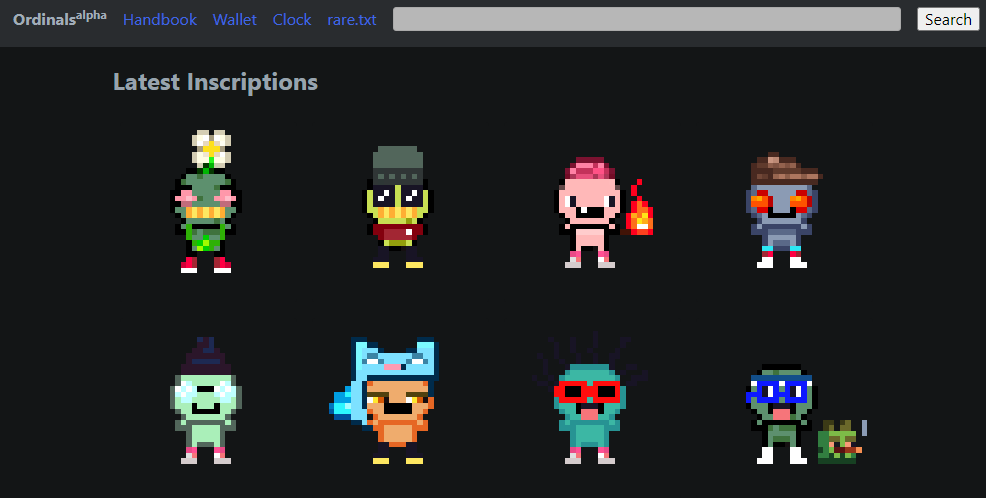
Ordinals: A new unique feature where users can attach arbitrary assets such as a text, image or their favourite ape NFTs to Satoshis using ordinal numbers as identifiers to track the location of specific Satoshis that are already transacted in the Bitcoin blockchain. Satoshi is basically a unit in the BTC currency where 1 BTC = 100 million Satoshis. A lot of people equate Ordinals = Bitcoin NFTs, but technically they are more like a game of treasure hunt where people embed these data into ordinal numbers to find the rarest number, like finding a mystic, long-lost artifact. The rarity of the ordinal number is determined by how early the transaction created in the blockchain, so the satoshi number in the very first block of the bitcoin blockchain would be the rarest number of them all. The later the transaction represented by that satoshi number, the more common the rarity.
Bitcoin has a few notable advantages when it comes to the real-world use cases such as:
-
Digital Cash:
The key feature of using Bitcoin as digital cash instead of your Ringgits is the worldwide acceptance. For example, You can send Bitcoin to your cousin in England without the need to convert your Ringgits to Pounds. Here are some advantages of using Bitcoin instead of a regular CIMB international wire transfer:
-
As of January 2023, an average Bitcoin transaction fee is $0.92 (~RM4.00), while a CIMB wire transfer will cost you RM10.00, so you save 60% if you use Bitcoin.
-
Bitcoin has an unlimited amount limit to transfer, while CIMB sets a daily limit of up to RM50,000, so Bitcoin is advantageous in transferring amounts more than RM50,000 while maintaining cheaper fees than banks.
-
An average Bitcoin transaction confirmation time is ~19 mins as of Jan 2023, while the transaction time between banks may differ according to the respective banks in different countries, but we can expect a bare minimum of 1 day.
-
Bitcoin has more traceability & transparency in the fact that you or anyone can view the transaction status as long as you have a transaction ID. Conversely, if you do a wire transfer & the transaction has been delayed, you have no way to track your transaction unless you call the customer service hotline.
-
-
Store of Value:
A fixed supply of 21 million BTC helps to ensure scarcity and provide some level of protection against inflation, similar to gold. In fact, unlike physical gold, Bitcoin is more liquid than gold in a way that it’s easier to buy, sell, send & receive BTC in this digital era, while tradeable gold coins have been long extinct from the system.
Bitcoin’s rate of supply to circulation is programmed to be decreased after each halving event, meaning after every 210,000 blocks have been minted, the BTC reward per block will decrease by half until it reaches 0. This means less BTC will be added in circulation, then as more people purchases Bitcoin to be used as a store of value & medium of exchange, the price of Bitcoin goes up thus enhanced the purchasing power of holding them.
-
Online purchases:
Bitcoin can be used to purchase goods and services online from merchants who accept the currency by utilizing the Lightning Network. With Bitcoin’s fixed supply & fair tokenomics distribution, Bitcoin is a great alternative financial asset that maintains high purchasing power regardless of market conditions.
Limitations
-
Energy Consumption:
There’s two sides to this story of Bitcoin’s energy consumption. On one hand, Bitcoin uses a significantly high amounts of electricity to mine those Bitcoins, while the heat loss from ASIC miners & GPUs results in high wastes of energy in the form of heat. On the other hand, the people who defended Bitcoin’s high energy consumption claim suggested that Bitcoin does not use as much energy as mining coal, or Bitcoin uses renewable energy like Solar, Wind, Nuclear or Hydro power so the use of renewable energy makes mining Bitcoin “green”.
In my opinion, power efficiency is critical for the sustainability of a blockchain. If you can run a blockchain that uses 99% lesser energy consumption than Proof-of-Work consensus systems, while maintaining the same security guarantees & decentralization, I believe blockchains should strive for this type of development. With my experience of mining Bitcoins in Bitcoin pools and checked out many videos of people setting up ASIC pools at their homes, I am definitely not a fan of Bitcoin mining. How would you feel if you’re running the computer 24/7 at maximum GPU setting, while listening to the noisiest computer fan all day & feeling the heat produced by your computer, and it may take you days, weeks or even months depending on how powerful is your GPU, and then the best reward you mined is just a mere few cents worth of Bitcoin? The risk-to-reward is definitely much less desirable, which brings me to my next point of Bitcoin limitation.
-
Expensive
Okay, you have experienced mining pennies of Bitcoin using your GPU and you want to increase your income potential. You scour the whole internet looking for the cheapest but yet powerful enough Bitcoin miner that you can get for a bang of your buck, but in the end, you’ll still need to fork at least 4 figures worth in dollars just to get a new & more powerful miner that uses so much electricity that even though your new machine’s hashing power increases your Bitcoin revenue, the energy consumption you used to mine those bitcoins may result in monthly negative net incomes.
Some may argue to get a second hand ASIC miner that cost you 3 figures. Good deal right? Wrong! Think about how much torture the ASIC machine has been through, running so many computations, producing so much heat to mine those precious bitcoins to you, your electronic circuitry inside may be almost at the end of its life before you know it.
Which brings yet another problem about Bitcoin.
-
Unsustainability
Back to the point when I talked about Bitcoin as a store of value. The most popular event in Bitcoin is called the “Bitcoin halving”, where the rewards are cut by half every 21,000 blocks minted, or approx. 4 years. The problem with this type of system is that you’ll need a sustainable economic incentive for miners to keep their machines alive for putting transactions into the blockchain. If the reward emissions are cut, miners would need to re-strategize how they want to continue operating and whether if the halving event & transaction fees earned are sustainable enough to make a profit consistently.
Let’s do some math, according to the Cambridge Bitcoin Electricity Consumption Index, the estimated annualized Bitcoin energy consumption is 112.16 TWh of power. That’s 9,346,000,000 kWh of energy consumption a month. According to Malaysia’s pricing & tariffs (taking TNB’s [Malaysia’s largest electricity service provider] commercial low voltage commercial tariff as the benchmark due to most of the blocks are mined by mining farms of different sizes), it would cost a monthly average of RM4,757,113,992 or RM4.76 billion (USD$ 1,098,007,081.82) worth of electricity cost to maintain the Bitcoin blockchain network. Comparing the average monthly transaction fee revenue for Jan 2023 (taking an average of 0.141USD/tx & 8.45million txs in Jan 2023 alone), which equates to an average BTC transaction fee revenue of USD$ 1.19145 million & a net loss USD$ 1.096 billion in Jan 2023.
Keep in mind that the revenue should be calculated by the sum of the BTC reward emission per block (6.25 BTC/block currently) & transaction fees. Assuming an average of 1872.6 transactions per block in Jan 2023, this would mean approximately 4,512 blocks have been minted in Jan 2023 alone, which would generate another 28,200 BTC ( total of USD$565,263.078.00 with a $20,044.79 average BTC $ price as of Jan 2023), the total revenue will be USD$ 566,454,528, which will still be a net loss of USD$ 531.5 million.
Keep also in mind that the electricity cost varies from country to country & using renewable energy will greatly reduce the electricity cost, and this calculation is assumed that the whole world is using TNB’s tariff rates.
Still, we can expect that due to the high energy consumption, large miners may still suffer financial losses for maintaining the bitcoin network if they don’t have access to cheap electricity & renewable energy, while Bitcoin halving keeps cutting the BTC reward emission by half.
-
Progressive centralization
This may also spare heated debate, but as bitcoin’s mining hash rate increases, GPU computation becomes even less relevant that it would be impossible to mine BTC using GPU for profit, and only the larger mining farms with more money to buy more efficient ASIC hardware are holding most of the Bitcoin’s hash power.
To measure the level of Bitcoin’s mining pool centralization, we have a metric called Minimum Attach Vector (MAV), which is the minimum number of participants needed to take control to attack or manipulate the network. If 51% of the hash rate are controlled by only a few handful of parties, then it becomes a security risk whereby if these companies are compromised, the bad actors may take over the network and perform malicious activities such as preventing new transactions from confirmations.
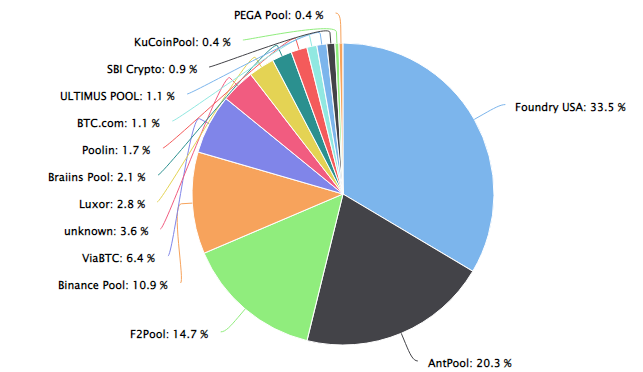 Bitcoin mining pool distribution, credits: BTC.com
According to the pie chart above, we can see more than 51% of Bitcoin’s hash rate are owned by only two companies: Foundry USA & AntPool, so the MAV number for Bitcoin in this case is 2. This also means if bad actors successfully attempt to takeoover Foundry USA & AntPool, they are able to control the Bitcoin network & transaction approvals, which is pretty bad for the decentralization and security properties of Bitcoin. Currently, 3 companies are already controlling almost 70% of the hash rate.
In summary, the bottleneck for sustaining the bitcoin network is energy consumption, progressive increase of cost to run the network & progressive centralization to a few largest mining farms due to increase in mining hash difficulty. Notice that unlike many other articles, I don’t include scalability, high transaction fees and lack of smart contract capabilities as the limitations of Bitcoin due to the implementation of the Lightning Network, Taproot & Stacks.
My Take on Bitcoin
Bitcoin is the longest cryptocurrency being introduced since the year 2009 and has been battle-tested whereby Bitcoin has an uptime of 99.98% since its inception, thus the Bitcoin network is one of the most reliable & stable blockchain network out there. Furthermore, it also has the best tokenomics where 100% of the Bitcoin is distributed to the miners without prior ownership from Venture Capitalist (VC) or private investors unlike other blockchains. With countries like El Salvador adopting Bitcoin’s Lightning network in their every day life albeit with issues such as price volatility & lack of user adoption, it is also possible for Malaysia to adopt the Bitcoin framework as an alternative payment currency to the MYR. Since BTC can be transacted globally, tourists & travelers from overseas can use BTC to purchase goods & services in Malaysia without the need to convert their fiat currencies into MYR, so there’s the user-friendliness aspect of BTC.
However, there are still many applications & businesses out there currently are not using the Lightning Network for transacting Bitcoin, which affects the user experience of using BTC as the payment currency. From my experience, you may read a lot of articles saying the average transaction time is 10 minutes, but actually the transaction time may also take 30 minutes, or even hours or days before the transaction is successful.
Adding to the fact that the current Bitcoin mining system is not energy efficient, it will be more expensive over time to mine Bitcoin so users tend to turn to alternative consensus methods such as Proof-of-Stake or Direct Acyclic Graphs (DAG) for faster, cheaper & significantly more energy efficient methods of validating blocks than Bitcoin.
Even so, Bitcoin is still the most important blockchain technology which spur continuous innovation towards building better, faster, cheaper & more secure alternative blockchains so we have to give credit to Satoshi Nakamoto (the founder of Bitcoin) massive respect for kickstart the movement towards a more financially-free, highly transparent & true user ownership economy.
-------------------------------------------------------------------------------------
Twitter: https://twitter.com/pizzadren
Substack: https://pizzadcrypto.substack.com/
Follow me on Twitter for more Malaysia-related crypto content. Subscribe to my Substack newsletter so you won't miss any of my articles from your email.






